Tag: Brain

  • The “Zero-Calorie” Trap: Why Fake Sugar Messes Up Your Body

    The “Zero-Calorie” Trap: Why Fake Sugar Messes Up Your Body

    Artificial sweeteners promise to make things taste sweet without adding calories. But what if your body is sending you mixed signals? New research shows that these zero-calorie substitutes may be causing metabolic responses that weren’t expected, which could lead to the health problems they are supposed to prevent.

    The Sweet Trick: How Your Brain Plays Tricks on Your Body

    At first, your brain doesn’t know the difference between real sugar and fake sugar when you taste something sweet. Your body gets ready for a sugar rush as soon as you taste diet soda. This is known as the cephalic phase response. It is a very complicated biological system that has been improved over thousands of years.

    This is where things get interesting and hard.

    Your pancreas makes insulin in case glucose comes, but it never does. It’s as if your body is throwing a metabolic party, but the guest of honor, real sugar, never shows up.

    The Insulin Confusion: When Signals Get Mixed Up

    Recent studies show that things are not looking good. Dr. Kushagra Mathur’s research on diabetic patients found something interesting: people who used artificial sweeteners had much higher insulin resistance than people who didn’t. The numbers don’t lie: the average HOMA-IR value for people who used artificial sweeteners was 7.39, while the average value for people who didn’t use them was only 2.6.

    But not all sweeteners work the same way. Studies show that stevia lowered insulin levels more than aspartame and regular sugar. Sucralose, on the other hand, seems to be especially bad, as some studies have shown that it makes healthy people less sensitive to insulin.

    The Metabolic Mayhem Begins

    There is more confusion than just insulin. When your body thinks it will get glucose but doesn’t, a number of things happen one after the other:

    • Glucose transporters become overactive, which could lead to fat buildup in cells
    • Insulin sensitivity decreases over time with repeated exposure
    • Blood sugar regulation becomes impaired, which raises the risk of diabetes

    Dr. Sabyasachi Sen’s groundbreaking research at George Washington University showed that sucralose causes fat to build up in a dose-dependent way, which means that more sweetener means more fat is stored.

    The Link Between the Gut Microbiome

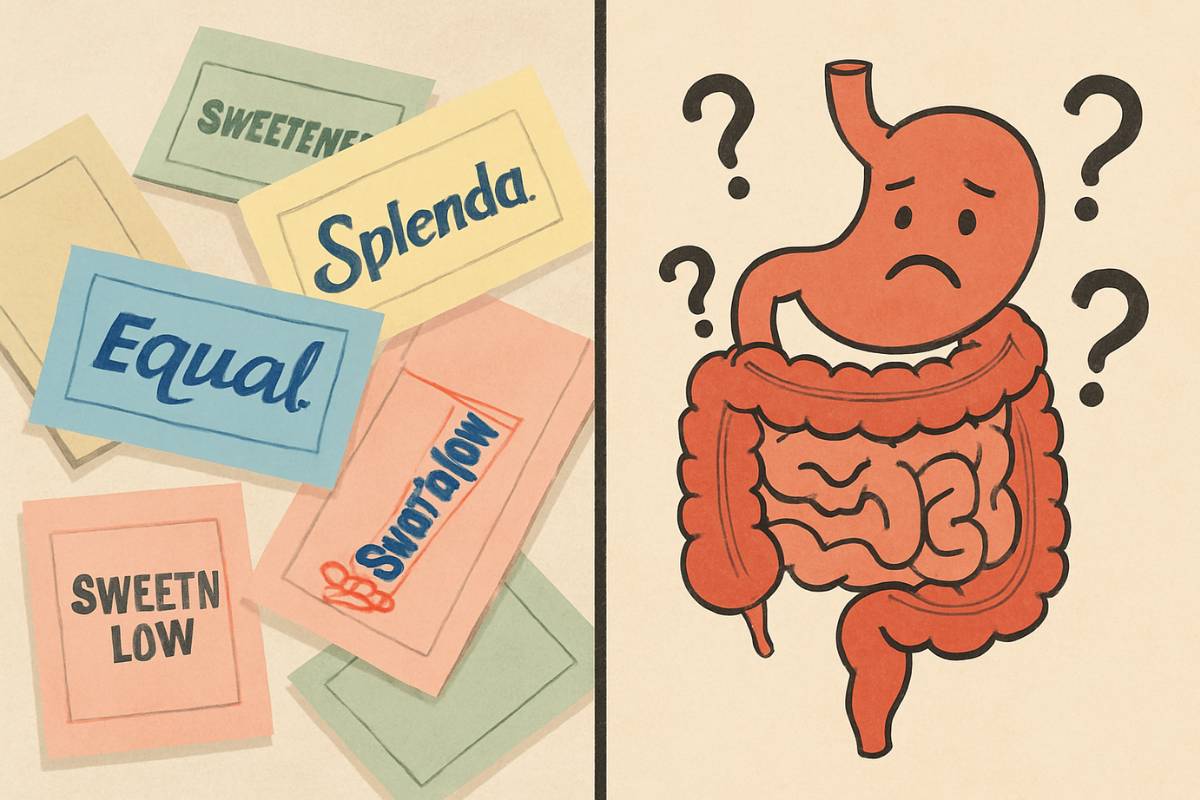
    Your gut bacteria may be the most interesting and worrying thing you find out. These tiny creatures that live in your intestines are very important for metabolism, and artificial sweeteners are throwing off their delicate balance.

    Research shows that artificial sweeteners like saccharin and sucralose greatly lower the number of different types of microbes. It’s not just that you have fewer types of bacteria; you also lose the good ones that help keep your metabolism in check.

    The Battlefield of Bacteria

    When scientists looked into what happens to gut bacteria when they are exposed to different sweeteners, they found some worrying trends:

    • Sucralose increased harmful bacterial families like Enterobacteriaceae
    • Natural sweeteners increased helpful bacteria like Lachnospiraceae
    • Saccharin changed important bacterial genera that are linked to liver inflammation

    What does this mean? Your friendly gut bacteria, which help break down food and control inflammation, are being replaced by bacteria that could be bad for you.

    The WHO’s Warning Shot

    The World Health Organization sent a warning to the artificial sweetener industry in May 2023. Their thorough review found that non-sugar sweeteners don’t help with long-term weight control and may even raise the risk of type 2 diabetes, heart disease, and death in adults.

    Francesco Branca, WHO’s Director for Nutrition and Food Safety, said, “People need to think about other ways to cut down on free sugars.” The group stressed that artificial sweeteners “have no nutritional value” and suggested cutting back on the overall sweetness of the diet.

    The Mystery of Individual Differences

    Not everyone reacts to artificial sweeteners in the same way. Studies show that only some people, called “responders,” have strong insulin responses to sweeteners like sucralose. This genetic lottery decides if your body gets stuck in the metabolic confusion trap.

    The shape is also important, which is interesting. Solid foods with artificial sweeteners caused stronger insulin responses than drinks. That diet yogurt you eat in the morning might mess up your metabolism more than that diet soda you drink in the afternoon.

    The Problem of Duration

    Long-term use seems to make these effects stronger. Mathur’s research showed that the longer you use artificial sweeteners, the more insulin resistance you will have. It’s not just about having one diet drink; it’s about the long-term effects over months and years.

    Some long-term studies of people found that eating artificial sweeteners at levels that were thought to be “safe” caused problems with blood vessels and made them store more fat.

    Beyond Diabetes: The Bigger Picture of Health

    The metabolic confusion goes beyond just problems with blood sugar. Studies indicate that artificial sweeteners may play a role in:

    • Metabolic syndrome development
    • Cardiovascular disease risk
    • Obesity paradoxically, despite zero calories
    • Inflammation and dysfunction of the liver
    • Accelerated aging processes

    Dr. Sen’s research even found that sucralose makes oxygen radicals build up, which are very reactive particles that hurt cells and slow down metabolism.

    What Science Says About the Confusion

    Artificial sweeteners affect taste receptors not only in your mouth, but also in your entire digestive system. These receptors, which evolved to detect natural sugars, send mixed signals when they come into contact with synthetic sugars.

    For example, the compound sucralose turns on the T1R2 and T1R3 taste receptors, which stimulate the intestines and raise levels of hormones like GIP and GLP-1 in the blood. This can cause hyperinsulinemia. Your body’s old sugar-detection system just wasn’t made to work with these new chemical fakes.

    Understanding Mixed Messages

    The research landscape is not entirely unidimensional. Some studies that last a shorter amount of time show little effect, while others show big changes in metabolism. This inconsistency probably comes from differences in people’s genes, eating habits, and study methods.

    But the evidence is starting to point to caution. The WHO’s recommendation is the most thorough evaluation to date, based on systematic reviews of the evidence that is available.

    The Way Forward: What This Means in Real Life

    What should people who care about their health do now that there is new evidence? The study proposes various strategies:

    Gradual reduction of overall sweetness preference, commencing early in life, seems to be the most advantageous. Instead of using artificial sweeteners instead of sugar, the goal should be to retrain your taste buds to enjoy less sweet foods.

    Natural alternatives like small amounts of stevia have better metabolic profiles. If you need to use sweeteners, plant-based ones may be better for your gut microbiome than synthetic ones.

    Individual monitoring is very important for people with diabetes or other metabolic issues. Because people respond so differently, it makes sense to work with healthcare providers to keep track of your own metabolic markers.

    The claim that artificial sweeteners have no calories may not be true, and they may have hidden metabolic costs. Even though they might help you lose weight in the short term, the long-term effects on insulin sensitivity, gut health, and diabetes risk show that biology doesn’t like being tricked. Sometimes, the body’s ancient knowledge is better than modern food science.

    Your metabolism developed over millions of years to process the natural sugars found in whole foods. If we try to trick this system with chemical substitutes, our bodies might end up outsmarting us instead.

  • Brain Fog from Anxiety: How to Clear Your Mind

    Brain Fog from Anxiety: How to Clear Your Mind

    Do you ever feel like your brain is stuck in molasses? Those thoughts are hazy, memories are just out of reach, and putting in effort to focus is like pushing a huge stone up a hill. People have called this annoying experience “brain fog.” Anxiety is a common and poorly understood cause of brain fog, but there are many other possible reasons.

    If you have anxiety and brain fog, you’re not the only one. This symptom is confusing and debilitating for millions of people who are dealing with anxiety. It could have an impact on your job, your life, and yourself, making you angry, ineffective, and even more anxious about the haze itself. This article will go into great detail about the link between anxiety and brain fog. It will explain what brain fog is, why anxiety causes it, how to spot its symptoms, and most importantly, how to clear the fog and get your mind back to normal.

    What Exactly is Brain Fog?
    It’s More Than Just Feeling Tired

    Let’s begin by describing what we mean by “brain fog.” It is not a medical condition on its own but a list of symptoms that constitute a state of compromised intellectual functioning. You can think of it as your brain functioning below optimum. Individuals explain brain fog in different terms:

    • Difficulty concentrating: Having trouble concentrating on tasks, being easily distracted.Memory issues: Forgetting, struggling to recall information, feeling that your memory is not as clear as it normally is.
    • Slowed thinking: Taking more time to process information, feeling mentally slow.
    • Trouble with words: Struggling with words or getting thoughts across clearly.
    • Feeling ‘fuzzy’ or ‘hazy’: General feeling of mental confusion or lack of clarity.
    • Trouble with complicated tasks: Struggling with planning, problem-solving, or making decisions.
    • Mental exhaustion: Being mentally tired even with little or no mental effort.

    Though sleep deprivation, a poor diet, some medications, and medical conditions may create brain fog, when it regularly occurs along with worrisome, nervous, or panicked feelings, anxiety is probably the culprit.

    Unpacking Anxiety: More Than Just Feeling Worried

    Anxiety is a normal human feeling that involves tension, concerned thoughts, and bodily changes such as heightened blood pressure. Anxiety is useful in moderation – it warns us about threats and prepares us. But when anxiety becomes overwhelming, chronic, and intrudes into everyday life, it can become an anxiety disorder.
    There are several ways in which anxiety may arise, either mental or physical. Mental features could be:

    • Extreme worry
    • Being restless or tense
    • Problematic control over worry
    • Irritability
    • Feeling something is awful and about to strike

    The physical features could range from:

    • Fast heart rate
    • Racing respirations (hyperventilation)
    • Perspiring
    • Trembling of fingers or hands
    • Weakness and fatigue
    • Inability to sleep
    • Indigestion or intestinal issues
    • Tension of the muscles

    Considering this wide range of symptoms, it’s not necessarily surprising that anxiety can also strongly affect cognitive performance, directly contributing to the phenomenon of brain fog.

    The Complex Connection: How Anxiety Causes Brain Fog

    Understanding why anxiety causes brain fog is vital to understand for effective management. It’s no accident; several linked biological and psychological processes are involved.

    1. The Stress Response and the Brain:

    Anxiety makes your body’s stress response system, also called the “fight-or-flight” response, kick in. When you feel threatened, whether it’s real or just your mind playing tricks on you, your brain tells your body to release stress hormones, mostly cortisol and adrenaline. These hormones are supposed to get your body ready to act right away by speeding up your heart rate, sending blood to your muscles, and sharpening your senses that are important for survival. But if you have chronic anxiety, this stress response is always on or stuck in the on position.

    Too much cortisol, especially over long periods of time, can hurt how the brain works. Research published in scientific journals like Biological Psychiatry has demonstrated that chronic stress and elevated cortisol levels can impair the functioning of the prefrontal cortex, the brain region responsible for executive functions including decision-making, working memory, and higher-order cognitive processes. This impairment is a principal contributor to the manifestations of brain fog.

    2. Neurotransmitter Imbalance:

    Anxiety is linked with imbalances in important neurotransmitters – chemical messengers in the brain that control mood, sleep, attention, and cognitive function.

    Serotonin, dopamine, norepinephrine, and GABA can all be disrupted by chronic stress and anxiety.
    Interference with these neurotransmitters can interfere with the communication between brain cells, resulting in problems with attention, memory, and processing speed of the mind, telltale symptoms of brain fog. For example, norepinephrine is responsible for attention and alertness, whereas GABA assists in soothing the nervous system. When these get imbalanced due to anxiety, cognitive processes are affected.

    3. Hypervigilance and Attentional Bias:

    Anxiety tends to make you hypervigilant – perpetually scanning your surroundings (or your internal thoughts and body) for danger. This state of hyper-vigilance is mentally draining. Your attention is repeatedly drawn towards possible worries or threats, with fewer cognitive resources left for activities that demand persistent attention, learning new facts, or solving problems.
    This is sometimes referred to as attentional bias. Anxious people pay more attention to threat stimuli.
    While this may be evolutionarily useful in a threat situation, in the case of contemporary life and chronic anxiety, it means your brain is continually redirecting energy to threat monitoring rather than letting you focus on your work, a conversation, or a book. This continuous scanning internally and redirecting the attention very much contributes to the experience of mental overload and not being able to think straight, which is present in brain fog due to anxiety.

    4. Sleep Disturbance:

    Sleep and anxiety are closely related. Worrying and intrusive thoughts can impair falling asleep or maintaining sleep.   Poor sleep quality is a significant cause of brain fog for everyone, independent of anxiety.

    Sleep is when your brain reinforces memory, removes garbage products, and does its much-needed maintenance.
    When sleep is repeatedly disturbed due to anxiety, cognitive function becomes compromised, perpetuating the brain fog. The more you go without sleep due to anxiety, the more you feel foggy, which subsequently creates anxiety over your performance or health, resulting in a negative cycle.

    5. Mental and Physical Fatigue:

    It’s tiring to always be fighting with the anxious thoughts and the physical effects of anxiety, like muscle tension and a racing heart. This constant mental and physical fatigue makes the total energy available for doing any work, like remembering things or thinking clearly, less useful. When you’re tired physically and mentally, it’s hard to think or remember. A lot of people with anxiety feel “tired but wired,” which is a perfect way to describe the energy drain that causes brain fog.

    6. Nutritional Neglect and Dehydration:

    When consumed by anxiety, individuals can overlook simple self-care such as eating normal, healthy meals and drinking plenty of water. Malnutrition and dehydration have a profound effect on brain function, causing low energy, inability to focus, and general mental lethargy. Although not an immediate cause of the anxiety-induced brain fog itself, these issues tend to occur alongside anxiety and can exacerbate the foggy sensation. In short, anxiety-induced brain fog is a multifaceted symptom resulting from the interaction of hormonal fluctuations, neurotransmitter imbalance, diverted attention, lack of sleep, and sheer fatigue caused by the body’s prolonged response to perceived danger.

    Identifying the Specific Symptoms of Anxiety-Induced Brain Fog.

    Although general symptoms of brain fog are similar regardless of the cause, when anxiety is the main culprit, certain patterns may emerge. You may observe:

    • The fog gets worse when anxiety or stress is high: When you’re especially anxious about something, dealing with a stressful situation, or under lots of anxiety symptoms, the brain fog will probably be more intense.
    • Struggling to focus on non-anxiety tasks: You may struggle to focus on your work, classes, or even a hobby, with your mind still very actively thinking about worries or perceived threats.
    • Memory slips with reference to normal items: Forgetting appointments, misplacing items, or struggling with remembering conversations made recently that had no association with your worry. The worry is taking over the mental capacity.
    • Overwhelmed with mundane choices: Minor decisions become like gigantic decisions when anxiety and mind fog rob your cognitive energies.
    • Mental “checking out”: Feeling as though you are being absent from everything, out-of-body, or experiencing things automatically due to having too much of one’s mental power elsewhere.
    • Increased frustration with cognitive tasks: Feeling easily irritated or impatient when you can’t think as clearly or quickly as you want to.

    Be sure to distinguish this from the type of cognitive impairment that may result from other medical illnesses. If you notice significant, sudden, or persistent cognitive changes that don’t directly correlate with your anxiety level, it’s critical to see a doctor to exclude other causes.

    The Ripple Effect: How Anxiety Brain Fog Affects Everyday Life

    Living with brain fog due to anxiety is not only infuriating; it can have very real, negative effects on a variety of areas of your life:

    • Work and School Performance: Trouble concentrating, recalling directions, meeting deadlines, and deciding can severely limit productivity and performance. This can create more stress and anxiety over your capabilities, further compounding the problem.
    • Relationships: Difficulty keeping up with conversations, forgetting appointments, or seeming absent-minded can test relationships with family, friends, and partners. It may be difficult for other people to get what you are experiencing, resulting in misunderstandings or feelings of loneliness.
    • Daily Tasks and Chores: Paying bills, tidying up your house, or doing chores can become tedious and error-prone when you have a confused mind.
    • Self-Esteem and Confidence: Having an ongoing sense of forgetfulness or slowness can erode your self-confidence and self-esteem, leaving you questioning your intelligence and ability.
    • Increased Anxiety: The annoyance and frustration caused by brain fog may paradoxically exacerbate anxiety, creating a self-reinforcing cycle difficult to escape. You may find yourself worrying that you have brain fog, making it worse.

    Acknowledging these effects makes your experience real – the brain fog is not “all in your head”; it is a real and difficult symptom with serious ramifications.

    Strategies and Solutions for Managing Brain Fog from Anxiety

    The best part is that since anxiety-related brain fog is usually itself a symptom of the anxiety, treatment of the underlying anxiety is the best method for lifting the fog. There isn’t an immediate remedy, but therapeutic intervention, changes in lifestyle, and certain coping mechanisms can work wonders.

    1. Tackling the Underlying Cause: Treating Anxiety

    • Therapy: It is usually the strongest weapon. Cognitive Behavioral Therapy (CBT) works especially well with anxiety disorders.CBT enables you to become aware of and challenge nervous thinking patterns that lead to activation of the stress system. Relearning to redefine anxious thoughts makes it possible for you to minimize activation of the stress system, leading to brain fog. Acceptance and Commitment Therapy (ACT) can help too by enabling you to be mindful of anxious thoughts without being caught up in them, giving your mental resources a break.
    • Medication: In certain situations, a physician might prescribe anti-anxiety medication or antidepressants to normalize brain chemistry and ease the severity of anxiety symptoms. As the anxiety subsides, the brain fog tends to subside also. This must always be done in consultation with an appropriate healthcare practitioner.
    • Mindfulness and Meditation: Consistent mindfulness practice serves to train your attention. With gentle recall of your attention to the current moment when it strays during mindfulness meditation (a fundamental aspect of mindfulness meditation), you establish the “muscle” of concentration. This can act directly against the attentional impairment brought about by anxiety and enhance focus, thus diminishing brain fog. Meditation also engages the parasympathetic nervous system, acting against the fight-or-flight response.
    • Relaxation Techniques: Deep breathing exercises, progressive muscle relaxation, and guided imagery are some practices that can calm your nervous system in the moment. Reducing the immediate physical symptoms of anxiety also tends to clear your head a bit and break the cycle of stress response.

    2. Lifestyle Changes to Support Brain Health

    • Prioritize Sleep: Try to get 7-9 hours of good quality sleep every night. Set a regular sleep time, have a calming pre-sleep routine, make your bedroom dark, quiet, and cool, and avoid screens before bedtime. Getting better sleep hygiene is important because sleep deprivation in itself leads to brain fog, and anxiety tends to interfere with sleep.  
    • Regular Exercise: Physical exercise is a powerful stress-reducer and can help alleviate anxiety symptoms. Exercise also enhances circulation to the brain, which is necessary for the best thinking. Pick something you like and try for at least 30 minutes on most days of the week.
    • Balanced Diet: Nourish your brain with a balanced diet comprising of plenty of fruits, vegetables, whole grains, lean protein sources, and healthy fats (such as omega-3 fatty acids present in fish). Do not indulge in excessive sugar, processed food, and unhealthy fats that lead to inflammation and brain disorders. Keep your body hydrated at all times to prevent brain fog.
    • Limit Caffeine and Alcohol: A morning cup of coffee may appear beneficial, but too much caffeine can enhance anxiety and interfere with sleep. Alcohol also aggravates anxiety and significantly impairs cognitive function and sleep quality, even when consumed in moderation. Try cutting back or avoiding these substances.

    3. Specific Strategies for Navigating the Fog

    As you work on the underlying anxiety, you can also use practical strategies to make living with brain fog more manageable:

    • Divide Tasks: Complex or large tasks may become too much when you are experiencing brain fog. Divide them into simpler, easy-to-do steps. Work on doing one step at a time.
    • Utilize External Aids: Do not depend on memory alone. Use calendars, reminder apps, to-do lists, and sticky notes to remember appointments, tasks, and key information.
    • Prioritize and Single-Task: Identify the most important tasks and focus on those first. Avoid multitasking, which is inefficient even without brain fog and can be nearly impossible when you’re foggy. Dedicate your full attention to one thing at a time.
    • Take Regular Breaks: One of the main characteristics of brain fog is mental fatigue. Remove yourself from taxing mental activities frequently. Brief intervals (5-10 minutes every hour) might refresh your mind.
    • Simplify and Organize: Cluttering up your physical surroundings and making life more complicated may add to mental burden and create it harder to locate things and remain on schedule.
    • Do Low-Pressure Mental Tasks: On very foggy days, avoid subjecting yourself to very challenging mental tasks. Do things that are mentally stimulating but don’t need careful concentration or recall of memory, like listening to music, light reading, easy puzzles, or creative arts.
    • Practice Self-Compassion: It’s so easy to become frustrated with yourself when you have brain fog. Keep in mind that it is a symptom and not a reflection of your failing. Be gentle and compassionate with yourself. Accept that you are doing the best you can with difficult circumstances.

    When to Seek Professional Help

    Although using self-help measures is beneficial, it’s important to recognize when professional help is necessary. You might want to consult with a physician or mental health practitioner if:

    • Your brain fog is severe or significantly impacting your ability to function in daily life.
    • Your anxiety is overwhelming and difficult to manage on your own.
    • You suspect there might be other underlying medical causes for your symptoms.
    • You are experiencing symptoms of depression alongside anxiety and brain fog.
    • Self-help strategies aren’t providing sufficient relief.

    A physician can assist in excluding other medical illnesses and address treatment, such as therapy or medication. A therapist can offer strategies and tools designed especially to cope with your anxiety and its cognitive manifestations.

    Living With and Beyond Brain Fog from Anxiety

    Brain fog from anxiety can make you feel alone and hopeless, but you should know that it is a common and manageable symptom. It doesn’t mean that your mental health will get worse for good. You can greatly lessen the effects of your anxiety by learning how it relates to the fog and taking steps to manage it and feed your brain.
    During all of this, be nice to yourself. To clear the fog, you need to work hard and be patient. Honor small wins every day, like being able to focus better, finishing a piece of work without feeling completely worn out, or getting a good night’s sleep. It can also help to have a network of friends, family, or support groups who are there for you.
    Ultimately, by getting to the root of the problem—your own anxiety—you are not only working for clearer thinking, but also for a better, healthier life in general. The road may be bumpy, but if you have the right knowledge and tools, you can push through the fog and into a clearer tomorrow.

    .
  • Why Socializing Is Serious Brain Exercise: The Power of Connection

    Why Socializing Is Serious Brain Exercise: The Power of Connection

    It’s easy to forget how much human interaction affects our mental health in today’s fast-paced digital world. But socializing is a serious brain workout that gives you cognitive benefits that go beyond normal mental exercises. Having deep conversations and being close to other people makes us happier and protects our brains from losing their ability to think. Let’s look at how the magic of connection can improve our mental health.

    The Cognitive Workout: How Socializing Engages the Brain

    Social interactions are complicated processes that involve many parts of the brain at the same time. We listen, read body language, come up with answers, and empathize all at the same time when we talk. This active engagement works on memory, attention, language, and emotional control.

    Experts say that social activities use all of our senses and make us think about things like body language, tone of voice, and what someone says. This thorough brain engagement strengthens existing neural connections and helps new ones form, which makes cognitive resilience stronger.

    Building Cognitive Reserve Through Social Engagement

    The concept of “cognitive reserve” refers to the brain’s ability to improvise and find alternative ways of completing tasks when faced with challenges. Regular social interaction contributes significantly to building this reserve. Engaging in conversations, participating in group activities, and forming relationships provides mental stimulation that enhances our brain’s adaptability.

    Research has shown that people with active social lives are less likely to develop dementia. The study indicates that social interactions challenge and reinforce neural networks, thus postponing cognitive decline.

    Emotional Benefits: Stress Reduction and Mood Enhancement

    In addition to mental stimulation, socializing is also important for emotional health. Positive social interactions release oxytocin, a hormone that lowers stress and enhances feelings of trust and bonding. This hormonal reaction decreases cortisol levels, counteracting the damaging effects of chronic stress on the brain.

    In addition, social interaction can reduce loneliness and depression. Older adults with robust social support networks have better sleep quality and enhanced stress management, both of which are crucial for cognitive health.

    Improving Memory and Learning Through Interaction

    Socializing is not merely about emotional support; it’s also a very effective memory builder and learning aid. Having a conversation involves recalling facts, speaking them out, and digesting new concepts, all of which build on memory paths.

    Scientific studies prove that social contacts increase memory retrieval as well as improves cognitive performance. For example, older persons taking part in recurrent video dialogues demonstrated stronger connectivity in regions of the brain relevant to attention and, hence, reinforced attention capacities.

    Socializing Across the Lifespan: A Lifelong Brain Booster

    The intellectual advantages of social interaction are not limited to any stage of life. Through childhood into old age, holding on to social relationships promotes brain health.

    • Children and Adolescents: Social play and interactions with friends are essential to the development of communication skills, empathy, and problem-solving skills.
    • Adults: Keeping work, family, and social life in balance may prove trying, yet keeping up friendships and participating in community activities offers mental stimulation and stress reduction.
    • Older Adults: Staying socially engaged can slow down cognitive decline and lower the risk of dementia. Being part of group activities, volunteering, or even just keeping in touch with friends and family regularly can make a big difference.

    Practical Tips toPractical Tips to Incorporate Socializing into Daily Life

    Incorporate Socializing into Daily Life

    Incorporating social activities into your daily life doesn’t have to be done with grand gestures. Here are some practical tips to stay socially engaged:

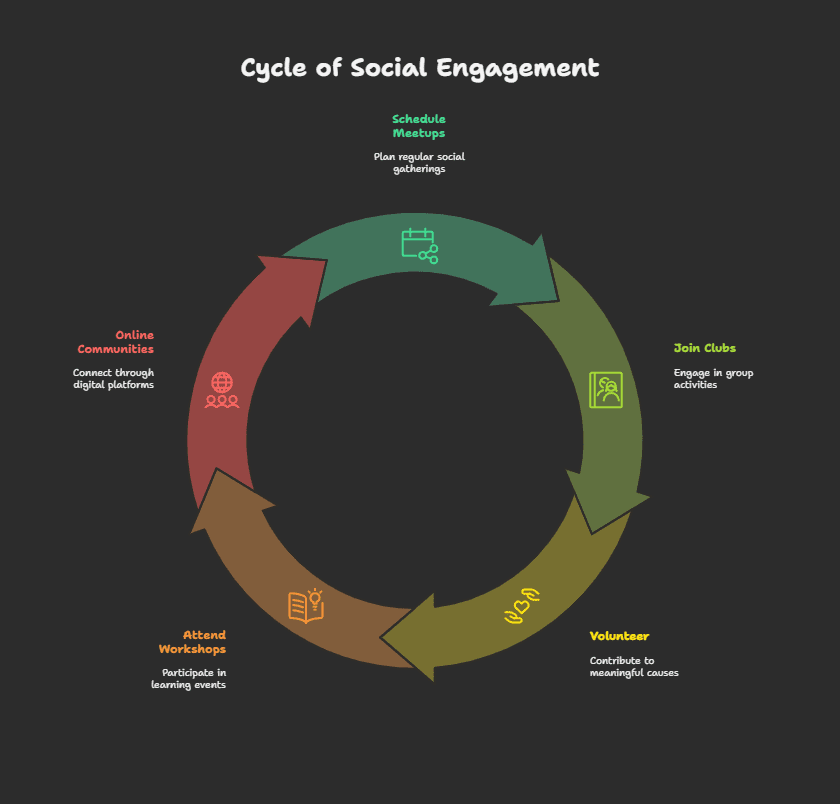
    Participate in Online Communities: Although face-to-face interactions are best, social media and online communities can provide significant connections, too.

    Schedule Regular Meetups: Allocate time every week to meet up with friends or relatives, either in person or online.

    Join Clubs or Groups: Engage in book clubs, hobby clubs, or community groups that interest you.

    Volunteer: Volunteering your time for causes that matter to you can bond you with similar individuals.

    Attend Workshops or Classes: Opportunities for lifelong learning bring both educational and social rewards.

    Conclusion: Adopt Social Interaction for Cognitive Vigor

    It’s not just a hobby to add social interaction to your daily life; it’s an important part of keeping your mind healthy. You can make your brain work harder, build up your cognitive reserve, and feel better emotionally by having interesting conversations and building strong relationships. Don’t forget that being social is good for your mental health, and being in a relationship is like putting your mental health on the line.

  • Building a Better Brain: Advice for Cognitive Growth in Children and Teenagers

    Building a Better Brain: Advice for Cognitive Growth in Children and Teenagers

    The brain grows a lot during the early years of life. A child’s brain is actually developing to about 90% capacity by the time they are five years old. That means that living a healthy life during those early years can help your brain grow and set you up for success in the future. That is something that parents and teachers have a lot of power over. Adults can help kids and teens build strong cognitive skills that will last a lifetime by putting a lot of emphasis on good nutrition, enough sleep, a balanced media diet, a love of learning, and a stimulating home environment.

    Nutrition for Cognitive Development

    What children eat directly affects their brain development and learning. A healthy diet with plenty of necessary nutrients enhances memory, attention, and problem-solving abilities. Some of the most important nutrients are:

    • Omega-3 fatty acids (EPA and DHA): These “good fats” are key components of brain cells. Omega-3s support the growth and communication of neurons. Sufficient intake of omega-3s (from sources such as fatty fish, walnuts, and flaxseeds) is essential for proper brain function. For pregnant or lactating women, foods high in omega-3s can also promote infant brain growth.
    • Iron: Iron transports oxygen to the brain and is required for learning and memory. Iron-deficient children usually exhibit delayed cognitive development. Even non-anemic iron deficiency has been associated with lower cognitive functioning in children and adolescents. Lean red meat, poultry, beans, and cereals are good sources. Having sufficient iron in the diet prevents these delays.
    • Zinc: Zinc plays an important role in brain signaling and neurotransmitter function. Zinc deficiency can decrease attention, learning, and memory in children. Zinc assists in making new neurons and affects brain plasticity. Meat, seafood, whole grains, nuts, and seeds are sources of zinc.
    • B vitamins (especially B6, B12, folate): B vitamins help with nerve function and making energy for the brain. Vitamin B12 is needed for insulating nerve fibers and brain growth. A lack of B12 in early life has been associated with slower motor and language development. Eggs, meat, dairy products, and green leafy vegetables are good food sources.

    Preventing malnutrition is important: undernourished children lag in tests, and better-performing kids have regular meals. Even simple routines, such as never skipping breakfast, enhance attention and memory. Shoot for a rainbow on the plate: bright-colored fruits and vegetables, whole grains, and sufficient protein build and power young brains. If kids are finicky eaters, try blending healthy nutrients into foods they already like.

    Nutrition Tip: Begin the day with a balanced breakfast. Adding whole grains, protein (such as eggs or yogurt), and a piece of fruit can stimulate your child’s attention and memory for morning school time.

    Importance of Quality Sleep for Brain Health

    Good sleep is like gasoline for a growing brain. While sleeping, children’s brains sort and save what they have learned throughout the day. Sleep also aids in brain development and emotional control. Children who get enough sleep generally have improved attention, memory, and school performance compared to those who don’t. Experts suggest:

    • School-age children (6–12 years): 9–12 hours at night.
    • Teenagers (13–17 years): 8–10 hours at night.

    Sticking to these amounts each night supports optimal cognitive health. Too little sleep can lead to inattention, mood swings, and poorer learning. Inadequate sleep has even been linked to a higher risk of obesity and illness, which can further distract from school and play.

    Good sleep quality is just as important. A restful bedroom (quiet, dark, and cool) and consistent bedtime routines help children fall asleep and stay asleep. Establish regular bedtimes, even on weekends. Restrict heavy meals or caffeine at night. Above all, switch off electronic screens (TVs, tablets, smartphones) at least 30 minutes before sleeping. The blue light emitted by screens can mislead the brain into believing that it’s still daytime and can lead to difficulty sleeping.

    • Establish a routine: Bedtime and wake-up time must remain the same every day.
    • Wind down: Listen to soothing music or read a book before bedtime rather than watching videos.
    • Screen curfew: Ban TVs and tablets from the bedroom, and stash devices hours before bedtime.

    Sleep Tip: Promote a calming bedtime routine. For instance, switch off screens at least 30 minutes prior to bedtime to assist your child in sleeping and enhance the quality of sleep. Reading or quiet play before lights-out can alert the brain that it’s time to sleep.

    Effects of Screen Time on Developing Brains

    Screens are omnipresent, yet excessive screen use actually gets in the way of learning and brain health. The research indicates that too much screen time (TV, tablets, smartphones) is associated with difficulties such as disrupted sleep, problems with attention, and even language delay. Young brains require active playtime and socializing; passive viewing on screens simply can’t compensate for it.

    Guidelines by age:

    • Less than 18 months: Do not use screens except for video-chatting with family.
    • 18–24 months: If exposed to digital media, select highly high-quality education programs and watch together with your child.
    • 2–5 years: Restrict to no more than 1 hour per day of high-quality programming, and attempt to co-view and discuss.
    • 6 years old and above: Instead of a strict time limit, the emphasis is on consistent limits and supervision. Make sure screen time doesn’t replace sleep, exercise, homework, or in-person family time.

    Increased screen time may translate into decreased time for hands-on learning, reading, and play. Heavy screen time has been associated by experts with lower school achievement and increased risk of depression and anxiety in adolescents. Teenagers who enjoy reading when young watch fewer hours of TV and sleep earlier by adolescence. Too much screen time is connected with attention deficits, poor weight, behavior problems, and language delay.

    By establishing healthy boundaries, parents can help ensure children consume media in intelligent ways. Promote interactive, learning apps or programs, and whenever you can, watch with your child and probe (“What do you like about this? What did you learn?”). Moderation is essential: screens are a learning tool and should not replace real-world discovery, physical activity, and human interaction.

    Promoting Lifelong Learning Habits

    A curious, learning attitude is one of the greatest things you can bestow upon a child or adolescent. Children who enjoy reading, trying new things, and engaging in hobbies are likely to have more resilient brains. These are some methods to promote this:

    • Reading for enjoyment: Get children to read for pleasure every day from an early age. Children who read for fun between the ages of 2–9 do better on tests of cognitive ability later in life. Early readers are better at verbal and memory tasks and even have bigger brain areas to use when learning. Attempt to make family reading time a daily occurrence.
    • Encourage curiosity: Cultivate questions and inquiry. Easy routines such as taking nature walks and having your child report back on what they are seeing, or inviting “why” and “how” questions during dinner, have a significant impact. Curious kindergarten students perform equally well with higher-income children on reading and math exams.
    • Hobbies and play: Provide support for interests such as art, music, science experiments, or sports. Practice and problem-solving activities develop cognitive skills. Ensure there is time for structured and unstructured activities. Allow children to pursue what they like to keep their brains active and flexible.

    Lifelong learning tip: Balance scheduled schooling with unscheduled time. When kids get to choose their activities at times, they learn to make goals and figure things out independently. Encourage effort and curiosity to support a growth mindset.

    Building a Brain-Boosting Home Environment

    Brain-Boosting Home Environment

    The home environment can fuel or slow brain development. Small adjustments in daily life can add up to huge benefits for a child’s brain:

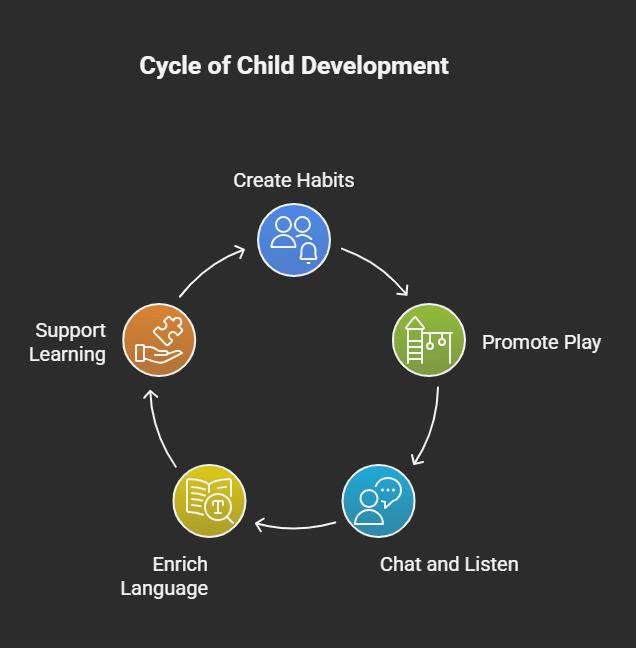
    • Create habits: Having consistent meal times, homework times, and bedtime creates a sense of security in children. Habits are what help the brain get things right.
    • Promote play and discovery: Allow children time and space to play. Play is a child’s “work,” whether building with blocks, drawing, or playing tag outside. These things stimulate the brain to connect. Outdoor time is brain food, too: exercise boosts blood flow and aids memory.
    • Chat and listen: Keep having conversations with your child regularly. It isn’t the sheer volume of words a child has heard, but the interactive exchanges that are most important. Talking to your child (not talking at them) and asking questions and listening for responses, you create neural paths associated with thinking and language.
    • Create a language-rich environment: In the early years, especially, narrate everyday activities: describe what you’re doing, sing songs, and read picture books together. For teens, encourage family discussions about books, news, and events.
    • Support challenges and learning together: Show your child how you enjoy learning. Work on a puzzle together, try a new recipe, or explore a science kit. Guide them patiently when they face tough problems to build resilience.

    Conversation Tip: Develop brainpower with conversation! Practice back-and-forth chat and open-ended questioning with your child every day. This active dialogue enhances language development and mental acuity.

    • Reduce stress and distractions: Peaceful, caring surroundings facilitate brain learning. Curtail hectic timetables and prevent ongoing overstimulation. Be loving and encouraging, stress-free loving homes allow children to explore and concentrate.

    Summary: Bringing It All Together

    Creating a smarter brain is a collaborative effort that begins early and accumulates piece by piece. Parents and teachers can greatly help a child’s intellectual growth by stressing good nutrition, enough sleep, healthy screen time, learning opportunities, and a warm, stimulating home environment. The daily habits listed above can have a big effect on how well young children learn, remember, and adapt because their brains grow so quickly.

    The same rules apply to teens: a healthy diet, enough sleep, limited screen time, and a curious mind will keep their brains strong and flexible. Most kids will do well with regular care that includes talking, playing, and doing things with their hands.

    Caregivers can make brain-strengthening changes that will affect generations to come by giving cognitive health the attention it deserves. For example, they can encourage people to eat whole foods instead of snack-packaged foods and to sleep instead of watching TV, movies, or playing computer games at night.