Tag: Cooking oil

  • Which Cooking Oil Has the Highest Smoke Point?

    Which Cooking Oil Has the Highest Smoke Point?

    When cooking, it’s very important to use the right oil. One thing to look for is cooking oil with a high smoke point. The oil you use can change the taste, texture, and even the healthiness of the food you are cooking. Anyone who wants to get the best results in the kitchen, whether they’re a beginner or a pro, needs to know about the smoke point.

    Decoding Smoke Point: What It Is and Why It Matters

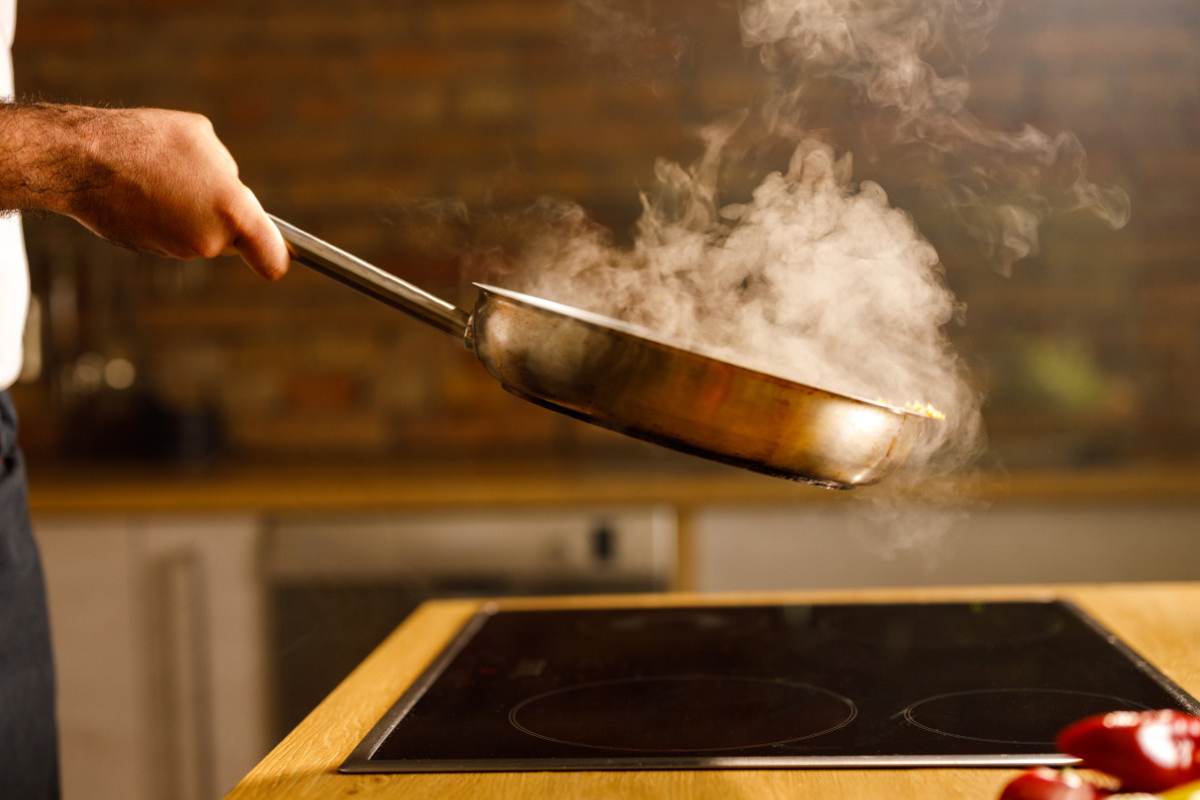
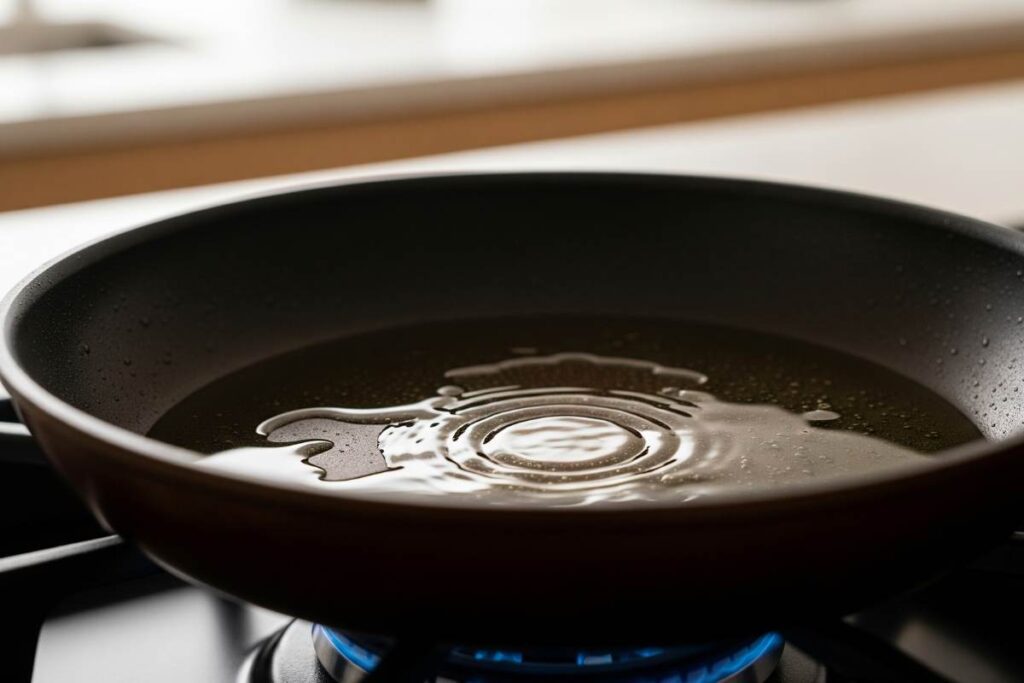
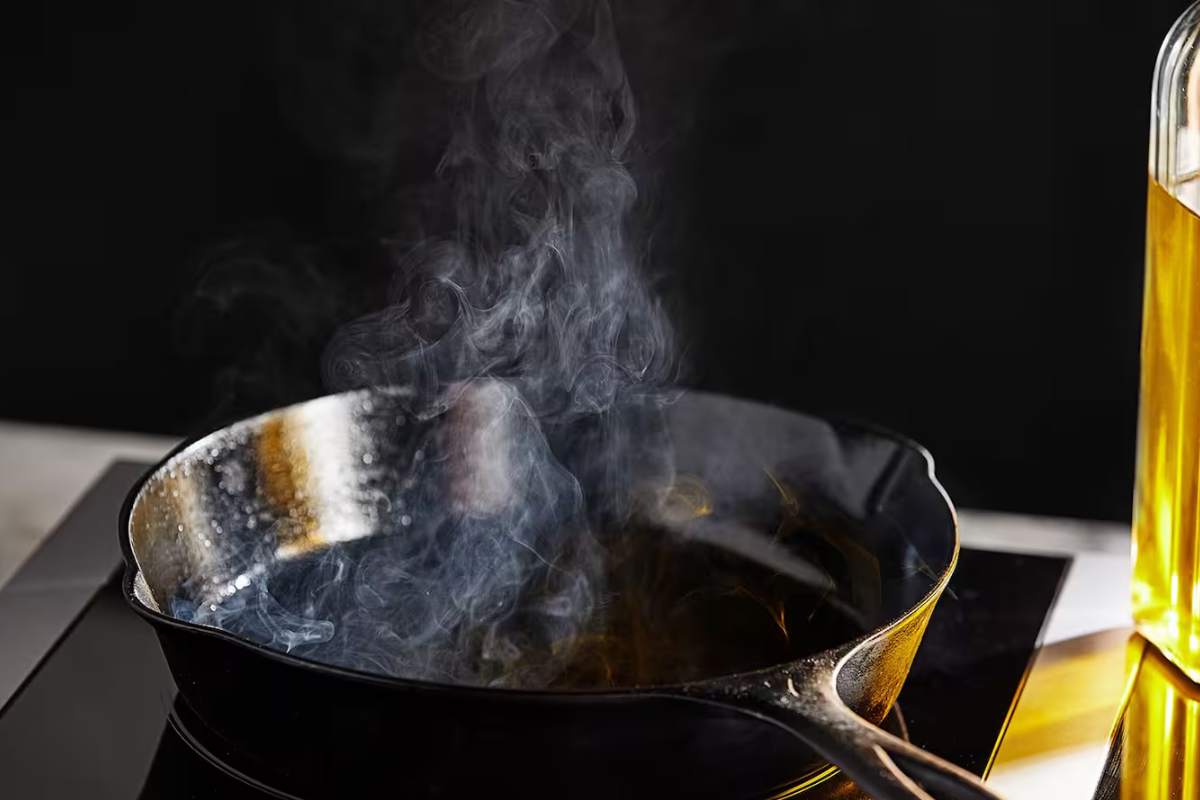
    The smoke point of cooking oil is the temperature at which it starts to break down and make smoke that can be seen. The heat breaks down the fats in the oil, which is what causes this. You might see the oil sparkle in the pan before this happens.

    This breakdown process is not just a visual cue; it’s also a change in the oil’s chemical makeup. When oil gets too hot, it lets out free radicals and a chemical called acrolein. Acrolein gives food a bad taste and smell that smells like burnt and bitter. The fumes will also make your eyes water and make your kitchen smell bad.

    Using cooking oil past its smoke point is bad for your health because it releases toxic substances. There are free radicals that are linked to oxidative stress in the body. More importantly, as the oil gets worse, it gets closer to its flash point, which is the temperature at which it releases gases that can catch fire. There is no risk of spontaneous combustion when cooking normally, but it is still a safety risk that should be avoided. For many ways to cook, it’s important to use oil that has the right smoke point.

    Oils that can handle a lot of heat, like searing, deep frying, and stir frying, need to be able to handle temperatures over 400°F (205°C). Using an oil with a low smoke point in these processes not only makes your food taste bad, but it also makes it less healthy. The data that has been collected over and over again shows that going over the smoke point not only makes the food taste bad, but it could also be bad for your health because it releases harmful substances. This shows how important it is to know and think about smoke points when cooking with oils and fats..

    The Quest for the Highest Smoke Point: Unveiling the Top Contenders 

    The quest for the oil that has the best smoke point is usually followed by a debate about various oils and how they are processed. Normally, refined oils will have higher smoke points than their unrefined counterparts. Refining oils eliminates impurities and free fatty acids, which are recognized to reduce the smoke point of an oil.

    Among vegetable oils, refined avocado oil often finds itself to be a top candidate for having the highest smoke point. The average range of its smoke point is near 520°F (271°C).
    Refined safflower oil is another oil that has a very high smoke point. Its smoke point, when averaged, is typically reported at approximately 510°F (266°C).

    Surprisingly, algae oil was determined to possibly possess the absolute highest smoke point of traditionally debated cooking oils. Its smoke point can go as high as 535°F (279°C). Nevertheless, it should be added that algae oil may not be as widely accessible for consumers as some of the more popular choices, such as avocado or safflower oil.

    Outside of these leading contenders, several other oils have high smoke points (over 450°F), such as refined rice bran oil, refined peanut oil, refined soybean oil, and corn oil. Refined avocado and safflower oils are always among the best performers, but algae oil has a potentially even higher smoke point. This would indicate a relatively newer or less popular choice for those who prefer cooking at very high temperatures.

    A Closer Examination of High Smoke Point Cooking Oils

    For a better comprehension of which cooking oil possesses the highest smoke point and which would be best for you, let’s examine a few of the best in greater detail.

    Refined Avocado Oil

    Refined avocado oil is obtained from the pulp of the avocado fruit and is widely valued due to its versatility as well as its high smoke point. The smoke point of refined avocado oil is often quoted as 520°F (271°C), though some sources quote a marginally lower range of 480-520°F.

    The taste of refined avocado oil is, in general, deemed to be neutral, which makes it a good all-around option that won’t have a heavy impact on the flavor of your dish. Unrefined avocado oil, on the other hand, still has a very light, butty, and occasionally grassy taste.

    With its high smoke point, the refined avocado oil is great for a wide range of high-heat cooking techniques such as deep-frying, searing, stir-frying, grilling, and baking. Nutritionally, it is rich in monounsaturated fats, specifically heart-healthy oleic acid. The key difference is between unrefined and refined avocado oil. The refined one values high smoke point and neutral taste and is highly versatile for high-heat procedures, while the unrefined one is more suitable for uses where its taste is wanted and lower heat is applied.

    Refined Safflower Oil

    Refined safflower oil comes from the seeds of the safflower plant and is also a very good choice for high-heat cooking because of its remarkable smoke point. The smoke point is often stated at about 510°F (266°C), though some state it between 450-500°F.   Just like refined avocado oil, refined safflower oil possesses a mild and neutral taste. This quality makes it fit for a broad variety of food uses without overwhelming the flavor of the other food ingredients.

    Refined safflower oil is suitable for high-heat cooking techniques like frying, stir-frying, sautéing, roasting, and baking. Several refined safflower oils are rich in monounsaturated fats, especially oleic acid, which makes them stable and have a high smoke point. The high oleic acid content of refined safflower oil makes it stable and can handle high temperatures, and thus it is an ideal choice for different cooking techniques where a neutral taste is desired.

    Algae Oil

    Algae oil is a relatively new player in the cooking oil industry and is distinguished by having a very high smoke point. It has a smoke point of as much as 535°F (279°C), which makes it one of the best choices for cooking at high heat.

    The taste of algae oil is characterized as neutral and clean, which means it will not alter the flavor of your foods. That is why it is best suited for cooking at high temperatures, such as searing and deep-frying. Nutritionally, algae oil contains heart-healthy omega-9 fatty acids. Although its extremely high smoke point and neutral taste make it a great option for cooking at high heat, and its omega-9 content is a nutritional plus, its availability may be a limiting factor for some consumers over more established brands.

    Comprehensive Comparison of Cooking Oil Smoke Points

    For a quick reference, the following table provides a comparison of the smoke points of various common cooking oils:

    Oil NameRefined/UnrefinedSmoke Point (°F)Smoke Point (°C)
    Refined Avocado OilRefined480-520249-271
    Unrefined Avocado OilUnrefined350-400177-204
    Refined Safflower OilRefined450-510232-266
    Unrefined Safflower OilUnrefined225107
    Algae OilRefined535-540279-282
    Refined Rice Bran OilRefined450-490232-254
    Unrefined Rice Bran OilUnrefined450232
    Refined Peanut OilRefined450232
    Unrefined Peanut OilUnrefined320-350160-177
    Refined Soybean OilRefined450232
    Unrefined Soybean OilUnrefined320160
    Refined Corn OilRefined400-450204-232
    Unrefined Corn OilUnrefined352178
    Refined Sunflower OilRefined450232
    Unrefined Sunflower OilUnrefined225-320107-160
    Light/Refined Olive OilRefined390-470199-243
    Extra Virgin Olive OilUnrefined325-410163-210
    Canola OilRefined400-475204-246
    Unrefined Canola OilUnrefined375-450190-232
    Ghee (Clarified Butter)Clarified375-485190-252
    Coconut OilRefined400-450204-232
    Coconut OilUnrefined350177
    ButterUnrefined302-350150-177

    This table offers a convenient way for readers to compare the smoke points of various frequently used cooking oils. Including both Fahrenheit and Celsius caters to a wider audience. Specifying whether an oil is refined or unrefined is crucial because this significantly impacts its smoke point. The data presented is compiled from multiple sources to provide a comprehensive and well-rounded overview, acknowledging potential variations in reported values.

    Factors That Influence a Cooking Oil’s Smoke Point

    There are a number of factors that can affect the smoke point of a cooking oil. Knowing these factors will allow you to make better decisions in the kitchen.

    The degree of processing, or refinement, is the most important aspect. Refining raises the smoke point by eliminating impurities like sediment and free fatty acids. Unrefined or “virgin” oils contain more of these solids, which burn at lower temperatures, causing a lower smoke point. This is why there are usually separate smoke points for the same oil, depending on whether it is refined or not.

    The level of free fatty acid (FFA) content in an oil is also very important. FFAs are not as stable as fatty acids that are in triglyceride form and will smoke at lower temperatures. FFAs increase when oils are heated, and this is why repeated heating of cooking oil is usually not advisable, since it reduces the smoke point with every repeated heating.
    Sedimentation, or residual solids from the oil’s processing (more common in crude oils), also influences the smoke point. The solids will burn at lower temperatures than the pure oil, lowering the smoke point overall.

    Last, the storage and age of the oil can influence its smoke point as well. Exposure to air, heat, and light can also break down the oil over time, which will reduce its smoke point. Thus, it is important to store your cooking oils properly in a dark, cool place in tightly closed containers to preserve the quality and smoke point of your cooking oils. Processing level is the most significant factor that determines a cooking oil’s smoke point. It explains why the refined and unrefined forms of the same oil tend to have varied smoke points.

    Pairing Smoke Point to Cooking Technique:
    Cooking Technique

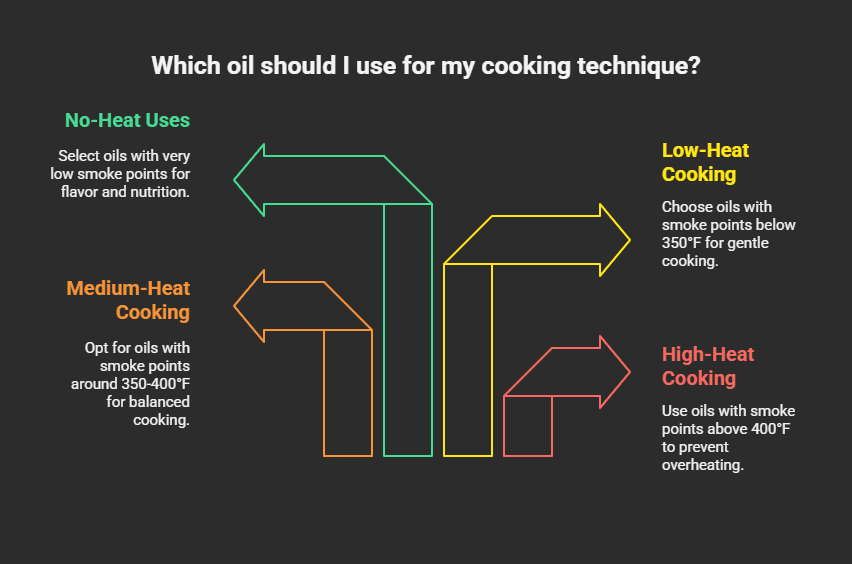
    Selecting the right oil with the correct smoke point for your cooking technique is the key to maximizing results and preventing the adverse effects of overheating oil. For cooking techniques involving high heat, such as deep-frying, searing, and stir-frying, oils with smoke points higher than 400°F (205°C) are preferable. Some good options in this group are refined avocado oil, refined safflower oil, algae oil, refined peanut oil, refined soybean oil, refined corn oil, and light refined olive oil.  

    Medium-heat cooking, such as sautéing, pan-frying, and baking, is ideally suitable for oils of medium smoke point, commonly around 350-400°F (177-204°C). The following are oils of such type: unrefined avocado oil, extra virgin olive oil, refined coconut oil, grapeseed oil, and canola oil.

    Low-heat cooking, including gentle sautéing and low-heat baking, uses oils with lower smoke points, typically below 350°F (177°C). Choices here include unrefined coconut oil, unrefined sesame oil, and butter.
    For no-heat uses such as salad dressings and finishing oils, oils with very low smoke points may be employed. These oils, for example, flaxseed oil, walnut oil, and other non-refined nut oils, tend to be selected for their specific flavors and nutritional values when consumed raw. Various cooking techniques require varying amounts of heat and, therefore, varying smoke points.

    Offering specific oil recommendations for each technique provides useful advice and aids the reader in putting their knowledge of smoke points into practice.

    Beyond the Smoke: Other Key Considerations When Cooking Oils

    Though the smoke point is important, it’s not the only detail to pay attention to when selecting a cooking oil. The taste of an oil can greatly influence the flavor of your finished dish. Neutral oils, like refined avocado, safflower, canola, vegetable, corn, soybean, rice bran, and peanut oil, are safe choices and won’t overwhelm the other flavors in your dish.   Conversely, oils with strong flavors, such as olive oil, sesame oil, and nut oils, may impart distinctive and favorable attributes to specific foods.

    The nutritional value of various cooking oils is also a significant factor to consider. Oils have different types of fats, such as monounsaturated, polyunsaturated, and saturated fats, with varying health effects. Certain oils are also higher in certain vitamins or antioxidants, which can also play a role in overall health.
    Lastly, the price and accessibility of some oils may also determine a consumer’s decision. Although a high smoke point may be preferable for some types of cooking, the usability of accessing and paying for a specific oil is also important to many home cooks. Although smoke point is a top consideration, flavor, nutrition, and usability are also important considerations that people make when choosing cooking oils. Recognizing these elements gives a more holistic view.

    Conclusion: Making Knowledgeable Choices for High-Heat Cooking.

    It’s very important to know the smoke point of the oils you use for cooking, especially when you cook at high temperatures. Choosing an oil that can handle the temperatures needed for your cooking method will make the food taste better, keep harmful chemicals from getting out, and make the kitchen safer.

    Refined safflower oil, refined avocado oil, and algae oil are the best choices for cooking oil with the highest smoke point. Refined avocado oil is a common product that has no taste and a smoke point of about 520°F. Refined safflower oil is another great choice because it has a similar smoke point and no taste. Algae oil has a higher smoke point (535°F) and a pure taste, though it may be harder to find.

    Finally, the best cooking oil for you will depend on how you cook, your taste, your nutritional needs, and what you can find. You can make better choices about the cooking oils you use and have more fun in the kitchen by using the information given.
  • High Smoke Point Cooking Oils vs. Low Smoke Point Oils: What’s the Difference?

    High Smoke Point Cooking Oils vs. Low Smoke Point Oils: What’s the Difference?

    So, What’s the Deal with Smoke Points Anyway?

    Let’s get this out of the way: not all oils for cooking are the same. Some can handle the heat. What else? Not really. Believe it or not, the reason has to do with something called the “smoke point.” Sounds like a lot, doesn’t it? For example, “the point of no return.”

    The smoke point is the temperature at which oil begins to smoke and break down. If you’re not careful, it can also make your kitchen smell like a chemistry lab gone wrong. Not great. Things start to get strange after that. The oil’s taste changes (not in a good way), nutrients start to leave, and you might even find some bad stuff floating around in your food. Oh no.

    Why Should You Even Care?

    Let’s be honest. Most of us just grab the oil that is closest and hope for the best. But here’s the catch: using the right oil for the right job? A total game changer. Your food tastes better, your kitchen stays less smoky, and you don’t accidentally make your meals less healthy.

    Ever tried frying chicken in extra virgin olive oil? Yeah. Don’t. (Unless you like the taste of burnt dreams.)

    High Smoke Point Oils: The Heavy Lifters

    Okay, picture this: you’re about to sear a steak, or maybe you’re deep-frying something crispy (fries, tempura, you name it). You need an oil that can handle the heat, literally. Enter: high smoke point oils.

    These are the tough guys. The ones that don’t flinch when things get hot. Avocado oil? Practically unbothered at 520°F. Refined peanut oil? It’s chilling at 450°F. Safflower, sunflower, and canola—these are your go-tos for anything that sizzles, pops, or needs a golden crust.

    And here’s a fun fact: it’s usually the refined oils that can take the heat. They’ve had their “impurities” (which, let’s be real, sometimes means flavor) stripped out, so they’re more stable. Less drama in the pan.

    Low Smoke Point Oils: The Delicate Types

    Now, on the flip side, you’ve got your low smoke point oils. These are the sensitive souls. The ones you want to treat gently, like a fancy olive oil you picked up on vacation, or that tiny bottle of walnut oil you splurged on because, well, why not?

    These oils start to smoke at lower temperatures. We’re talking 225°F for flaxseed oil (basically, don’t even look at it funny), 320°F for walnut oil, and around 350°F for unrefined coconut oil. Butter? It’s in this club, too. And extra virgin olive oil, yes, the one everyone raves about for “health,” is best for drizzling, dipping, or low-heat sautéing.

    So, what do you do with these? Think salad dressings, finishing touches, or a gentle sauté. Anything more, and you’re risking a smoky kitchen and wasted flavor.

    The Science-y Bit (But Not Boring, Promise)

    Why do some oils smoke sooner than others? It’s all about what’s in them. Refined oils have had a lot of the stuff that burns easily (free fatty acids, little bits of plant matter) taken out. That’s why they’re more heat-resistant. Unrefined oils? They’re packed with flavor and nutrients, but also with things that don’t love high heat.

    And then there’s the fat breakdown. Saturated fats (like coconut oil and butter) are a bit more stable, but often have lower smoke points. Monounsaturated and polyunsaturated fats (think olive, avocado, sunflower) can go either way, depending on how they’re processed.

    Health: Is Hotter Always Better?

    Here’s where it gets interesting. You might think, “Hey, if high smoke point oils are more stable, they must be healthier, right?” Well… not so fast. It’s complicated.

    Refined oils can handle the heat, but sometimes they lose nutrients in the process. Unrefined oils keep all their good stuff—antioxidants, vitamins, and flavor—but you can’t crank up the heat without losing those perks. And if you push any oil past its smoke point, you risk creating not-so-great compounds (acrolein, anyone?).

    So, what’s the move? Use high-smoke-point oils for high-heat jobs. Save the fancy, flavorful stuff for when you want to taste it. And don’t stress too much; balance is key.

    Real-Life Scenarios (Because Who Doesn’t Love a Good Example?)

    Cooking Method

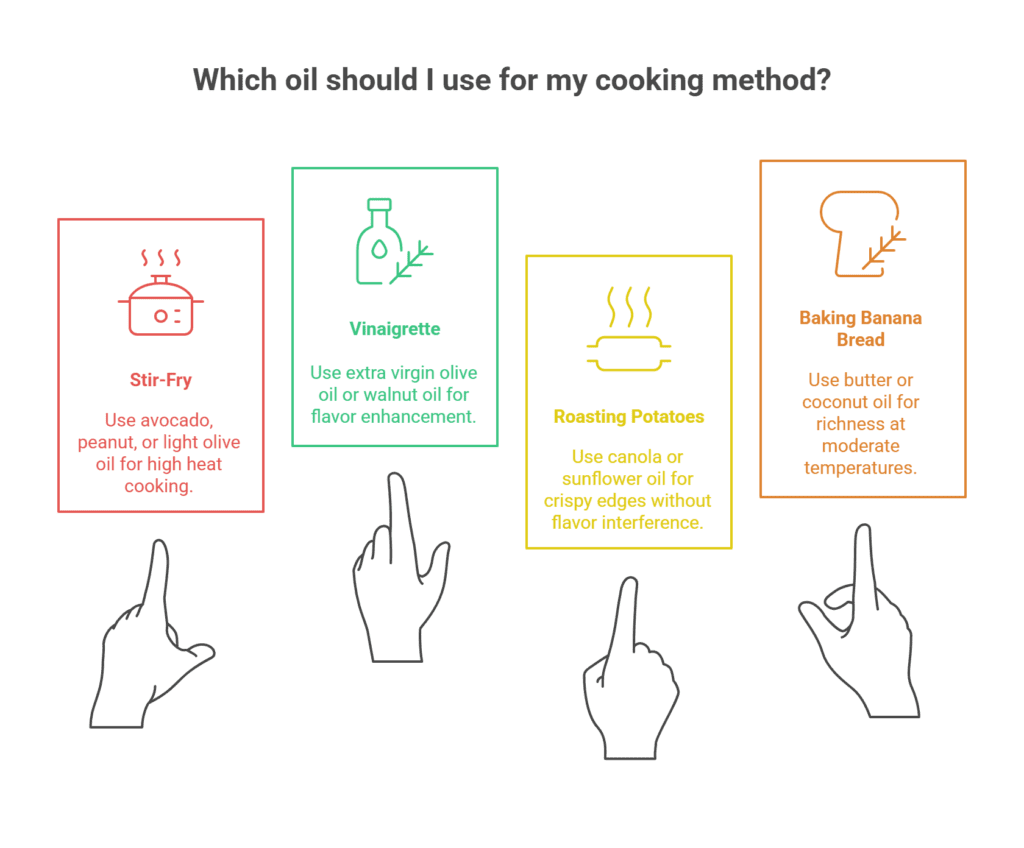
    Let’s say you’re making stir-fry. You want that pan screaming hot. Grab avocado oil, peanut oil, or even light olive oil (not extra virgin). Your veggies will thank you.

    Making a vinaigrette? Now’s the time to break out the extra virgin olive oil or walnut oil. You’ll actually taste the difference.

    Roasting potatoes? Canola or sunflower oil will get you that crispy edge without any weird flavors.

    Baking banana bread? Butter or coconut oil adds richness, but keep the temp reasonable.

    Quick Table (Because Sometimes You Just Want the Facts)

    Oil TypeSmoke Point (°F)What It’s Good For
    Avocado (refined)520Searing, frying, grilling
    Safflower (refined)510Roasting, frying
    Sunflower (refined)450Sautéing, frying
    Peanut (refined)450Deep frying, stir-frying
    Canola (refined)400Baking, sautéing
    Grapeseed420Sautéing, frying
    Olive (extra virgin)325-375Dressings, drizzling, low-heat
    Coconut (unrefined)350Baking, low-heat sautéing
    Flaxseed225Dressings, finishing
    Walnut320Dressings, finishing

    (And yes, you can totally screenshot this for later.)

    Picking the Right Oil: It’s Not Rocket Science

    Here’s the thing: you don’t need a PhD to pick the right oil. Just ask yourself a few questions. How hot is your pan going to get? Do you want the oil to add flavor, or just do its job quietly in the background? Are you after health perks, or just that perfect crispy edge?

    If you’re frying, roasting, or grilling, go for a high smoke point. If you’re making a salad or finishing a dish, go low smoke point, and let the flavor shine.

    And don’t be afraid to experiment. Sometimes the “wrong” oil ends up being your new favorite. (Just, you know, maybe open a window.)

    FAQs, Because Everyone’s Got Questions

    Can I fry with extra virgin olive oil?
    Technically, yes, but you’ll lose a lot of its flavor and health benefits. Plus, it’ll smoke up your kitchen. Save it for drizzling.

    Is coconut oil good for high heat?
    Refined coconut oil can handle more heat than unrefined, but it’s still not the best for deep frying. Use it for baking or gentle sautéing.

    What happens if I use the wrong oil?
    Worst case? Burnt taste, smoky kitchen, maybe some not-so-great compounds in your food. Not the end of the world, but not ideal.

    Are high-smoke-point oils less healthy?
    Not always. It depends on the oil and how it’s processed. Just don’t overdo it, moderation is your friend.

    What’s the healthiest oil?
    Depends on who you ask, but oils high in monounsaturated fats (like olive and avocado) are usually a safe bet.

    A Few Tips (From Someone Who’s Burned a Pan or Two)

    Store your oils somewhere cool and dark; sunlight is not their friend. Keep the lids tight. If it smells weird, toss it. And don’t buy the giant jug unless you’re running a restaurant. Fresh is best.

    The Bottom Line (Or, Why Any of This Matters)

    Let’s be honest: the oil you use can make or break your food. If you need to cook something hot and fast, high-smoke-point oils are the way to go. Oils with a low smoke point? For flavor and finishing touches, they’re the secret weapon.

    Mix it up. Try new things. Don’t be afraid to mess up; some of the best kitchen stories start with, “So I accidentally used the wrong oil…”

  • The Ultimate Guide to High Smoke Point Cooking Oils: What You Need to Know

    The Ultimate Guide to High Smoke Point Cooking Oils: What You Need to Know

    Experienced chefs do this. They choose oil not only for its health benefits but also for the dish. High smoke point oils ensure a clean taste in final recipes, blazing heat for deep-frying, and no drama during sautéing.

    However, they also mix it up. Dressing for salads? Extra virgin olive oil. Spicy stir-fry? Peanut oil or avocado, please.

    Ready to Take Your Cooking to the Next Level?

    You’re sautéing some onions one minute, and then you’re avoiding clouds of smoke from burnt oil. The irony is that even the best of us experience it. What is the solution, then? Knowing your cooking oil is the first step. In particular, the smoke point—that enchanted cutoff point that no kitchen should overlook.

    What’s a Smoke Point Anyway?

    Alright, before we dive into all the oils and their secrets, let’s get straight to the basics:

    • Smoke Point: The temperature at which oil starts to smoke, break down, and release substances that might not be so great for your health (or your dinner’s flavor).
    • Why does it matter? Well, heated past this point, oils break down into free radicals and acrolein, a chemical that gives burnt food its distinctive, not-so-pleasant aroma. Yep, not ideal.

    But there’s more… Choosing an oil with the right smoke point doesn’t just keep your kitchen air clear; it means better flavor, texture, and nutrition. Let’s crack this open.

    Quick Hits: Benefits of High Smoke Point Oils

    The Ultimate Guide to High Smoke Point Cooking Oils
    • Safer high-temperature cooking: Think deep-frying, wok stir-frying, searing steaks, the works.
    • Cleaner taste: No burnt, bitter notes sneaking in.
    • Versatility in recipes: From Mediterranean to Asian cuisine, these oils fit right in.
    • Less breakdown of healthy fats: Quality is maintained for heart health.
    • Longer shelf-life: Many high-smoke-point oils stick around longer in your pantry.

    Breaking Down the Science (If You’re Interested)

    Different oils contain different fatty acids. The more refined an oil, funny enough, the higher its smoke point tends to be. Why? Refining strips away impurities that cause smoke, those tiny bits left over from the seeds, nuts, or fruits.

    Here’s the kicker: Not all “refined” oils are created equal. You need to peek at the label, maybe ask a store clerk, and double-check what’s inside.

    The Heavy Hitters: Types of High Smoke Point Oils

    Alright, here comes the real nuts and bolts. Let’s roll through the line-up of kitchen MVPs.

    Avocado Oil

    Smoke Point: 520°F (271°C)

    • Good for: searing, grilling, deep-frying, and salad dressings.
    • Profile: Mild, buttery flavor. Packed with monounsaturated fats.
    • Health notes: High in vitamin E and good fats. Naturally anti-inflammatory.
    • Downside: Not always budget-friendly.

    Refined Peanut Oil

    Smoke Point: 450°F (232°C)

    • Good for: frying, roasting, Asian stir-fries, tempura.
    • Profile: Neutral to slightly nutty flavor. All-purpose champ.
    • Health notes: Lowers cholesterol, good vitamins.
    • Allergy warning: Might not be safe for folks with peanut sensitivities. Always check.

    Safflower Oil

    Smoke Point: 510°F (266°C)

    • Good for: high-heat stir-frying, deep-frying, and baking.
    • Profile: Super mild, light texture.
    • Health notes: Rich in unsaturated fats.
    • Shelf life: Stays fresh longer if stored cool.

    Rice Bran Oil

    Smoke Point: 450°F (232°C)

    • Good for: deep frying, grilling, and dressings.
    • Profile: Slightly nutty, neutral aroma.
    • Health notes: Loaded with antioxidants like vitamin E.

    Refined Sunflower Oil

    Smoke Point: 450°F (232°C)

    • Good for: everyday frying, roasting, and sautéing.
    • Profile: Clean, unobtrusive flavor.
    • Health: High in vitamin E. Good for skin, too.
    • Note: Look for “refined”, unrefined has a lower smoke point.

    Refined Sesame Oil

    Smoke Point: 450°F (232°C)

    • Good for: pan-frying, deep-frying, Korean BBQ, and noodle dishes.
    • Profile: Neutral flavor (unless toasted).
    • Health: Antioxidants, heart-friendly fats.

    Refined Canola Oil

    Smoke Point: 400°F (204°C)

    • Good for: baking, sautéing, everyday use.
    • Profile: Neutral, light, doesn’t overpower.
    • Health: Low in saturated fat, omega-3, and omega-6 fatty acids.

    Grapeseed Oil

    Smoke Point: 420°F (216°C)

    • Good for: frying, salad dressings, grilling vegetables.
    • Profile: Light taste, smooth texture.
    • Health: Vitamin E, polyunsaturated fats.

    Vegetable Oil (Blend)

    Smoke Point: 400–450°F (204–232°C)

    • Good for: everything from baking to deep-frying.
    • Profile: Varies, a blend of different seeds, so check the label.
    • Affordable and easy to find.

    High Smoke Point Oils vs. Low Smoke Point Oils

    Let’s get this squared away. What’s the real difference?

    High Smoke Point OilsLow Smoke Point Oils
    Avocado, Peanut, Refined SunflowerExtra Virgin Olive, Flaxseed, Walnut
    Deep-frying, grilling, wok cookingSalad dressings, drizzles, dips
    Stable at high heatBreakdown quickly at 300–350°F
    Neutral flavor profileDelicate, robust, sometimes bitter when overheated

    Now, a little secret. Sometimes, low smoke point oils bring wild flavor notes to dishes. Think: walnut oil in salad, sesame oil in a marinade. But for anything over medium heat? Stick with the pros.

    Choosing Your Oil: What Should You Look For?

    Here’s what matters, besides the smoke point.

    • Flavor preferences: Some oils are just practically invisible. Others, like toasted sesame, are bold.
    • Allergens: Peanut, nut-based oils? Check twice if you’re serving a crowd.
    • Nutritional value: Omega-3s, Vitamin E, monounsaturated fats.
    • Refined vs. unrefined: Refined means higher smoke point, less flavor.
    • Cost and availability: You know this one, what fits your budget and what you can actually find on shelves.

    Pro Cooking Tips: Making the Most of High Smoke Point Oils

    So, you’ve made your pick. Now what? Take these tips on board for home-cooking, restaurant-worthy results.

    • Start with a dry pan. Less moisture means faster heating, no splatter.
    • Pour oil before preheating; most high smoke point oils can take it.
    • Watch out for the shimmer. When oil starts to shimmer, it’s hot enough. Any hotter, and smoke may follow.
    • Don’t reuse oil too many times. Each use lowers its smoke point and increases the risk of breakdown.
    • Store oils in cool, dark places. Light and heat spoil even the toughest oils.

    Where High Smoke Point Oils Shine (Real-Life Uses)

    Let’s move from theory to reality. Picture these scenarios:

    • Deep Frying: Fried chicken, samosas, tempura, and French fries all need oil above 400°F. Go with peanut, avocado, or safflower.
    • Stir-Frying: Restaurant-quality stir fries need a blazing wok; reach for rice bran or canola.
    • Searing Steak or Fish: Avocado oil doesn’t burn at the edges, crisp outside, juicy inside.
    • Roasting Veggies: Sunflower oil makes potatoes golden and tender, with no burnt undertones.
    • Making Popcorn: Grapeseed or canola gives crisp pops with no lingering smell.

    Health Angle: Are All High Smoke Point Oils Created Equal?

    Not really. Here’s the scoop.

    Oils high in monounsaturated and polyunsaturated fats tend to be better for heart health. Some (like avocado, sesame, and grapeseed) pack bonus antioxidants.

    But refining, even when it raises the smoke point, can strip away some nutrients. Sometimes, less flavor means less nutrition.

    Watch out for:

    • Trans fats (rare, but possible if oil is overheated or reused)
    • Over-processing (check labels)
    • Unnecessary additives (preservatives, coloring)

    If you’re cooking at lower temps, consider using unrefined oils for that full nutritional wallop.

    Environmental and Ethical Considerations

    Surprising? Maybe. But more people are thinking about how their cooking oil is grown, harvested, and processed.

    • Palm oil is common in blends, but its farming can harm ecosystems.
    • Peanut, avocado, and grapeseed are generally sustainable if grown carefully.
    • Organic oils cost more, but skip synthetic pesticides.
    • Local options? Sometimes fresher, sometimes pricier.

    Read up where you can. Every little bit helps.

    Busting Myths About Cooking Oils

    People say a lot about oil… Some of it is true, some of it is not so much.

    1. Myth: Oil boils like water.
      • No. Oil doesn’t boil; it smokes, then eventually, it burns.
    2. Myth: All oils lose their health benefits when heated.
      • Kind of. Most high smoke point oils retain good fats at high temps. Overheating does cause breakdown, though.
    3. Myth: Olive oil is always best.
      • Depends. Extra virgin olive oil has a low smoke point. Great raw, not ideal for frying.

    Frequently Asked Questions

    Does the smoke point only matter for frying?

    Nope. It matters any time you heat oil close to its limit, think baking, stir-frying, roasting.

    Can you tell when oil hits the smoke point?

    You sure can. The oil shimmers; then thin wisps of smoke pop up. Smells get sharper. Time to remove from heat.

    Is coconut oil high in smoke point?

    Refined coconut oil hits around 400°F, good, but not the highest. Unrefined (virgin) sits lower, so check the label.

    Should you throw away oil after it smokes?

    Best idea? Yes. Once oil smokes, it’s started breaking down. Toss it and start over.

    How to Store Your High Smoke Point Oils

    Quick steps:

    • Cool, dark place, pantry or cabinet.
    • Seal tightly; oxygen breaks down oil fast.
    • Don’t refrigerate unless the label says so (most oils don’t need it).
    • Buy smaller bottles if you cook less often; fresh is best.

    Cooking Oil Safety: What Not to Do

    • Never heat oil unattended.
    • Don’t add water to hot oil, you know what happens next: pops, splatters, mess.
    • Avoid plastic containers near hot oil.
    • Dispose of old oil responsibly, not down the drain.

    Final Word: Choosing the Best Oil for the Job

    Experienced chefs do this. They choose oil not only for its health benefits but also for the dish. High smoke point oils ensure a clean taste in final recipes, blazing heat for deep-frying, and no drama during sautéing.

    However, they also mix it up. Dressing for salads? Extra virgin olive oil. Spicy stir-fry? Peanut oil or avocado, please.

    Handy Quick Reference Table

    Cooking TaskBest High Smoke Point OilsApproximate Smoke Point
    Deep-fryingPeanut, Avocado, Safflower450–520°F
    SearingAvocado, Sunflower450–520°F
    Stir-fryingRice Bran, Grapeseed420–450°F
    RoastingSunflower, Canola400–450°F
    Everyday useVegetable Blend, Canola400–450°F
    Asian recipesPeanut, Sesame450°F

    Fast Facts You’ll Want to Remember

    • Always check oil labels for smoke point and whether it’s refined.
    • Not all oils are equally healthy; look for unsaturated fats and antioxidants.
    • High smoke point oils are your friend for high-temp tasks.
    • Store your oils right to keep them fresh.