Tag: Diet

  • Is a gluten-free diet making you gain weight? The Truth That Was Hidden

    Is a gluten-free diet making you gain weight? The Truth That Was Hidden

    You’ve seen it all over the place. Gluten-free signs all over the grocery store, celebrities swearing by wheat-free diets, and friends saying they’ve “never felt better” since they stopped eating gluten. But here’s the thing: that gluten-free diet you thought would help you lose weight? It could be doing the opposite.

    It doesn’t make sense, does it? Well, get ready, because the science behind gluten-free weight gain is more complicated than most people want to admit.

    The Big Gluten-Free Mistake

    Let’s get real for a minute. Alexandra Anca, a dietitian in Toronto, says it plainly: “The idea that avoiding gluten will automatically help you lose weight is a big mistake.” She has actually seen the exact opposite in her practice.

    Not only is this one expert’s opinion. Studies have shown time and time again that people who stop eating gluten often gain weight instead of losing it. A study of 369 adults with celiac disease found that 27% of those who were overweight at first gained even more weight after almost three years on a gluten-free diet.

    But hold on, there’s more. Another study of 371 adults with celiac disease found that 82% of overweight patients gained more weight after two years on a gluten-free diet. The numbers for kids are just as shocking: the percentage of overweight kids with celiac disease almost doubled from 11% to 21% after they stuck to a gluten-free diet for at least a year.

    Why gluten-free foods have more calories

    This is where things get really interesting. Those gluten-free options that look so innocent on your pantry shelf? They often look like healthy foods but are actually high in calories.

    For instance, bread. A piece of regular whole wheat bread has about 71 calories and 0.9 grams of fat. Look at it next to its gluten-free version: Each slice has 77 calories and 2.3 grams of fat. It may not sound like much, but it adds up faster than you think.

    But the problem goes beyond just bread. Rice, tapioca, potato, and sorghum are some of the most common gluten-free flours. They have a higher glycemic index than wheat. They have more carbs and calories in each serving.

    And here’s the kicker: gluten-free baking needs more sugar and fat to make up for the texture and taste that gluten naturally gives. It’s like cooking chemistry, and sadly, the answer is usually more calories.

    The Restaurant Truth Check

    Eating out? The gap in calories gets even bigger. The “GlutenWise” individual pizzas from Boston Pizza have about 720 calories, while the regular-crust versions have about 500 calories. That’s 44% more calories, as well as more fat, sodium, and sugar.

    This happens over and over again with many food manufacturers and restaurant chains. When gluten is removed, other ingredients are added to keep the taste and texture. What are those extra ingredients? Most of the time, sugar, fat, and calories.

    The Health Halo Effect

    Psychologists talk about the “health halo effect,” which is making waistlines everywhere bigger. People think that something is healthier if it says “gluten-free” on the label, even if it isn’t.

    This mental shortcut makes people do something dangerous: eat more food. If it’s “healthy,” why not have more, right? No. Studies show that people eat more of foods they think are healthy, which can actually make them gain weight instead of stopping it.

    Recent research shows how common this misunderstanding has become. A survey from 2013 found that 65% of American adults think gluten-free foods are healthier by nature, and 27% choose gluten-free products specifically to lose weight. Spoiler alert: science doesn’t back up either of these ideas.

    What gluten-free products really have inside

    Let’s take a look behind the curtain of marketing, shall we? Plant Foods for Human Nutrition published a full study that looked at gluten-free foods and their regular counterparts. The results were… let’s just say they weren’t good.

    Gluten-free foods usually have:

    • More sugar
    • More calories
    • Less protein
    • Less fiber
    • Fewer important nutrients

    Sachin Rustgi from Clemson University, who wrote the study, said that “many perceived benefits of gluten-free products – such as weight control and diabetes management – are exaggerated.”

    But why do companies add sugar and fat to these things? It doesn’t mean it’s necessary. Food scientists need other ways to make textures and flavors that people will like because gluten doesn’t bind things together. Sadly, those other options usually cost more calories.

    The Fiber and Protein Issue

    People don’t know this, but grains that contain gluten, like wheat, rye, and barley, are great sources of arabinoxylan, a fiber that is very good for your health in many ways. By cutting out gluten, you are also cutting out this helpful fiber.

    This has a double whammy effect. First, you’re eating foods that have extra sugars and fats in them. Second, you’re missing out on fiber, which helps control blood sugar, keeps your gut bacteria healthy, and makes you feel full longer.

    The protein situation isn’t much better either. A lot of gluten-free foods have a lot less protein than foods that are made with wheat. And here’s the really frustrating part: sometimes manufacturers add fiber supplements to make up for it, but these can actually make it harder for the body to break down protein.

    The Link to Celiac

    Now, let’s be very clear about something important. The Canadian Celiac Association says that about 1 in 133 people have celiac disease, and for them, a gluten-free diet is not an option. It’s necessary for health.

    Here’s the strange thing: even people who need gluten-free diets often gain weight when they start them. Why? People with celiac disease start to absorb nutrients better when their damaged intestines heal. This better absorption includes calories, which can make you gain weight if you keep eating the same amount.

    Researchers have seen this pattern over and over again. “People with celiac disease will often gain weight as their intestines heal and they can get more nutrients from their food,” said one study.

    The Long-Term Effect on Weight

    Meta-analyses of long-term gluten-free diets show a worrying trend. Long-term adherence to gluten-free dietary patterns has been consistently linked to elevated body mass index (BMI) and nutritional deficiencies.

    A systematic review and meta-analysis of 27 studies concluded that gluten-free diets exerted “no significant effect” on weight loss. In fact, the effect on BMI and body fat was “significantly higher” in interventions lasting more than 48 weeks.

    What does this mean in real life? If you stay on a gluten-free diet for too long, you are more likely to gain weight than lose it.

    The Nutritional Deficiency Trap

    Gluten-free diets that aren’t needed can cause nutritional gaps in addition to weight gain. Packaged gluten-free foods often don’t have enough fiber and don’t have added vitamins and minerals.

    People who don’t eat gluten often have trouble getting enough of:

    • Folic acid
    • Dietary fiber
    • Calcium
    • Vitamins B
    • Iron

    Alexandra Anca says that people who eat gluten-free “need to get dietary fiber, folic acid, calcium, and B vitamins from other foods.” “That’s a lot of work to do on nutrition for a diet that’s supposed to be “healthier.”

    When it makes sense to be gluten-free

    Let’s be honest. It’s not bad to eat gluten-free foods; they just don’t work for most people as magic weight-loss tools.

    People with celiac disease need these diets for medical reasons.

    • Wheat allergies
    • Non-celiac gluten sensitivity

    Avoiding gluten can greatly improve the quality of life and stop serious health problems from happening in these cases. That’s medical care, not a choice of lifestyle.

    The Problem with Processing

    You might be surprised to learn that a lot of foods that don’t have gluten are very good for you. Fresh fruits, vegetables, lean meats, fish, nuts, and seeds are all naturally gluten-free and full of nutrients.

    The problems start when we depend too much on gluten-free processed foods. To get a good taste and texture without gluten, these products often go through a lot of processing. More processing usually means more sugars, fats, preservatives, and additives.

    According to Harvard’s School of Public Health, gluten-free foods usually have less fiber and more sugar and fat than regular foods. They’ve also seen “a trend toward weight gain and obesity among those who follow gluten-free diets.

    The Cost Factor

    It’s bad enough that you gain weight, but gluten-free products also cost a lot more than regular ones. Recent studies show that American shoppers “often pay more for gluten-free products” but get “less protein and more sugar and calories.”

    It’s like paying a lot of money for bad food. That’s not really the health boost that most people want.

    Smart Ways to Eat Well

    So what should someone who cares about their health do? Not all gluten-free foods are bad for you; the key is to make better choices in general.

    When it comes to eating healthy, food experts always say to “get back to the basics.” This means paying attention to:

    • Foods that are whole and not too processed
    • Fruits and vegetables that are fresh
    • Lean proteins
    • Fats that are good for you
    • Enough fiber from a variety of sources

    No proof that cutting back on gluten will help your health or waistline if you don’t have celiac disease or gluten sensitivity. Nutrition experts at the Cleveland Clinic say it clearly: “There is absolutely no evidence that simply getting rid of gluten will result in weight loss.”

    The Bottom Line on Losing Weight Without Gluten

    The gluten-free industry doesn’t want you to know this, but it’s true: their products are often less nutritious and higher in calories than regular ones.

    The research is clear and consistent. A lot of studies show that gluten-free foods usually have more calories, sugar, and fat and less protein and fiber than regular foods.

    For people who don’t have a medical reason to avoid gluten, going gluten-free often makes them gain weight instead of lose it. The “health halo effect” makes people eat more of foods they think are healthy, but these foods are often higher in calories than the foods they replace.

    The Yale School of Medicine says it best: “A common misconception is that a gluten-free diet is healthier in and of itself, even for people who don’t have medical reasons for following it.”

    If you really want to lose weight, cutting out gluten isn’t the answer. The answer is to eat a balanced diet and exercise regularly to create a calorie deficit that lasts. Eat whole foods, watch how much you eat, and don’t buy gluten-free processed foods unless you really need them for medical reasons. This will save you money.

    The best diet is one that you can stick to for a long time and still get all the nutrients you need. Most people don’t need to stop eating gluten; they just need to stop believing the wrong things about what makes food healthy.

    The gluten-free diet trend has led to the creation of a billion-dollar industry that promises better health and weight loss. But the science is clear: for most people, going gluten-free is more likely to make your waistline bigger than smaller.


  • 5 Surprising Advantages of a No Sugar Diet

    5 Surprising Advantages of a No Sugar Diet

    Getting rid of sugar may not be the easiest thing to do, especially since it’s so well hidden in so many common foods. But the rewards can be amazing once you leap. Most people think of losing weight when they hear the term “sugar-free diet,” but there are some benefits that most people don’t know about that can help their health in ways they can’t even imagine. If you’ve been hesitant, here are five shocking benefits of a no-sugar diet that might completely change how you think.

    1. Your Skin Gets a Natural Glow

    One of the first things that many notice when they eliminate added sugar from their diet is their skin. Excessive sugar consumption can cause inflammation, which tends to manifest as acne, redness, or puffiness. Without sugar provoking those inflammatory reactions, your complexion could become clearer and more even. With time, your skin could look more radiant and youthful, all without the use of costly skincare products.

    2. You’ll Feel More Energized Throughout the Day

    Sugar tends to make your energy surge and then plummet, causing you to feel lethargic and drained. When you cut out sugar from your diet, your blood sugars remain stable, leading to a consistent supply of energy. You will find yourself experiencing fewer energy crashes in the afternoon, better endurance, and steadier moods. You can make it easily through the day without reaching for coffee or sugary treats.

    3. Mental Fog Starts to Lift

    If you’ve ever struggled to concentrate or felt like your thoughts were in a haze, your sugar intake might be partly to blame. Reducing sugar helps stabilize insulin levels, which plays a key role in cognitive performance. Many people who cut back on sugar report sharper focus, better memory, and improved mental clarity, making it easier to stay productive and alert.

    4. Your Immune System Is Boosted

    Another of the less expected advantages of a no-sugar diet is its impact on your immune system. Excessive consumption of sugar is known to impair your body’s defenses, which means it becomes more difficult to ward off colds and infections. With reduced consumption of sugar, your immune system operates more effectively, possibly leading to fewer days off work and faster recovery times.

    5. Your Gut Health Enhances

    Your digestive system also improves when you eliminate sugar. Sugar provides energy for the bad bacteria in your gut, which creates an imbalance that can cause bloating, gas, and discomfort. When you eliminate sugar, you promote the growth of good bacteria, which aids in improved digestion and overall gut health. A healthier gut can also positively impact your mood and immune system.

    Final Thoughts

    There are many unexpected benefits of a no-sugar diet that go beyond losing weight. The benefits can be both mental and physical, such as clearer skin, more energy, sharper thinking, and a stronger immune system. If you don’t want to give up all sugars, cutting back on processed foods and sugary drinks is an easy way to get healthier. Try it for a few weeks; you’ll be amazed at how good you feel.

  • Eating Eggs Raise Your Cholesterol: Science Surrounding the Controversy

    Eating Eggs Raise Your Cholesterol: Science Surrounding the Controversy

    Do eggs raise your cholesterol levels? People who care about their health have been asking this question because dietary advice is always changing, and reports sometimes contradict each other. If you’ve ever stood there for a moment, unsure of whether or not to crack an egg into the pan, you’re not alone. The person is hesitant because they know that high levels of blood cholesterol are a major risk factor for heart disease.

    Many studies have looked at the complicated relationship between the cholesterol we eat (dietary cholesterol) and the cholesterol in our blood (blood cholesterol) over the years. Science has come a long way, and the early warnings didn’t tell the whole story. This article wants to look into that science, bust the myths, and talk about how eggs can be part of a heart-healthy diet in the modern age. We’ll look at what cholesterol is, how eggs are good for you, how our bodies break down dietary cholesterol, and what the most recent research says about how eating eggs affects our blood cholesterol levels and heart health.

    First Things First: Understanding Cholesterol

    Before going into eggs in particular, let’s get a better understanding of what cholesterol is. It’s always talked about in a negative context, but cholesterol is a waxy, fat-like molecule that’s life-essential. Your body requires it to carry out a variety of important functions, including:

    • Creating Cell Membranes: Cholesterol gives form and flexibility to the outside covering of all your cells.
    • Creating Hormones: It’s a precursor to steroid hormones such as estrogen, testosterone, and cortisol.
    • Producing Vitamin D: Cholesterol in your skin is processed into vitamin D when exposed to the sun.
    • Producing Bile Acids: Your liver synthesizes bile acids from cholesterol, which are important for the digestion of fats.

    Your liver is the main producer of cholesterol in your body – it produces all the cholesterol you require. Cholesterol is also present in foods of animal origin, including meat, poultry, dairy foods, and, yes, egg yolks. This is referred to as dietary cholesterol.

    Good vs. Bad Cholesterol: HDL and LDL Explained

    Cholesterol moves in your blood bound to proteins. These are referred to as lipoproteins. You’ve probably heard of the two most common ones:

    • Low-Density Lipoprotein (LDL): Also known as “bad” cholesterol. High LDL cholesterol levels may cause plaque (a fatty buildup) to form in your arteries, a condition known as atherosclerosis. This hardens the arteries and raises the risk of heart attack, stroke, and peripheral.
    • High-Density Lipoprotein (HDL): Sometimes referred to as “good” cholesterol. HDL is a scavenger that collects excess cholesterol from your arteries and brings it back to the liver, where it is eliminated from the body. Increased levels of HDL cholesterol are usually thought to be protective against heart disease.

    When physicians speak of your “cholesterol levels,” they are most often discussing a lipid panel test, which tests for total cholesterol, LDL cholesterol, HDL cholesterol, and triglycerides (another fat in your blood). It’s the relative balance between LDL and HDL, more so the amount of LDL, that is an important marker of cardiovascular risk.

    Dietary Cholesterol vs. Blood Cholesterol: The Important Difference

    This is where a lot of the egg confusion comes in. For many years, it was believed that consuming foods with high dietary cholesterol would have a direct and significant effect on raising blood cholesterol levels, especially the “bad” LDL cholesterol. This made sense.

    But the human body has a highly developed system for controlling cholesterol levels. When you eat cholesterol, your liver will usually counteract it by making less cholesterol of its own. For most individuals, this protective mechanism results in dietary cholesterol having a surprisingly minor impact on their total blood cholesterol levels. The effect is different from one person to another, but overall, the connection isn’t as direct or as powerful as was thought.

    The Nutritional Powerhouse: What’s in an Egg?

    Eggs contain a lot more than cholesterol. They contain an impressive array of important nutrients, making them one of the most nutrient-dense foods around. One large egg (around 50 grams) has about:

    • Calories: Around 70-80
    • Protein: 6 grams of top-quality protein (with all nine essential amino acids)
    • Fat: 5 grams (including beneficial unsaturated fats)
    • Cholesterol: About 185-200 milligrams (mostly contained in the yolk)
    • Vitamins: Good sources of Vitamin D (essential for bone health and immunity), Vitamin B12 (essential for nervous function and formation of red blood cells), Riboflavin (B2), Folate (B9), Vitamin A, and Vitamin E.
    • Minerals: Well-sourced minerals of Selenium (an essential antioxidant), Phosphorus, and Iron.
    • Choline: An Essential nutrient essential to brain function, memory, the functioning of the liver, and fetal development. Eggs are one of the highest food sources for choline.
    • Antioxidants: Lutein and Zeaxanthin, both of which occur in the yolk, promote good eye health and have been shown to cut the risk of age-related macular degeneration and cataracts.

    A large percentage of these beneficial nutrients, including choline, vitamin D, lutein, and zeaxanthin, are all contained within the yolk – the same part where the cholesterol also occurs. To throw away the yolk is to miss out on all the considerable health advantages.

    The Historical Perspective: Why Eggs Got a Bad Rap

    The issue with eggs and cholesterol has been around for decades. Early studies were very much concerned with the quantity of cholesterol in foods. Since egg yolks were found to be one of the highest dietary sources of cholesterol (one of the highest dietary sources in the average diet), recommendations were put forward suggesting very tight restrictions on egg intake, sometimes as few as two or three whole eggs per week. This was under the presumption that cholesterol from diet was a key cause of high cholesterol in the blood and heart disease.

    These guidelines were built into public health counsel for decades, causing a general assumption that eggs were bad for one’s health, especially heart health. Yet as nutritional science continued to advance, scientists started questioning this linear correlation.

    Contemporary Science: Does Consuming Eggs Increase Your Cholesterol Levels Considerably?

    This leads us back to our original question, with a better knowledge of cholesterol and the egg diet. So, does egg consumption increase your cholesterol according to available evidence?

    The overwhelming opinion of many large studies and meta-analyses in the last several decades is that for most healthy individuals, egg consumption in reasonable amounts will not raise blood cholesterol levels or the risk of heart disease significantly.

    Here’s why the thought process has changed:

    • Limited Effect of Dietary Cholesterol: As stated above, the body adjusts for dietary cholesterol consumption. Studies have revealed that for approximately 70-75% of the population (sometimes referred to as “normal responders” or “hypo-responders”), consuming cholesterol-rich foods such as eggs has no effect or very little effect on their blood LDL or total cholesterol levels. Their bodies effectively regulate internal cholesterol production.
    • Attention Focused on Saturated and Trans Fats: Scientific studies have indicated over decades now that saturated fats and, in particular, man-made trans fats play much stronger roles in elevating blood levels of LDL (“bad”) cholesterol than does dietary cholesterol. Food sources high in these fats include fatty meats, processed meats (such as sausage and bacon), butter, full-fat dairy products, fried foods, shortening-based baked products, and many ultra-processed snack foods. Eggs per se are quite low in saturated fat (approximately 1.6 grams per large egg).
    • HDL (“Good”) Cholesterol: There is even a hint from some studies that consuming eggs may increase HDL (“good”) cholesterol slightly in some people, which might be helpful for heart health. The total cholesterol to HDL cholesterol ratio is sometimes a better predictor of risk of heart disease than total cholesterol, and eggs don’t appear to negatively impact this ratio in most people.
    • Nutrient Synergy: The dense nutrient package of eggs (protein, vitamins, minerals, antioxidants) can potentially provide health benefits that negate any possible slight impact of their cholesterol content.
    • Population Studies: Large observational cohorts with thousands of individuals followed for many years have largely been unable to detect a significant association between moderate egg eating (up to one egg daily) and increased risk of heart disease or stroke in the general population.

    What About “Hyper-Responders”?

    Most individuals adapt to dietary cholesterol easily, but there is a smaller group of people (estimated at 25-30%) that consists of “hyper-responders” or “hyper-responders.” In these individuals, the intake of dietary cholesterol does result in a greater rise in both LDL and HDL cholesterol levels

    Genetics also has an important role to play in establishing if a person is a hyper-responder or not. Individuals with specific genetic inclinations, along with individuals with existing ailments such as type 2 diabetes or familial hypercholesterolemia (a genetic disorder that leads to extremely high cholesterol levels), may have to watch their dietary cholesterol more carefully, including from eggs.

    Saturated Fat: The Bigger Dietary Culprit for Blood Cholesterol

    It’s important to distinguish the impacts of dietary cholesterol from saturated and trans fats. When you consume foods rich in saturated fat, your liver’s reaction is to create more LDL cholesterol. Trans fats (located in partially hydrogenated oils, although largely phased out of most food supplies) are worse because they not only increase LDL but decrease protective HDL cholesterol.

    Think about the way eggs tend to be consumed:

    • Fried in butter or oil.
    • Served with bacon, sausage, or ham (saturated fat and sodium content high).
    • Scrambled with cheese (contains saturated fat).

    In these instances, likely it is the foods eaten alongside the eggs and the ways they are cooked, not the eggs themselves, which most directly raise blood cholesterol and heart disease risk. When you boil or poach your eggs and serve them with whole-grain toast and avocado, you have a very different effect on your cholesterol level than you would if you had them fried, topped with processed meats.

    Beyond Cholesterol: The Many Health Benefits of Eggs

    Only looking at cholesterol misses the important positive roles eggs play in a nutritious diet:

    • High-Quality Protein: Necessary for tissue building and repair, muscle maintenance, and immune system support. Protein also helps with fullness, which can assist with weight control.
    • Brain Health: Choline is essential for making neurotransmitters (acetylcholine) and brain development before birth and in early life. Proper choline consumption is associated with improved cognitive function and memory.
    • Eye Health: Lutein and zeaxanthin concentrate in the retina and protect eyes against damaging blue light and oxidative stress, possibly lowering the risk of cataracts and macular degeneration.
    • Weight Management: The protein-fat combination in eggs makes you feel fuller for longer, which can lower total calorie consumption and support weight management efforts.
    • Nutrient Density: Eggs offer a wide range of fundamental vitamins and minerals in proportion to their calorie count, making eggs a very effective method of augmenting nutrient intake.

    How Many Eggs Are Acceptable to Eat?

    According to contemporary scientific opinion, advice has evolved dramatically

    For Healthy People: The majority of major health organizations now concur that eating up to one entire egg every day is included in a healthy eating pattern for the general population and does not raise the risk of heart disease. There is a suggestion from some studies that healthy people might be able to tolerate even higher levels, but one a day is a commonly held guideline.
    For Those with Risk Factors: Those with type 2 diabetes, a history of heart disease, or who are hyper-responders to dietary cholesterol might be told to reduce their egg yolk intake. Some recommendations include limiting intake to a few yolks a week. But this can differ, and these individuals need to talk to a doctor or registered dietitian about their diet. Egg whites, being protein without fat or cholesterol, may typically be eaten more liberally.
    Emphasize the Overall Diet: The most crucial aspect may be that foods are viewed in the context of the overall diet. A diet full of fruits, vegetables, whole grains, lean meats, and healthy fats (such as the Mediterranean or DASH diets) is essential for heart health. An egg in such a pattern is quite different from an egg eaten in a diet with a high content of processed foods, added sugars, and unhealthy fats.

    Cooking Styles Make a Difference

    The way you cook your eggs can greatly influence their nutritional profile

    Healthier Choices: Boiling, poaching, scrambling, or making omelets using less oil (using non-stick utensils or a pinch of olive/avocado oil), and adding vegetables are good options.

    Less Healthy Choices: Cooking eggs in large quantities of butter, coconut oil, or other saturated fats, or pairing them with high-fat, processed sides such as sausage and bacon, contributes large amounts of saturated fat, sodium, and calories.

    The Bottom Line: Eggs and Your Cholesterol

    So let’s go back to the main question one last time: Does eating eggs increase your cholesterol?

    The response is complex but overall comforting for the majority of individuals. Though eggs do bear dietary cholesterol, studies find that for the majority of the population, this has little effect on their blood cholesterol levels, particularly when compared to the influence of saturated and trans fats. The body’s regulatory system typically replaces the cholesterol absorbed from food.

    Eggs are nutritional dynamos, providing first-class protein, vitamins, minerals, and helpful substances such as choline and antioxidants. Healthy individuals can include eggs (e.g., a daily maximum of one) as part of an overall diet filled with whole foods and be largely safe, if not even healthful.

    Attention to keeping cholesterol levels healthy and minimizing heart disease risk should center on:

    • Limit Saturated and Trans Fats: Decrease consumption of fatty meats, processed meats, fried foods, and commercially baked snacks.
    • Increasing Fiber Intake: Consume a lot of fruits, vegetables, whole grains, and legumes.
    • Healthy Fats: Use unsaturated fats in olive oil, avocados, nuts, and seeds.
    • Healthy Weight: Equilibrate calorie consumption with activity.
    • Regular Exercise: Aim for a minimum of 150 minutes of moderate-intensity aerobic physical activity per week.
    • Not Smoking: Smoking harms blood vessels and greatly raises the risk of heart disease.

    It’s more beneficial to pay attention to your general eating habits and lifestyle rather than fearing eggs. You can probably still eat eggs occasionally as part of a varied and well-balanced diet if you enjoy them. It is always best to consult your doctor or registered dietitian for personalized advice tailored to your needs and current health status if you have any health conditions, such as diabetes, heart disease, or extremely high cholesterol. They can tell you how foods like eggs fit into your heart-healthy diet.

  • 7 Belly Fat Myths Debunked: Stop Wasting Time on What Doesn’t Work

    7 Belly Fat Myths Debunked: Stop Wasting Time on What Doesn’t Work

    Belly fat isn’t just an aesthetic issue; it’s linked to serious health conditions like heart disease, type 2 diabetes, and some cancers. Unfortunately, the web is full of misinformation and quick fixes that promise to burn belly fat overnight. In this article, we’ll debunk the most popular belly fat myths, tell you why they won’t work, and point you in the direction of evidence-based, sustainable solutions.

    Myth 1: Spot Reduction Is Possible, Just Crunch More

    One of the most enduring pieces of fitness folklore is that you can burn belly fat by targeting specific exercises like crunches or planks. This is called the spot reduction myth and has been thoroughly debunked by science.

    When you exercise, your body burns fat from everywhere, not just the area you’re exercising. Fat loss happens evenly throughout the body, depending on genetics and hormones. Core exercises can tone the abdominal muscles, but won’t directly reduce the fat layer over them. Successful belly fat loss is dependent on overall fat loss through diet and exercise.

    Myth 2: Fat-Burning Pills Will Melt Belly Fat

    There are so many supplements that claim to burn fat easily. Most of these fat-burning pills have no science and have not been tested for safety. Research shows that over-the-counter weight loss supplements do not cause significant fat loss and are bad for your health. Some prescription drugs can help with weight loss, but have side effects and need to be taken under medical supervision.

    Myth 3: Belly Wraps Trim You Down


    Belly wraps are also promoted as gadgets to slim your waist and melt belly fat. But these wraps do nothing but temporarily trigger water loss through sweating and not fat loss. Any inch lost is temporary and comes back once you drink water again. There is no science to back up that belly fat wraps work in losing fat in the long run.

    Myth 4: You Can Lose Belly Fat Fast with Fad Diets

    Severe diets that claim to burn belly fat fast are unhealthy and unsustainable. Although you will see fast results, they might be due to water loss or muscle breakdown and not fat reduction. Plus, they will slow down your metabolism and cause nutrient deficiencies. The best and most sustainable way to lose belly fat is through a healthy diet with regular exercise.

    Myth 5: More Cardio = Less Belly Fat

    Cardio is good for overall health and can contribute to weight loss, but doing only cardio is not the best way to lose belly fat. Adding strength training to your workout increases muscle mass, which increases resting metabolic rate and fat burning. A combination of strength training and cardio is best for losing belly fat.

    Myth 6: Missing Meals Leads to Losing Belly Fat

    Missing meals can result in greater hunger and subsequent overeating later in the day, potentially leading to weight gain, including belly fat. Balanced, regular meals keep blood sugar levels stable and regulate appetite. Regular eating habits promote improved metabolism and energy levels, supporting effective belly fat loss.

    Myth 7: Fat-Free Foods Are Best

    Fat-free or low-fat foods are also seen as healthy foods. The foods may have added sugars and minimal nutrients, though. Healthy fats play an important role in hormone synthesis and nutrient uptake. Avocados, nuts, and olive oil are good sources of healthy fats and can contribute to good health and weight loss.

    What Works: Evidence-Based Strategies to Reduce Belly Fat

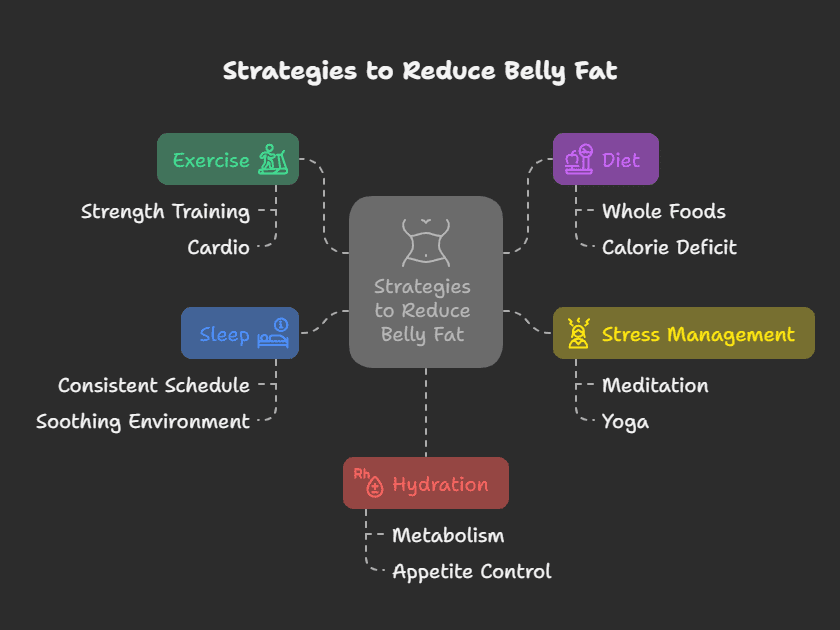
    Strategies to Reduce Belly Fat
    1. Combine Strength Training and Cardio
      Add resistance training and cardio exercises to your exercise routine. Strength training will add muscle mass, raising your resting metabolic rate, and cardio will burn calories and improve your heart health.
    2. Eat a Balanced Diet
      Emphasize a whole foods diet that consists of fruits, vegetables, lean meats, whole grains, and healthy fats. Steer clear of processed meals and sugary drinks. Keeping a calorie deficit, eating fewer calories than you expend, is needed for fat loss.
    3. Stress Management
      Stress can result in elevated cortisol levels, which are linked to fat gain, especially around the midsection. Use stress-reducing methods like meditation, deep breathing, or yoga.
    4. Sleep First
      Target 7–9 hours of good-quality sleep at night. Bad sleep is associated with weight gain and excess belly fat. Set a consistent sleep schedule and establish a soothing sleeping environment.
    5. Drink Hydrating Fluids
      Consuming sufficient water facilitates metabolism and helps manage appetite. Swap sugary beverages with water to lower calorie consumption.

    Final Thoughts

    Losing belly fat isn’t so much about fad diets or spot training certain areas with specific exercises. It’s about adopting a holistic strategy that encompasses a healthy diet, routine exercise, stress control, and quality sleep. By dispelling such belly fat myths, you can target methods that work and result in sustainable, long-term health rewards.

  • Uric Acid Diet Guide: Foods to Eat and Avoid for Healthy Levels

    Uric Acid Diet Guide: Foods to Eat and Avoid for Healthy Levels

    The numbers might have been slightly off during a routine check-up. Or perhaps you are all too familiar with the tale of waking up to a big toe that is throbbing, irate, and unable to bear the weight of a bedsheet. You wouldn’t want your worst enemy to experience such a beautiful and fiery pain. That’s the hallmark of gout, the most well-known and excruciating side effect of uric acid, my friend.

    You’re here for whatever reason. You’ve been instructed to monitor your levels, and your plate should be the first thing you check. And perhaps you’re a little bitter about having to give up some of your favorite foods because you’re feeling a little overwhelmed? Breathe deeply. You’re in the proper location.

    Because this isn’t just another list of “eat this, not that” that is sterile and dull. Not at all. This is a genuine discussion about food, lifestyle, and regaining control. It’s not just about preventing a flare-up; it’s about living well. Without making you feel as though you are facing a life sentence of boring, uninteresting meals, we will delve into the specifics, the whys, and the hows.

    It may surprise you to learn that controlling your uric acid can be empowering. It’s an opportunity to become more aware of your body and learn what triggers its reactions. Are you prepared to begin? Let’s get started.

    What’s the Big Deal with Uric Acid, Anyway?

    Before we start ransacking your pantry, let’s get one thing straight. Uric acid isn’t some evil villain. It’s a normal, naturally occurring substance in your blood. Your body produces it when it breaks down chemicals called purines.

    Think of it like this: your body is a busy workshop, constantly building and repairing. Purines are like the raw materials, the sawdust and leftover scraps from all that work. Your kidneys are the cleanup crew, filtering this “sawdust” (uric acid) out of your blood and sending it out of your body via your urine. It’s a pretty slick system, most of the time.

    The problem starts when the system gets out of whack.

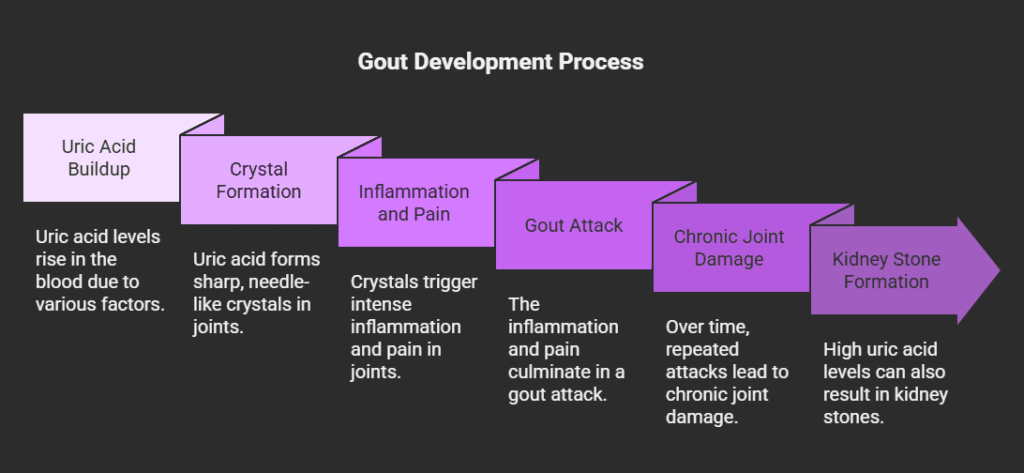
    Gout Development Process

    Either your body starts producing way too much sawdust, maybe you’re feeding it a ton of purine-rich materials, or your cleanup crew (the kidneys) gets a bit sluggish and can’t sweep it all away efficiently. When that happens, the uric acid builds up in your blood. It has nowhere to go. So it travels around your body, looking for a place to settle, and it has a particular fondness for cooler spots, like your joints.

    And when will it settle? It forms tiny, sharp, needle-like crystals. Ouch. That’s not a metaphor; that’s literally what’s happening. Those urate crystals are what trigger the intense inflammation and agonizing pain of a gout attack. It’s not just a pain; it’s a fire. A full-on, five-alarm blaze in your joint. And over time, this can lead to not just more frequent attacks, but also chronic joint damage and even kidney stones.

    Scary stuff, right? But here’s the kicker: you have way more control over this than you think. And it starts with the fuel you put in your body.

    The Game-Changer: Your Plate

    When it comes to managing uric acid, your diet is, without a doubt, the single biggest lever you can pull. It’s the game-changer. It’s how you go from being a victim of your symptoms to the master of your well-being.

    The core principle is simple: manage your purine intake. Now, this doesn’t mean you have to eliminate every single purine from your life. That’s practically impossible, and frankly, it wouldn’t be healthy. Lots of very nutritious foods contain purines. The key isn’t elimination; it’s strategy. It’s about knowing which foods are packed to the gills with purines and which ones are safe to enjoy freely.

    It’s time to know your friends from your foes.

    The ‘Green Light’ List: Foods to Embrace and Enjoy

    Let’s start with the good news. The great news. The list of foods you can and should be eating is long, vibrant, and delicious. This is about abundance, not deprivation. Get ready to pile your plate high.

    Fruits: Nature’s Candy and Your New Best Friend

    If there’s one food group to fall head over heels for, this is it. Most fruits are wonderfully low in purines and packed with things that actively help your cause.

    • Cherries, Cherries, Cherries! Okay, let’s just get this one out of the way. Cherries are the undisputed heavyweight champion in the fight against uric acid. They are legendary. They contain powerful antioxidants called anthocyanins, the stuff that gives them that gorgeous, deep red color, which have incredible anti-inflammatory properties. Some studies suggest that eating cherries or drinking tart cherry juice can lower uric acid levels and slash the risk of a gout attack. So, yes, believe the hype. A cup a day might just keep the doctor away. Seriously.
    • Vitamin C Powerhouses: Your body loves Vitamin C. And you know what else loves it? Your kidneys. Vitamin C has been shown to help the kidneys excrete more uric acid. So, load up! Think oranges, grapefruits, kiwi, and strawberries. A simple orange for a snack? That’s not just a snack; that’s a strategy.
    • Apples & Bananas: The humble apple contains malic acid, which is thought to help neutralize uric acid. Bananas are low in purines and a great source of potassium, which helps prevent uric acid from crystallizing. Easy, portable, and effective. What’s not to love?

    Vegetables: A Rainbow of Goodness

    Now, vegetables can feel like a bit of a minefield because of some old, outdated advice. The truth? Plant-based purines just don’t seem to affect your body in the same way animal-based ones do. So, while some veggies are higher in purines than others, the consensus now is that the benefits of eating a wide variety of vegetables far, far outweigh any potential risk.

    • The All-Stars: Cucumbers, bell peppers (all colors!), carrots, broccoli, squash, and potatoes are all low-purine heroes. They are hydrating and full of fiber and vitamins. Roast them, steam them, eat them raw in a giant salad. Go crazy.
    • What About Spinach and Asparagus? Ah, the age-old question. Yes, foods like spinach, asparagus, mushrooms, and cauliflower have a moderate amount of purines. For years, they were on the “avoid” list. Funny thing is, recent research has thrown that into question. Studies have failed to show a link between eating these vegetables and an increased risk of gout attacks. So, unless you find they are a personal trigger, there’s no need to banish them. Just don’t eat a whole pound of asparagus in one sitting. Common sense, you know?

    Dairy: The Unexpected Secret Weapon

    Here’s a fun surprise. Low-fat dairy is not just safe; it’s actively beneficial. Believe it or not, dairy products seem to have a special power; they promote the excretion of uric acid through your urine.

    • Milk & Yogurt: A glass of skim milk or a bowl of low-fat yogurt can literally help flush the bad stuff out. We’re talking a measurable effect here. Greek yogurt, in particular, is a fantastic, protein-packed option for breakfast or a snack. Just make sure you’re choosing the low-fat or non-fat versions, as high-fat dairy doesn’t seem to have the same protective effect.

    Grains & Starches: Choose Your Carbs Wisely

    Carbohydrates are your friend, but the type of carbohydrate matters.

    • Go for Whole Grains: Think brown rice, whole wheat bread, quinoa, and oats. These are complex carbohydrates that are good for your overall health, help with satiety, and are generally low in purines.
    • Ditch the White Stuff: Highly processed, refined carbohydrates, white bread, white rice, sugary cereals, cakes, cookies are another story. They can spike insulin levels, which in turn can reduce how much uric acid your kidneys get rid of. It’s a sneaky backdoor effect that many people miss.

    Beverages: Hydrate, Hydrate, and Caffeinate?

    • Water is Your Superpower: If cherries are the champion, water is the god-tier superpower. You need to drink it. Lots of it. All day. Think of your body as a system of pipes. Water is what flushes those pipes clean, clearing out all the excess uric acid before it has a chance to set up camp in your joints. Aim for at least 8-10 glasses a day, maybe more if you’re exercising or it’s hot out. Carry a bottle with you everywhere. This is non-negotiable.
    • Coffee Lovers, Rejoice! Here’s the best news you might hear all day. Multiple large-scale studies have shown that regular coffee consumption is associated with lower uric acid levels. Yes, you read that right. The effect is seen with both regular and decaf coffee, which suggests it’s not just the caffeine but other compounds in the coffee that are helping out. So, that morning cup (or three)? It’s probably helping.
    • Green Tea: Not a coffee person? Green tea is another excellent choice, loaded with antioxidants and beneficial compounds.

    The ‘Yellow Light’ List: Proceed with Caution

    Life is about balance, right? Not everything is a hard yes or a hard no. This is the zone of moderation. These are foods that aren’t necessarily off-limits forever, but you need to be smart about them. It’s about portion size and frequency.

    • Lean Meats: We’ll get to the big, bad red meats in a moment, but what about chicken? A small, palm-sized portion of chicken or turkey breast, a couple of times a week, is generally considered okay for most people. The key is lean and small. A giant fried chicken dinner? That’s venturing into the red zone. But a simple grilled chicken salad for lunch is a different story entirely.
    • Oatmeal: Oatmeal is fantastic for you, full of soluble fiber. It does have a moderate level of purines, though. Is this a problem? For most people, no. The benefits are too great to ignore. Just don’t make it your only food source. Having a bowl for breakfast is a world away from having it for every meal.
    • Lentils and Legumes: Beans, lentils, and peas are a wonderful source of plant-based protein and fiber. They also carry a moderate purine load. Like the controversial veggies, they used to be on the “no” list, but a new school of thought sees them as a much, much safer bet than animal protein. They are a fantastic substitute for red meat.
    • Some Fish: This is a tricky one. We know that some seafood is disastrous for uric acid (more on that below). But what about the others? Fish like salmon, while having more purines than, say, a carrot, are also packed with anti-inflammatory omega-3 fatty acids. For many, a small serving of a lower-purine fish like salmon or trout once in a while might be a reasonable trade-off. This is where you have to listen to your body.

    The ‘Red Light’ District: Foods to Seriously Avoid

    Okay, time for some tough love. Some foods are just, if I’m being honest, purine-delivery systems. They are so high in these compounds that they can send your uric acid levels soaring and trigger a flare-up with shocking speed. These are the foods to either eliminate or save for the rarest of rare, special occasions.

    • Organ Meats: This is the absolute top of the list. Liver, kidneys, sweetbreads, pâté. These are purine bombs. No way around it. They are incredibly dense in purines because of their metabolic function in the animal. Sorry, but these have to go. End of story.
    • Red Meat: Beef, lamb, pork, and game meats like venison are all very high in purines. This is often the hardest one for people to swallow, but cutting way back on red meat can make a monumental difference. Think of it as a “once in a blue moon” food rather than a weekly staple.
    • Certain Seafood: While some fish are on the yellow list, others are squarely in the red. Anchovies, sardines, herring, mussels, scallops, and mackerel are notoriously high in purines. If you see anchovies on a pizza menu, just walk away.
    • Alcohol, Especially Beer: Ah, alcohol. This is a double-whammy. Or rather, a triple-whammy.
      1. Beer is the worst offender. Why? It’s made from brewer’s yeast, which is fantastically high in purines. It directly adds fuel to the fire.
      2. Alcohol itself speeds up purine production in the liver. So it’s making your body produce more of the bad stuff internally.
      3. Alcohol dehydrates you and forces your kidneys to work overtime processing the alcohol, which means they do a much worse job of filtering out and excreting uric acid. So, beer delivers purines and makes your body produce more uric acid and making it harder to get rid of it. It’s the perfect storm for a gout attack. Hard liquor is also problematic. Wine, in very strict moderation (like one small glass), seems to be less of a threat, but honestly, the safest bet is to dramatically reduce your intake across the board.
    • The Hidden Villain: High-Fructose Corn Syrup (HFCS): This is the one that surprises everyone. It’s the secret enemy. HFCS contains no purines at all, yet it is one of the worst things you can consume for your uric acid levels. Here’s how it works: your body burns through a lot of energy to process fructose, and this process stimulates the production of uric acid like crazy. It revs up the “sawdust” machine in your workshop to a terrifying degree. Where do you find it? Sugary drinks. Sodas, sweetened iced teas, many fruit juices (yes, even the ones that seem healthy!), and countless processed foods and snacks. You must become a label detective. Cutting out sugary beverages is as important, if not more important, than cutting out red meat.

    Beyond the Plate: Lifestyle Tweaks That Make a World of Difference

    Your diet is the cornerstone, but a few other lifestyle changes can support your efforts and make you feel a whole lot better.

    • Weight Management: This is a delicate subject, but it’s crucial. Carrying extra weight puts more strain on your joints, but it also increases your body’s production of uric acid, making it harder for your kidneys to eliminate it. Losing even a small amount of weight, such as 5-10% of your body weight, can have a significant impact on your uric acid levels and the frequency of gout attacks. Frame it not as a punishment, but as an act of kindness to your body. It’s not about looking a certain way; it’s about taking a burden off your system so it can function better.
    • Gentle Movement: Regular exercise is fantastic for your overall health, weight management, and stress levels. But you need to be smart. High-impact, joint-jarring exercise can be a bad idea, especially if your joints are already sensitive. Think gently. Walking is amazing. Swimming is even better; it’s zero-impact and works your whole body. Cycling and yoga are also wonderful choices. The key is consistency.
    • Stress Less, Seriously: Who doesn’t have stress? But chronic stress can contribute to inflammation throughout your body. Finding ways to manage it can only help. It doesn’t have to be complicated. Five minutes of deep breathing, a short walk in the middle of the day, and listening to some music; these small acts can make a big difference in your overall state of well-being.

    You’ve Got This. Really.

    This is a lot of information, I realize. It may seem as though your life has been completely redesigned. However, don’t treat it like a mountain that you must climb all at once. Consider it a single step.

    Begin modestly. Make one change this week. Perhaps it’s switching to sparkling water with a squeeze of lemon instead of your usual soda. Perhaps it’s packing a large salad for lunch. Or perhaps it’s simply committing to always have a water bottle on hand.

    This is a process rather than a final destination. You will occasionally get a piece of pizza. Cake will be served at the birthday celebrations. It’s alright. That is what it means to be human. Progress, not perfection, is the aim. It’s about feeling better, having more energy, and not having to worry about that next painful, unexpected attack.

    Now you know. You are familiar with the low-fat yogurt, the water, the cherries, and the heroes. The villains, beer, organ meats, and sugary drinks are all familiar to you. You’re not in the dark anymore.

    So, go ahead. Enter your kitchen. Consider it a pharmacy rather than a minefield. A healing place. A position of authority. One tasty, wise, and filling meal at a time, regain your health. Your joints in particular will appreciate it. You’re capable.