Isn’t the modern world a constant source of stress? Financial concerns, relationship problems, and work deadlines. Numerous wellness fads promise immediate relief, but scientific research shows which approaches actually produce long-lasting effects.
The Science of Stress Reduction
Methods Based on Evidence That Truly Work
Studies consistently show that mindfulness-based interventions enhance emotional regulation and successfully lower cortisol levels. Participants who used evidence-based practices demonstrated statistically significant improvements in both psychological and physiological markers, according to a thorough 2024 analysis of stress management interventions.
One of the most proven methods is Mindfulness-Based Stress Reduction. More than 3,000 participants in several randomized controlled trials demonstrated that MBSR has moderate to large effect sizes in lowering depression and anxiety. These advantages last for at least six months.
The intriguing aspect of mindfulness? In fact, it alters the structure of your brain. Research shows:
A decrease in amygdala reactivity – your brain’s stress warning system
An increase in gray matter in regions linked to emotional regulation
Progressive Muscle Relaxation: The Underappreciated Hero
You might be surprised to learn that progressive muscle relaxation routinely works better than a lot of popular methods. When compared to control groups, a head-to-head comparison study revealed that PMR produced immediate physiological benefits with linear trends toward relaxation.
Muscle groups are systematically tensed and released as part of the technique. Sounds easy, doesn’t it? However, the outcomes are significant. Both measurable physiological changes and psychological relaxation states significantly improved for the participants.
Deep Breathing: Not Just Hot Air
The parasympathetic nervous system, which is your body’s natural “rest and digest” response, is activated by deep breathing exercises. There is especially compelling evidence that the 4-7-8 technique reduces stress reactivity:
Breathe in for four counts
Hold for seven
Exhale for eight
The speed at which this works is amazing. Attention span can be protected and improved with just 12 minutes of practice per day for five days. Deep breathing results in quantifiable physiological relaxation, according to studies that use electrodermal activity and heart rate monitoring.
Common Approaches Under Scientific Examination
Yoga: Traditional Practice, Contemporary Approval
Yoga creates the ideal environment for stress relief by fusing physical postures, mindful breathing, and awareness. A 2025 bibliometric analysis showed that yoga’s benefits for treating stress-related illnesses are becoming more widely acknowledged, including:
Anxiety management
Depression relief
Burnout prevention
The study goes into detail regarding the physiological advantages of yoga. Yoga has been shown to improve cardiovascular health in studies that track blood pressure and heart rate variability. According to one comparative study, yoga performed the best in terms of classification when it came to differentiating between states of stress and relaxation.
Nature-Based Stress Reduction: The Ignored Answer
Time spent in nature regularly improves mood and well-being while lowering stress and anxiety. Even virtual reality simulations of nature can significantly reduce stress. Exposure to nature is currently advised by the American Heart Association as a valid stress-reduction technique.
Sound Science in Music Therapy
Playing or listening to music can help:
Divert the mind
Ease tense muscles
Lower stress hormones
Though more research is required to establish optimal protocols, the physiological mechanisms are well-documented.
Popular Methods: Where’s the Proof?
Digital Solutions and Apps: Practicality vs. Efficiency
Compared to conventional guided mindfulness practices, mobile mindfulness apps show promise but have lower success rates. The advantages of planned, in-person interventions might not be replaced by digital solutions, despite their convenience.
Depending on the algorithm, the classification accuracy for stress reduction through mobile apps varied from 51 to 94%, whereas traditional yoga had an accuracy of 72 to 97%. This implies that although apps can be useful, you shouldn’t rely solely on them to manage your stress.
Other Methods: Contradictory Outcomes
Although the effects of aromatherapy, especially lavender, on stress vary greatly from study to study, there are some benefits. There is currently little data supporting acupuncture’s ability to manage stress in general, but it does show some modest effects on blood pressure in hypertensive patients.
Although the effectiveness of guided imagery techniques varies greatly from person to person, they do produce quantifiable relaxation benefits. The method is most effective when used in conjunction with other evidence-based strategies.
Advice from Medical Experts
The Best Methods Are Integrated
Instead of depending solely on one intervention, healthcare providers are increasingly advocating for the combination of several evidence-based techniques. The most successful programs incorporate:
Relaxation methods
Exercise
Mindfulness
All-encompassing stress management regimens
Incorporating stress management training into routine rehabilitation led to significantly higher stress reduction and, importantly, lower rates of adverse cardiovascular events over the years, according to a seminal study of 151 cardiac patients. This illustrates that achieving quantifiable health results from stress management is more important than simply feeling better.
Consistency and Duration Are Important
Conventional MBSR programs consist of eight weeks of:
Body scanning
Sitting meditation
Gentle yoga
Shorter interventions might work for some people, according to research, but longer programs usually yield more long-lasting effects.
It seems that daily practice is necessary. Research continuously demonstrates that individuals who practice regularly reap more advantages than those who practice infrequently.
Physiological Mechanisms: The Reasons These Techniques Are Effective
The System of Stress Reaction
Prolonged stress raises cortisol and triggers the sympathetic nervous system, which:
Impairs immune function
Raises blood pressure
Quickens the heartbeat
In order to counteract these negative effects, evidence-based stress management techniques activate the parasympathetic nervous system.
Effective methods result in quantifiable changes in blood pressure, stress hormone levels, and heart rate variability, according to studies employing cutting-edge monitoring equipment. There is observable physiological improvement in addition to psychological benefits.
Long-Term Changes and Neuroplasticity
The brain is actually rewired by regular application of evidence-based practices. Studies using neuroimaging reveal:
Elevated activity in the prefrontal and anterior cingulate cortices – critical regions for controlling emotions
Your brain’s stress center, the amygdala, gradually becomes less reactive
Formulating Your Plan for Evidence-Based Stress Management
Begin With Tested Bases
Start with the methods that have the most scientific backing:
Progressive muscle relaxation
Mindfulness meditation
Consistent exercise
These are the cornerstones of efficient stress reduction.
Instead of attempting several methods at once, think about beginning with just 10–20 minutes a day of one technique. When it comes to stress management, consistency is more important than intensity.
Track Your Development
When feasible, keep track of both objective indicators and subjective metrics, such as your feelings. Concrete indicators of your progress include:
Overall energy levels
Blood pressure (if you have any concerns)
Quality of your sleep
When to Get Expert Assistance
Even though self-management of stress can be very successful, there are some circumstances in which professional assistance is necessary. Clinical assistance may be necessary for:
Persistent stress
Anxiety that interferes with day-to-day functioning
Depression that affects daily activities
The evidence is unmistakable: scientific research identifies the strategies that actually work, despite popular culture’s many claims of stress relief. Regular physical activity, progressive muscle relaxation, mindfulness-based techniques, and systematic breathing exercises have all been shown to have quantifiable positive effects on mental and physical health.
Selecting evidence-based techniques that work for your lifestyle and using them regularly is more important than trying to find the “perfect” method. Science, not fads, should be the foundation of your stress management toolkit.
Life today doesn’t stop for stress relief. When deadlines pile up, meetings run late, and personal obligations need your attention, it can be hard to find time for traditional self-care. But managing stress doesn’t mean spending hours meditating or going to expensive wellness retreats. It means finding ways to fit it into your busy life.
The Need for Stress Management Right Now
In 2025, stress at work is higher than it has ever been. Almost 40% of workers have cried at work in the last month, and 66% of workers are burned out at work, which is the highest number ever. The youngest generation has some unique problems. Young adults aged 18 to 24 are the most likely to need time off for mental health problems caused by stress.
The effects go beyond just making you feel bad. Long-term stress can lead to high blood pressure, heart disease, and a weakened immune system. Every year, depression and anxiety cost the world $1 trillion in lost productivity and 12 billion working days. This isn’t just a problem for you; it’s a public health and economic crisis that needs to be dealt with right away.
Quick Stress Relief Methods That Work
Studies show over and over again that short interventions can lower stress levels. More than 200 research trials show that mindfulness-based methods work to lower stress, even in short sessions. Guided imagery, deep breathing, and progressive muscle relaxation all make people feel much more relaxed in just 20 minutes.
Breathing Techniques for Combat
Box Breathing (2 to 4 Minutes)
Military personnel use this method in high-stress situations. It involves breathing in a certain way that triggers the body’s relaxation response. You have to breathe in for four counts, hold it for four counts, breathe out for four counts, and hold it again for four counts. Even just two minutes of box breathing can lower cortisol levels and help you control your emotions better.
The Breathing Space Exercise (1 Minute)
This very fast method only takes a minute and can be done anywhere. Push all other thoughts aside and concentrate only on your breath. Be aware of how it feels to breathe in and out, and bring your attention back to your breath whenever your mind starts to wander. This exercise helps you feel better right away if your mind is racing or you feel overwhelmed.
Small Mindfulness Exercises
The STOP Method (2 Minutes)
STOP means:
Stop what you’re doing
Take a breath
Observe your surroundings and internal state
Proceed with purpose
This method breaks the cycle of stress and clears your mind without needing special places or tools.
Quick Body Scan (30 seconds to 2 minutes)
Pick a part of your body and pay attention to it as if you were looking at it through a microscope. Pay attention to how things feel, like temperature, tension, or pressure, without trying to change them. Move this focused attention around your body slowly and see what you find.
The Grounding Technique 5-4-3-2-1
This method, which is based on the senses, helps keep your attention in the present. List:
Five things you can see
Four things you can touch
Three things you can hear
Two things you can smell
One thing you can taste
This exercise is especially helpful when you feel like you can’t control your anxiety or stress.
Quick Relief Through Movement
Breaks to Walk and Talk (5–10 Minutes)
Do some light exercise while talking to someone or thinking quietly. Choose a safe way to get around in or out of your office. To fully disconnect, walk at a comfortable pace and don’t talk about work. Moving around releases endorphins, which are the body’s natural stress relievers.
Stretching at Your Desk (2–3 Minutes)
Stretching can help you get rid of physical tension that builds up during busy days at work. Focus on:
Neck rolls
Shoulder shrugs
Gentle twists of the spine
You can do these moves in professional clothes without getting too much attention.
Tips for Digital Wellness
Breaks from Screens and Time in Nature (5–15 minutes)
Taking short breaks from screens helps your eyes and mind relax. Being outside for even 10 to 15 minutes lowers cortisol levels and makes you feel better naturally. If you can’t go outside, looking out a window or at pictures of nature can give you similar benefits.
Managing Notifications
Digital interruptions that happen all the time make stress levels go up a lot. Turning off phone notifications for an hour each day gives you time to focus on your work and clear your mind. This small change can make you feel much less like you’re always “on call.”
Longer Techniques Based on Evidence (15–30 minutes)
While quick techniques give you quick relief, longer ones give you deeper restoration for those who can make time for them.
Relaxing Your Muscles Progressively (15–20 minutes)
This method involves systematically tightening and loosening different muscle groups. Studies show that PMR greatly boosts both mental and physical relaxation. It’s especially good at letting go of built-up physical tension from long, stressful workdays.
Parts of Mindfulness-Based Stress Reduction (MBSR)
You need eight weeks of training to do MBSR the traditional way, but you can practice each part on its own. While lying down, the “body scan” technique guides your attention through different parts of your body without judging them. This helps you be more aware of and accept your body’s feelings.
Applications for the Workplace
Rituals for Changing Meetings (1–2 Minutes)
Instead of jumping right into the next task, use the time between meetings to do short reset exercises. Options include:
Take three deep breaths
Think about what you want to accomplish in the next meeting
Do a quick body scan
Mindful Task Changes
Take a 30-second break before switching between projects to mentally “close” the last one and “open” the next one. This stops the mental mess that happens when tasks mix together without clear lines.
Making the Most of Your Lunch Break
If you can’t take a full lunch break, even eating the first few bites mindfully, paying attention to taste, texture, and temperature, can help you clear your mind.
Creating Habits That Help You Deal with Stress in the Long Run
Start Small and Slowly Build Up
Start with just one method that doesn’t take more than two minutes. Duration doesn’t matter as much as consistency. Once a short practice becomes second nature, you can slowly add other techniques or make the practice longer.
Link to Routines That Already Exist
Add stress-relieving activities to things you already do:
While your coffee brews, do breathing exercises
While you wait for the elevator, do a body scan
Use your commute time to do mindfulness exercises
Keep an Eye on What Works
Pay attention to which methods help you the most with your own stress patterns. Some people do better with movement-based methods, while others like breathing or mindfulness techniques better.
When to Get More Help
Quick ways to relieve stress work well for dealing with everyday stress, but if you have long-term stress, anxiety, or signs of burnout, you may need professional help. Warning signs include:
Trouble sleeping
Trouble remembering things
Being more irritable
Feeling tense in your body
Feeling like you have too many choices to make every day
Combining professional therapy with daily stress-relieving activities like mindfulness, exercise, and setting healthy boundaries greatly improves mental health and resilience. Mental health professionals can help you find ways to deal with chronic stress that are right for you and help you deal with the things that are causing it.
In 2025, stress management needs to be based on real-life situations and use methods that can fit into real-life schedules. These quick tips won’t get rid of all the stress in your life, but they will help you stay mentally clear, emotionally stable, and physically healthy even when things are tough. It’s not about finding more time; it’s about being more mindful of the time you already have.
Everyone knows that going to the gym, running, or doing yoga is good for our bodies. We see the results in toned bodies, better endurance, and maybe even a lower number on the scale. But what if I told you that the changes that will last the longest are happening in your head, which is less obvious but much more complex? Yes, we’re going to talk about how working out can make your brain healthier in a big way. It’s a fascinating journey that goes far beyond building biceps. It shows how moving our bodies affects our memory, sharpens our focus, and even makes new brain cells. Don’t think of exercise as just a way to stay in shape; it’s one of the best ways to boost your mental health.
For a long time, people thought that the brain was a pretty stable organ that grew up through childhood and then slowly got worse with age. But neuroscience has proven this idea wrong with the idea of neuroplasticity, which is the brain’s amazing ability to change itself, make new neural pathways, and rewire itself over the course of a person’s life. And guess what? Exercise has a strong effect on all of this good rewiring. It’s not just about how good you feel because of endorphins; every time you exercise, your brain changes in real, structural, and functional ways.
In this article, we’ll look at the complicated link between exercise and how the brain works. We’ll look at how different types of exercise, like aerobic exercise, strength training, and yoga/mind-body exercises, help improve memory, concentration, and the amazing process of neurogenesis, which is the creation of new brain cells. Get ready to learn how your workout routine is doing more for your brain than you ever thought possible.
The Brain-Body Connection: More Than Muscle Fuel
Let’s learn how exercise affects the brain before we dive into the exercises themselves. It’s a complex process: 1. Increased Blood Flow: Your heart beats faster when you exercise, pumping more blood through your body, including your brain, which is ravenous for resources, using up to 20% of the oxygen and energy of your body. Increased blood flow provides an important supply of oxygen and glucose, the brain cells’ main fuel. It also facilitates the removal of metabolic waste products more effectively. Imagine upgrading the delivery system to your brain headquarters – quicker, more efficient, and better armed.
2. The Chemical Cocktail: Exercise releases a potent blend of neurochemicals:
Endorphins: Renowned for the “runner’s high,” these are natural mood elevators and painkillers.
Dopamine: Essential in motivation, reward, learning, and attention. Exercise will frequently result in a surge of dopamine, creating feelings of accomplishment and concentration.
Serotonin: Regulates mood, sleep, and appetite. Regular exercise can balance serotonin levels, a move that may ease symptoms of depression and anxiety.
Norepinephrine: Plays a role in alertness, attention, and the stress response. Exercise regulates its release, enhancing focus and resilience.
Brain-Derived Neurotrophic Factor (BDNF): It’s a star player in brain rewiring. BDNF is fertilizer for your neurons. It helps existing neurons survive, promotes the growth of new ones (neurogenesis), and helps form new connections (synaptogenesis). We’ll discuss much more about BDNF.
Insulin-like Growth Factor 1 (IGF-1): Secreted in the muscles and liver during exercise, IGF-1 makes its way to the brain and acts in conjunction with BDNF to stimulate neuronal growth, survival, and plasticity.
3. Decreased Inflammation: Chronic inflammation is bad for overall health, including brain health. It’s associated with cognitive decline and neurodegenerative disease. Regular moderate exercise has anti-inflammatory properties, protecting the brain from this damage. 4. Stress Reduction: Exercise is an excellent stress buster. It normalizes the body’s stress response system (the hypothalamic-pituitary-adrenal or HPA axis) and reduces cortisol levels, the major stress hormone. Chronic stress has been shown to shrink the hippocampus (important for memory) and disrupt prefrontal cortex function (critical for decision-making), so reducing stress through exercise has great neuroprotective advantages. These processes interact with one another, developing a situation within the brain that is beneficial to growth, adjustment, and highest functioning. Exercise isn’t simply strengthening your heart; it’s refining the control center of your entire organism.
Aerobic Exercise: The Cardio Champion for Cognitive Enhancement
When most individuals think of “exercise for brain health,” aerobic exercises tend to spring to mind first, and there’s a reason for that. Exercises such as running, swimming, cycling, brisk walking, dancing – anything that raises your heart rate and maintains it for an extended amount of time – are especially effective brain enhancers.
Effect on Memory:
Aerobic exercise significantly impacts the hippocampus, a brain area responsible for learning and the creation of memory, especially spatial memory and transferring short-term memory to long-term memory. This is how
BDNF Spurt: Aerobic exercise pumps up BDNF levels profoundly, particularly in the hippocampus. This surge enhances neurogenesis (more later!) and strengthens synaptic links, facilitating easier creation and recall of memories. Aerobic exercise has been demonstrated to grow the hippocampus itself, reversing age-related shrinkage that so commonly leads to declining memory.
Enhanced Blood Flow: The greater oxygen and nutrient supply directly supports the function and resilience of hippocampal cells.
Neurotransmitter Balance: The activation of acetylcholine, dopamine, and norepinephrine through aerobic exercise also contributes to memory encoding and retrieval.
Imagine your hippocampus as a library of your memories. Aerobic exercise creates more neurons (neurogenesis), makes the old ones stronger (synaptic plasticity), and enhances the librarian’s performance (neurotransmitter function).
Impact on Focus and Attention:
Getting a little fuzzy mentally? A run or brisk walk could be the ticket. Aerobic exercise improves executive functions, which are overseen mostly by the prefrontal cortex. These include:
Planning and organization
Working memory (keeping information in mind to play around with it)
Attention control and focus
Inhibitory control (staying on track despite distractions)
Cognitive flexibility (alternating between tasks)
How does cardio help?
Increased Prefrontal Cortex Activity: Aerobic exercise increases blood flow and activity in this vital area.
Dopamine and Norepinephrine Release: These neurotransmitters are critical to sustain alertness, attention, and goal-directed behavior.
Improved Efficiency of Neural Networks: Regular aerobic exercise appears to make the communication networks between various brain regions responsible for attention and control more efficient.
Impact on Neurogenesis:
This is where aerobic exercise comes into its own. Although neurogenesis persists throughout life, it can happen most easily within the hippocampus Cardiovascular exercise is the most intensively reported behaviourally evoked stimulus to induce hippocampal neurogenesis in adults. BDNF increased dramatically following cardio, directly impelling stem cells of the hippocampus to convert to new neurons. New neurons make their way into established hippocampal networks and improve the learning potential, as well as memory versatility. It’s constructing a ‘younger’ brain, neuron by neuron.
Strength Training: Developing Brainpower Along with Building Muscle.
For many years, the mental benefits of exercise were mostly credited to aerobic exercise. But more and more studies are now demonstrating that strength training (or resistance training) – weight lifting, resistance band work, or bodyweight exercises such as push-ups and squats – also has distinctive and substantial benefits for your brain.
Impact on Memory and Executive Function:
Although perhaps not as strongly stimulating BDNF as high-intensity aerobic exercise, strength training accomplishes its magic through slightly different, yet complementary, mechanisms:
IGF-1 Boost: Resistance exercise particularly well elevates levels of Insulin-like Growth Factor 1 (IGF-1). As noted above, IGF-1 traverses the blood-brain barrier and works together with BDNF to promote neuronal health and plasticity and thereby potentially enhance memory and cognitive function.
Myokines: Muscles also behave like endocrine organs under strength training, secreting signalling molecules known as myokines (e.g., irisin, cathepsin B). Certain myokines can penetrate the brain and affect cognitive processes, such as memory and possibly neurogenesis, although studies are in progress.
Better Glucose Metabolism: Strength training makes your body (and brain) more sensitive to insulin, so it can use glucose better. Better glucose metabolism is associated with improved cognitive function and reduced risk of dementia.
Improved Executive Functions: Research indicates that strength training can enhance executive functions, perhaps by improving functional connectivity within brain networks supporting attention and cognitive control. The concentration demanded by lifts, planning exercise regimens, and monitoring progress may be part of the reason.
Preventing Cognitive Decline:
Strength training appears to hold special promise for maintaining cognitive function as we grow older:
Maintaining Brain Volume: According to some research, resistance exercise will help retain, and possibly add volume, to certain parts of the brain, potentially offsetting age-related shrinking.
Cutting Back White Matter Lesions: White matter lesions correlate with mental decline. Strength training will cut back their growth.
Better Functional Independence: Since resistance training serves to preserve strength and muscle mass, it encourages older adults to remain active, which indirectly translates to cognitive advantage.
Aerobic exercise may be the MVP for hippocampal neurogenesis, but strength training is an equally effective add-on strategy with the ability to enhance executive functioning, metabolic status favoring the brain, as well as have potentially distinct neuroprotective impacts via factors arising from muscle tissue. A healthy regimen that blends both is probable the best overall strategy.
Yoga and Mind-Body Practices: Finding Focus, Calm, and Clarity
Yoga, Tai Chi, and Qigong combine physical postures, breathing techniques, and meditation or mindfulness elements. These practices offer a unique blend of physical and mental training with distinct benefits for the brain.
Impact on Focus, Attention, and Interoception:
Mind-body practices train your ability to pay attention, both to external stimuli and internal sensations (interoception).
Improved Attention Control: The attention needed to maintain postures, coordinate breath with movement, and meditate strengthens the brain’s attention networks. fMRI studies have demonstrated changes in brain areas involved in attention (such as the prefrontal cortex) in frequent yoga practitioners.
Enhanced Interoception: Mindfulness and yoga develop sensitivity to subtle body cues – your heartbeat, breath, muscle tension. Increased interoceptive awareness is associated with improved emotional regulation and decision-making.
Mindfulness and Working Memory: The mindfulness aspect, being present without judgment, can decrease mental clutter and enhance working memory capacity.
Effect on Stress Reduction and Mood:
This is one of the key strengths of mind-body practices.
Parasympathetic Activation: Techniques for deep breathing that are typical of yoga (pranayama) trigger the parasympathetic nervous system – the body’s “rest and digest” system. This opposes the “fight or flight” response of the sympathetic nervous system, decreasing heart rate, blood pressure, and cortisol.
GABA Boost: Certain research indicates that yoga is able to elevate levels of GABA (gamma-aminobutyric acid), a neuroinhibiting neurotransmitter responsible for soothing nervous system activity. Low GABA levels are related to anxiety and mood disorders.
Amygdala Regulation: Meditation techniques, commonly included within yoga, have been found to decrease activity and even grey matter volume in the amygdala, the center of fear within the brain, resulting in lowered reactivity towards stressors.
Effect on Memory
Although direct neurogenesis impacts may be less significant than with intense cardio, yoga positively affects memory indirectly
Stress Reduction: By reducing cortisol, yoga shields the hippocampus from the harmful impacts of chronic stress.
Improved Focus: Increased attention and decreased mental clutter naturally enhance memory encoding and retrieval processes.
Structural Changes: Long-term practice of yoga has been linked to higher grey matter volume in areas of the brain that are implicated in learning, memory, and emotional regulation.
Yoga and other mindfulness practices rewire the brain by increasing self-awareness, refining emotional regulation, soothing the nervous system, and improving focus, building a mental landscape that supports clarity and resilience of mind.
How Physical Exercise Rewires Your Brain: The Science of Neurogenesis and Neuroplasticity
Let’s focus on the two fundamental concepts that describe how physical exercise reshapes your brain: neurogenesis and neuroplasticity.
Neurogenesis: Creating New Brain Cells
As stated, neurogenesis is the creation of new neurons. We used to think that we were born with every neuron we’d ever possess. We now realize that this is not the case, especially in certain areas of the brain such as the hippocampus (memory) and the olfactory bulb (smell). Aerobic exercise, in particular, is a strong inducer of hippocampal neurogenesis.
The Process: Exercise raises BDNF. BDNF instructs neural stem cells in the dentate gyrus of the hippocampus to divide and mature into functional new neurons.
Integration: These new neurons move and integrate into pre-existing neural circuits. This is not only about quantity; this is about increasing the capacity of the network. New neurons are believed to be highly excitable and plastic and play an important role in learning new things and differentiating between similar things (pattern separation).
Survival: Not all the new neurons live. Whether or not they get used – doing mentally stimulating tasks and exercise allows these new cells to remain and play a role in the long term.
Exercise provides the potential for greater learning and memory by offering up the building materials (new neurons) and supportive conditions (BDNF, blood flow).
Neuroplasticity: Redesigning Connections
Neuroplasticity is the general concept that includes the capacity of the brain to change its structure and function in relation to experience. It occurs continually, but exercise significantly enhances several types of plasticity: Synaptic Plasticity: This is a term for modifications in the strength of synapses between cells. Exercise promotes processes such as Long-Term Potentiation (LTP), which enhances synapses and enables more efficient communication between cells. This is essential for learning and memory. Consider it to be paving and expanding the highways between brain locations that regularly have a lot of traffic. BDNF comes into play here as well.
Structural Plasticity: Exercise can cause visible changes in brain structure, including:
Greater volume of grey matter (neuron cell bodies, dendrites, synapses) in regions like the hippocampus and prefrontal cortex.
Enhanced white matter integrity (myelinated nerve fibres that link different brain areas), which results in speedier and more effective communication between brain networks.
Higher density of dendritic spines (dendrites are neuron branches that receive inputs). More spines, more possible connections.
Functional Plasticity: The brain can reassign functions from the damaged region to an undamaged region or reorganize the way it engages various regions to accomplish a task more effectively. Exercise appears to enhance this adaptive function.
Basically, exercise makes your brain more efficient, resilient, and flexible. Exercise strengthens valuable connections, weakens poor ones, promotes new pathway growth, and even restructures the physical landscape of brain areas responsible for thinking, learning, and emotion. This continuous rebuilding is the quintessence of how physical exercise rewires your brain
Practical Tips: Incorporating Brain-Boosting Exercise into Your Life
.Learning the amazing brain advantages is inspiring, but how do you take that and turn it into action?
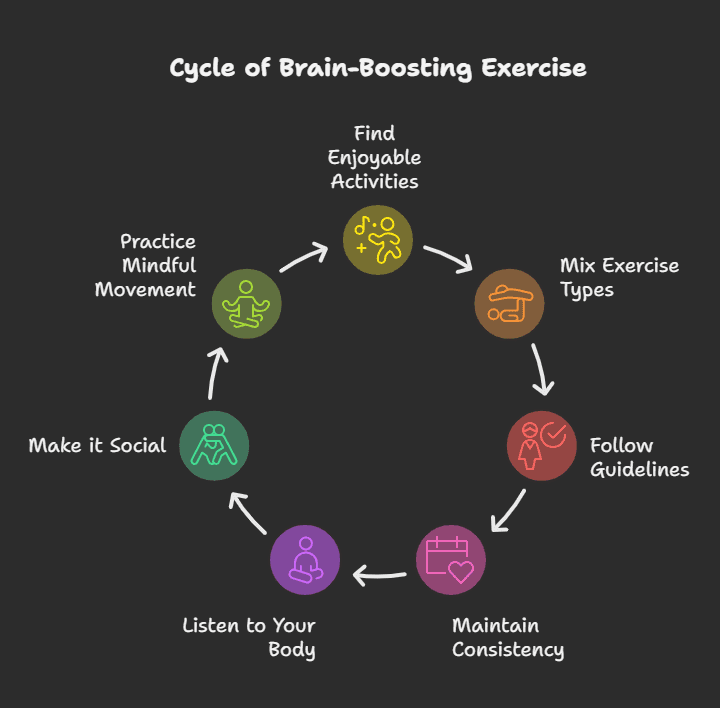
Find What You Enjoy: You’re more apt to stick with things you really like. Try on various activities – dancing, hiking, team sports, weightlifting, swimming, yoga classes, and fast-paced walking with a podcast.
Mix Up Different Types: Try to mix aerobic, strength, and mind-body exercises for the widest variety of brain advantages. For instance, 2-3 days of cardio, 2 strength training days, and 1-2 sessions of yoga or stretching per week.
Follow Guidelines (But Start Where You Are): General guidelines usually recommend 150 minutes of moderate-intensity aerobic activity (such as brisk walking) or 75 minutes of vigorous-intensity aerobic activity (such as running) per week, with muscle-strengthening activities two times a week. But something is better than nothing. Begin slowly and increase duration and intensity over time.
Consistency is the Key: Daily exercise yields the greatest long-term brain advantages. Prioritize consistency over occasional intense bursts. Short, regular sessions also accumulate.
Listen to Your Body: Prevent overtraining that can lead to increased stress and inflammation. Leave room for rest days and recovery.
Make it Social: Working out with friends or taking a class can increase motivation and provide a social connection factor, which is also good for brain health.
Mindful Movement: Tune into your body and breath while exercising, even with cardio or strength training. This increases the mind-body connection.
Conclusion: Move Your Body, Master Your Mind
TThe evidence is undeniable and convincing: exercise is not just good for your body; it’s also good for your mind. Understanding how physical activity affects your brain changes the way we think about exercise from a chore to an investment in our mental sharpness, emotional strength, and brain health over time. Movement changes the structure and function of your brain in a good way. For example, aerobic exercise can help you remember things better, strength training can help you concentrate better, and yoga can help you relax and think more clearly. Exercise improves the way we think, learn, and feel by increasing blood flow, releasing good neurochemicals like BDNF, reducing inflammation, and promoting neuroplasticity.
When you put on your running shoes, pick up a weight, or step onto your yoga mat, remember that you’re doing more than just working out your muscles. You are taking part in an act that will change your brain in a big way. You’re making your brain stronger, sharper, and tougher with each workout. Don’t just look at the biceps; recognize movement as the powerful brain tool it is. Your future self will be grateful..
It’s easy to forget how much human interaction affects our mental health in today’s fast-paced digital world. But socializing is a serious brain workout that gives you cognitive benefits that go beyond normal mental exercises. Having deep conversations and being close to other people makes us happier and protects our brains from losing their ability to think. Let’s look at how the magic of connection can improve our mental health.
The Cognitive Workout: How Socializing Engages the Brain
Social interactions are complicated processes that involve many parts of the brain at the same time. We listen, read body language, come up with answers, and empathize all at the same time when we talk. This active engagement works on memory, attention, language, and emotional control.
Experts say that social activities use all of our senses and make us think about things like body language, tone of voice, and what someone says. This thorough brain engagement strengthens existing neural connections and helps new ones form, which makes cognitive resilience stronger.
Building Cognitive Reserve Through Social Engagement
The concept of “cognitive reserve” refers to the brain’s ability to improvise and find alternative ways of completing tasks when faced with challenges. Regular social interaction contributes significantly to building this reserve. Engaging in conversations, participating in group activities, and forming relationships provides mental stimulation that enhances our brain’s adaptability.
Research has shown that people with active social lives are less likely to develop dementia. The study indicates that social interactions challenge and reinforce neural networks, thus postponing cognitive decline.
Emotional Benefits: Stress Reduction and Mood Enhancement
In addition to mental stimulation, socializing is also important for emotional health. Positive social interactions release oxytocin, a hormone that lowers stress and enhances feelings of trust and bonding. This hormonal reaction decreases cortisol levels, counteracting the damaging effects of chronic stress on the brain.
In addition, social interaction can reduce loneliness and depression. Older adults with robust social support networks have better sleep quality and enhanced stress management, both of which are crucial for cognitive health.
Improving Memory and Learning Through Interaction
Socializing is not merely about emotional support; it’s also a very effective memory builder and learning aid. Having a conversation involves recalling facts, speaking them out, and digesting new concepts, all of which build on memory paths.
Scientific studies prove that social contacts increase memory retrieval as well as improves cognitive performance. For example, older persons taking part in recurrent video dialogues demonstrated stronger connectivity in regions of the brain relevant to attention and, hence, reinforced attention capacities.
Socializing Across the Lifespan: A Lifelong Brain Booster
The intellectual advantages of social interaction are not limited to any stage of life. Through childhood into old age, holding on to social relationships promotes brain health.
Children and Adolescents: Social play and interactions with friends are essential to the development of communication skills, empathy, and problem-solving skills.
Adults: Keeping work, family, and social life in balance may prove trying, yet keeping up friendships and participating in community activities offers mental stimulation and stress reduction.
Older Adults: Staying socially engaged can slow down cognitive decline and lower the risk of dementia. Being part of group activities, volunteering, or even just keeping in touch with friends and family regularly can make a big difference.
Practical Tips toPractical Tips to Incorporate Socializing into Daily Life
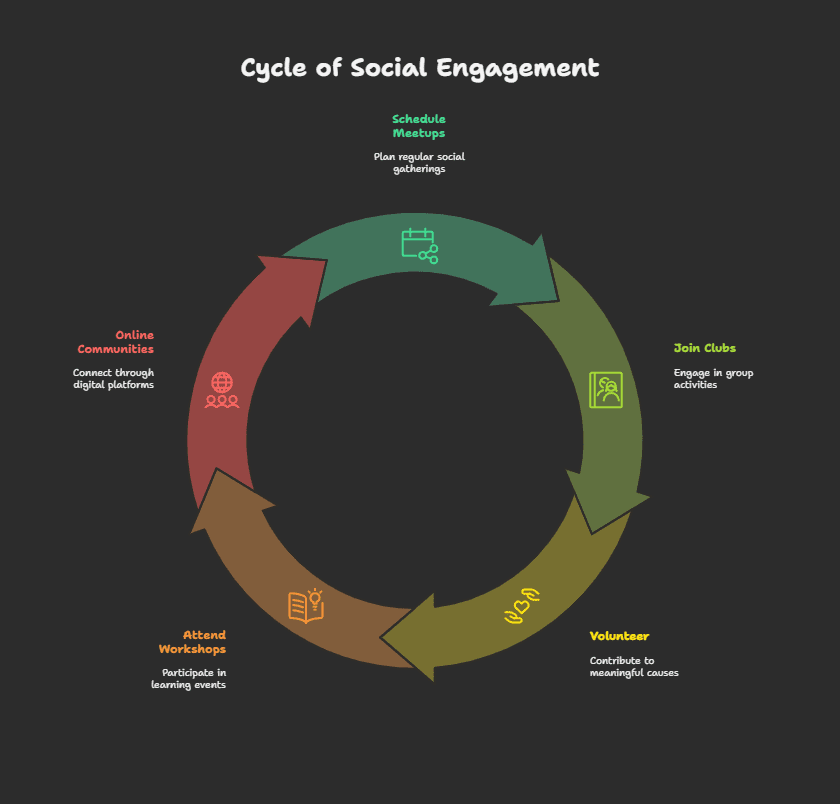
Incorporating social activities into your daily life doesn’t have to be done with grand gestures. Here are some practical tips to stay socially engaged:
Participate in Online Communities: Although face-to-face interactions are best, social media and online communities can provide significant connections, too.
Schedule Regular Meetups: Allocate time every week to meet up with friends or relatives, either in person or online.
Join Clubs or Groups: Engage in book clubs, hobby clubs, or community groups that interest you.
Volunteer: Volunteering your time for causes that matter to you can bond you with similar individuals.
Attend Workshops or Classes: Opportunities for lifelong learning bring both educational and social rewards.
Conclusion: Adopt Social Interaction for Cognitive Vigor
It’s not just a hobby to add social interaction to your daily life; it’s an important part of keeping your mind healthy. You can make your brain work harder, build up your cognitive reserve, and feel better emotionally by having interesting conversations and building strong relationships. Don’t forget that being social is good for your mental health, and being in a relationship is like putting your mental health on the line.