Tag: Hairfall

  • Top Reasons of Hairfall in Female: Causes, Solutions, and Expert Advice

    Top Reasons of Hairfall in Female: Causes, Solutions, and Expert Advice

    A woman’s hair is an important part of who she is and how she sees herself. So, when hair starts to fall out too much, it can be annoying and upsetting mentally. You’re not the only one who has thinning hair or hair loss that you can see. Finding a good solution to hair loss in women starts with knowing what causes it. This book will explain the science behind female hair loss, go over all the main causes, and give you real solutions that can work.

    Hair Fall in Women

    Every person loses hair daily; it’s an integral part of the hair cycle. Exceeding 100 hairs a day could be a sign of some underlying problem. The cause of hairfall in females can be from lifestyle to a medical condition. The determination of the basic cause is important for effective treatment.

    Main Reasons for Hairfall in Females

    Let’s get into the most prevalent and science-supported reasons for hair loss among women in deeper detail:

    1. Hormonal Imbalances

    Hormones have a strong role to play in the regulation of the growth cycle of the hair. Shifts in the hormones, particularly androgens (male hormones found in minuscule proportions in females), can reduce the size of the hair follicles and cause hair thinning.

    Typical causatives:

    • Polycystic ovary syndrome (PCOS)
    • Menopause
    • Pregnancy and giving birth
    • Thyroid disease

    These hormonal fluctuations tend to interrupt the regular hair cycle, forcing more hair into the shedding (telogen) stage.

    2. Female Pattern Hair Loss (Genetic Factors)

    Hereditary factors can be a major cause of hair loss in females. Also referred to as androgenetic alopecia, this genetic condition leads to slow thinning, particularly on the crown or vertex of the scalp.

    • Typically apparent after age 40
    • More diffuse than male pattern baldness
    • Can be treated with therapies such as Minoxidil

    3. Stress and Mental Health

    Physical or emotional stress can cause telogen effluvium, a condition in which a large percentage of hair follicles enter the resting phase too early.

    Common stressors:

    • Trauma
    • Surgery
    • Divorce
    • Job loss
    • Grief

    Hair loss usually begins 2-3 months following the stressful episode and can persist for several months.

    4. Nutritional Deficiencies

    A suboptimal diet with insufficient nutrients adversely impacts hair health. Deficiency of nutrients is usually an under-appreciated cause of hairfall in females.

    Essential nutrients for healthy hair:

    • Iron
    • Vitamin D
    • Vitamin B12
    • Zinc
    • Protein

    Iron deficiency, in specific, is one of the most common causes of hair loss in women of reproductive age.

    5. Hairstyling Habits and Chemical Processes

    How you style your hair may be doing more harm than you realize.

    Harmful practices are:

    • Frequent styling with flat irons or curling irons
    • Tight hairstyles, such as ponytails or braids, can lead to traction alopecia.
    • Chemical processes such as bleaching, perming, or relaxing

    Repeatedly, these practices break hair shafts and roots, so hair is more likely to fall out.

    6. Medication and Medical Treatment

    Some medications have hair loss as a listed side effect. If you’ve recently taken a new medication, that might be the culprit.

    Typical offenders:

    • Chemotherapy
    • Antidepressants
    • Blood pressure medication
    • Birth control pills
    • Medications for acne (such as isotretinoin)

    Talk to your doctor if you think your prescription is impacting your hair.

    7. Thyroid Disorders

    An underactive (hypothyroidism) or overactive thyroid (hyperthyroidism) can have a major impact on your hair.

    Symptoms may be:

    • Thinning hair
    • Dry, brittle hair
    • Slow hair growth

    A blood test can quickly diagnose thyroid disorders, and treating them typically makes hair healthier.

    8. Autoimmune Diseases

    Alopecia areata is an autoimmune disease where the body’s immune system attacks its hair follicles.

    • Suddenly, patchy hair loss
    • May appear on the scalp, eyebrows, or body elsewhere
    • May be reversible with treatment

    Other autoimmune illnesses, such as lupus, will cause balding or thinning of hair as well.

    9. Scalp Infections and Conditions

    Scalp health is associated with direct links to hair health. Irritations such as dandruff, psoriasis, or fungal infections may destroy hair follicles and block hair growth.

    Symptoms to watch for:

    • Itchy, scaly scalp
    • Redness or an inflamed appearance
    • Bumps with pus

    Treating the scalp with medicated shampoos or seeking dermatological attention can correct scalp balance.

    How to Determine the Exact Cause of Hairfall in Females?

    If you’re witnessing unusual hair fall, don’t make assumptions. Professional diagnosis is important.

    Steps you can take:.

    • Consult a dermatologist or trichologist: They can do a scalp biopsy or blood work.
    • Hormone level check: If you have acne or irregular periods.
    • Nutrient analysis: Blood tests to find out if there’s a deficiency.
    • Hair pull test: To determine how much hair is being shed while tugging gently

    Solutions and Treatment Options

    So now that we’ve gone through the reasons behind it, let’s see what you can do to fight this hair loss.

    Medical Treatment

    • Minoxidil (Rogaine): FDA-approved for female pattern hair loss
    • Finasteride: Not strictly approved for females, but occasionally administered off-label
    • Hormone therapy: In PCOS or menopausal women
    • Corticosteroids: In autoimmune-related hair loss

    Nutritional Supplements
    If your hair loss is caused by a lack of certain nutrients, correcting that may result in regrowth.

    Recommended supplements:

    • Biotin
    • Iron (talk to a doctor before taking)
    • Omega-3 fatty acids
    • Vitamin D

    Hair Care Tips

    • Shampoo with a mild, sulfate-free formula
    • Don’t brush wet hair
    • Cut back on heat styling
    • Oil your hair regularly (e.g., coconut oil, castor oil)

    Natural Remedies
    Although not supported by all scientists, plenty of people have been successful with natural remedies.

    Popular options:

    • Aloe vera
    • Onion juice
    • Rosemary oil
    • Green tea rinses

    Be careful with home treatment and apply a patch test before complete application.

    Preventive Steps to Minimize Hairfall in Women

    You cannot always avoid hair fall, but the following habits can minimize the risk:

    • Eat a well-balanced diet
    • Drink plenty of water
    • Exercise regularly
    • Give up smoking and alcohol

    Reduce stress by practicing yoga, meditation, or therapy

    Don’t neglect sleep, 7-8 hours every night

    When to Consult a Physician

    If your hair falls:

    • Abrupt or patchy
    • With other symptoms such as fatigue or weight loss
    • Ongoing despite proper hair care
    • Affecting your self-esteem or mental well-being

    Then it’s time to see a healthcare professional for further assessment.

    Conclusion:

    Hair loss is a very personal and annoying problem, but with the right attitude, it can usually be dealt with. Knowing the cause of hair loss in women gives you the power to make smart choices if your hair loss is due to hormones, lack of nutrients, stress, or an underlying illness.

    Keep in mind that each woman’s hair journey is different. There is no one-size-fits-all answer, but with time, professional help, and regular care, you can have healthy hair.
  • Hairfall in Men Explained: Causes, Prevention, and Effective Treatments

    Hairfall in Men Explained: Causes, Prevention, and Effective Treatments

    Have you ever looked at those small clumps in the shower drain and thought, “Really?” You’re not the only one. Believe it or not, hair loss in men is one of the most common problems. But before you freak out or grab your hat collection, let’s talk about what’s going on, why it matters, and most importantly, what you can do about it.

    Quick snapshot:

    • What? Your precious strands are making a break for it.
    • Who? Approximately 50% of men experience noticeable hair thinning by the age of 50.
    • Why? A cocktail of genetics, hormones, lifestyle… and sometimes, just plain bad luck.
    • How to fix? From science-backed treatments to simple home tweaks.

    Ready? Let’s dive in.

    The Usual Suspects: Why Your Hair Might Be Checking Out

    1. Genetics (The Big G)
      • Family history isn’t just about your dad’s cheekbones or your uncle’s height. If men in your family tree have sported a receding hairline or a thinning crown, odds are you might too.
      • Funny thing is, this “androgenetic alopecia” sounds fancy, right?, ‘s super common: up to 70% of men will show some signs in their lifetimes. Random? Not really. If the gene’s in play, DHT (dihydrotestosterone) messes with your follicles, making them shrink and produce finer hair until, eventually, they stop altogether.
    2. Hormones & DHT Drama
      • Dive deeper into that acronym: DHT is a testosterone byproduct, and while it’s crucial for male development, it also binds to hair follicles.
      • Result? Miniaturized follicles, thinner shafts, fewer happy hairs.
      • By the time your 30s hit, if you’re prone, you’ll likely notice more hair in your brush, or patches that feel airier than they used to.
    3. Stress: The Sneaky Saboteur
      • Who doesn’t stress? Work deadlines, personal drama, that huge presentation… it adds up. And hair? It feels it.
      • Telogen effluvium, anyone? It’s a fancy term for stress-induced shedding: your follicles go into premature “rest” mode, and hairs tumble out.
      • (If you’ve ever had a shock, illness, surgery, or even a scary breakup, you might’ve seen this firsthand.)
    4. Nutritional Gaps
      • You are what you eat… or not.
      • Protein, iron, zinc, vitamin D, and B vitamins all play starring roles in healthy hair growth.
      • Skipping meals, fad diets, or living on energy drinks? Your follicles throw up their hands. Literally.
    5. Scalp Health & Hygiene
      • Too much scrubbing? You could irritate the scalp, inflame follicles, and trigger shedding.
      • Too little washing? Oils build up, pores clog, and you guessed it, follicles suffocate.
      • Balance is key. Kinda like Goldilocks: not too hot, not too cold.
    6. Environmental & Lifestyle Culprits
      • Pollution, UV exposure, harsh styling products… they all chip away at hair integrity.
      • Smoking? It restricts blood flow, meaning less oxygen to your scalp.
      • All-nighters and poor sleep? Your body’s repair crew never shows up on time.

    Solutions That Don’t Suck: From Lab to Lifestyle

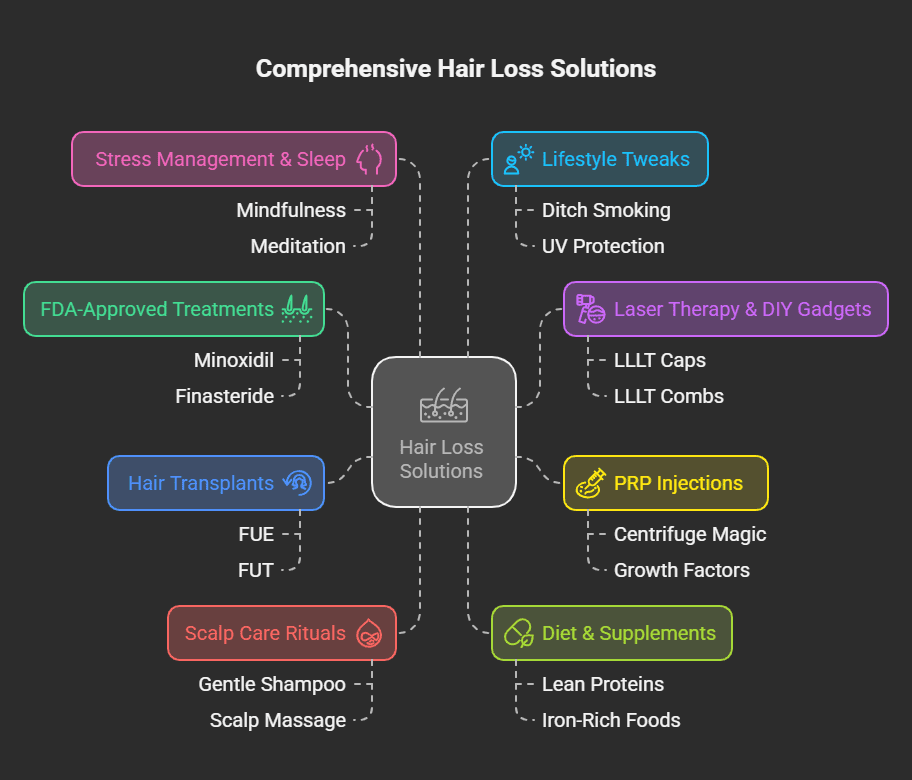
    Hair loss solution

    Here’s the kicker: some fixes are high-tech, some are low-key, but most work best when you combine them. Mix and match like your favorite playlist.

    1. FDA-Approved Treatments
      • Minoxidil (Rogaine): Applied topically, it can kick-start follicles into growth mode. Side effects? Sometimes itching or dryness, but hey, worth a shot if you’re losing ground.
      • Finasteride (Propecia): A daily pill that reduces DHT levels by blocking the enzyme 5-alpha reductase. Not for everyone (ask your doc), but it’s been shown to slow, even reverse, hair loss in many men.
    2. Laser Therapy & DIY Gadgets
      • Low-level laser therapy (LLLT) caps or combs.
      • Sounds sci-fi? It’s thought to boost circulation and cellular activity in the scalp.
      • Studies show moderate gains, perfect if you’re on the fence about pills.
    3. Platelet-Rich Plasma (PRP) Injections
      • By the time you read this, your blood could be working overtime, thanks to centrifuge magic that concentrates growth factors.
      • Painful? Mild. Effective? Many report thicker hair within months.
      • Costly? Yes. Worth it? Depends on your budget and commitment.
    4. Hair Transplants: The Real Deal
      • Follicular Unit Extraction (FUE) or Transplantation (FUT).
      • Doctors harvest healthy follicles, usually from the back of your head, and graft them to thinning areas.
      • Recovery takes weeks, but the results can last a lifetime.
    5. Scalp Care Rituals
      • Gentle shampoo, scalp massage, exfoliation (yes, exfoliation!).
      • Try a tea-tree or salicylic acid formula to keep pores clear.
      • Weekly massage (even 5 minutes) boosts blood flow, think of it as cardio for your head.
    6. Diet & Supplements (The Inside Job)
      • Lean proteins: fish, chicken, legumes.
      • Iron-rich foods: spinach, lentils, and pumpkin seeds.
      • Omega-3s: salmon, flaxseed, walnuts.
      • Biotin, zinc, and vitamin D are considered quality supplements if you’re low on the essentials.
      • Hydrate. Water = highway for nutrients to reach your follicles.
    7. Stress Management & Sleep
      • Mindfulness, meditation, yoga… pick your chill pill.
      • Aim for 7–9 hours nightly.
      • (Bonus: better sleep = better everything.)
    8. Lifestyle Tweaks
      • Ditch smoking: your scalp will thank you.
      • UV protection: hats, scarves, SPF sprays.
      • Moderate styling: loosen that ponytail, ease up on heat tools, and give harsh chemicals a miss.

    Putting It All Together: Your Personalized Game Plan

    So, lots of options. But where to begin?

    1. Assess the damage.
      • Mirror check. Brush check. Pinpoint the pattern.
      • Snap a few photos; compare monthly.
    2. See a pro.
      • Dermatologist or trichologist? They’ll diagnose whether it’s genetic, stress-related, or something else.
      • Get labs: thyroid, iron levels, hormone panels.
    3. Start small, then level up.
      • Maybe minoxidil + scalp massage for starters.
      • Add in dietary tweaks.
      • Reassess in 3–6 months.
    4. Stay consistent.
      • Hair cycles are slow. Patience is more than a virtue; it’s essential.
      • Missing doses or skipping weeks? You’ll lose momentum.
    5. Be flexible.
      • If one tactic fizzles, try another.
      • Combine low-tech and high-tech as needed.
    6. Mind the psychology.
      • Hair loss can hit self-esteem hard.
      • Talk to friends, join a support group, or see a counselor if it’s dragging you down.

    Wrapping Up: Why It’s More Than Just Hair

    Hair loss isn’t just a cosmetic problem. It can be a sign of health problems, lower self-esteem, and even change the way you interact with the world. Who would have thought a string could be so strong?

    But the most important thing is that you have choices. A lot of them. From drugstore bottles to the newest clinics. It’s all about finding the right mix for your hair story, budget, and way of life.

    Try it out. Keep going. (And yes, those little “baby hairs” will probably show up, real champions.) Every strand counts on this journey… And you do too.