Tag: Mental Health

  • The Best Stress Management: Scientific Approaches Unpack What Actually Works

    The Best Stress Management: Scientific Approaches Unpack What Actually Works

    Isn’t the modern world a constant source of stress? Financial concerns, relationship problems, and work deadlines. Numerous wellness fads promise immediate relief, but scientific research shows which approaches actually produce long-lasting effects.

    The Science of Stress Reduction

    Methods Based on Evidence That Truly Work

    Studies consistently show that mindfulness-based interventions enhance emotional regulation and successfully lower cortisol levels. Participants who used evidence-based practices demonstrated statistically significant improvements in both psychological and physiological markers, according to a thorough 2024 analysis of stress management interventions.

    One of the most proven methods is Mindfulness-Based Stress Reduction. More than 3,000 participants in several randomized controlled trials demonstrated that MBSR has moderate to large effect sizes in lowering depression and anxiety. These advantages last for at least six months.

    The intriguing aspect of mindfulness? In fact, it alters the structure of your brain. Research shows:

    • A decrease in amygdala reactivity – your brain’s stress warning system
    • An increase in gray matter in regions linked to emotional regulation

    Progressive Muscle Relaxation: The Underappreciated Hero

    You might be surprised to learn that progressive muscle relaxation routinely works better than a lot of popular methods. When compared to control groups, a head-to-head comparison study revealed that PMR produced immediate physiological benefits with linear trends toward relaxation.

    Muscle groups are systematically tensed and released as part of the technique. Sounds easy, doesn’t it? However, the outcomes are significant. Both measurable physiological changes and psychological relaxation states significantly improved for the participants.

    Deep Breathing: Not Just Hot Air

    The parasympathetic nervous system, which is your body’s natural “rest and digest” response, is activated by deep breathing exercises. There is especially compelling evidence that the 4-7-8 technique reduces stress reactivity:

    • Breathe in for four counts
    • Hold for seven
    • Exhale for eight

    The speed at which this works is amazing. Attention span can be protected and improved with just 12 minutes of practice per day for five days. Deep breathing results in quantifiable physiological relaxation, according to studies that use electrodermal activity and heart rate monitoring.

    Common Approaches Under Scientific Examination

    Yoga: Traditional Practice, Contemporary Approval

    Yoga creates the ideal environment for stress relief by fusing physical postures, mindful breathing, and awareness. A 2025 bibliometric analysis showed that yoga’s benefits for treating stress-related illnesses are becoming more widely acknowledged, including:

    • Anxiety management
    • Depression relief
    • Burnout prevention

    The study goes into detail regarding the physiological advantages of yoga. Yoga has been shown to improve cardiovascular health in studies that track blood pressure and heart rate variability. According to one comparative study, yoga performed the best in terms of classification when it came to differentiating between states of stress and relaxation.

    Nature-Based Stress Reduction: The Ignored Answer

    Time spent in nature regularly improves mood and well-being while lowering stress and anxiety. Even virtual reality simulations of nature can significantly reduce stress. Exposure to nature is currently advised by the American Heart Association as a valid stress-reduction technique.

    Sound Science in Music Therapy

    Playing or listening to music can help:

    • Divert the mind
    • Ease tense muscles
    • Lower stress hormones

    Though more research is required to establish optimal protocols, the physiological mechanisms are well-documented.

    Popular Methods: Where’s the Proof?

    Digital Solutions and Apps: Practicality vs. Efficiency

    Compared to conventional guided mindfulness practices, mobile mindfulness apps show promise but have lower success rates. The advantages of planned, in-person interventions might not be replaced by digital solutions, despite their convenience.

    Depending on the algorithm, the classification accuracy for stress reduction through mobile apps varied from 51 to 94%, whereas traditional yoga had an accuracy of 72 to 97%. This implies that although apps can be useful, you shouldn’t rely solely on them to manage your stress.

    Other Methods: Contradictory Outcomes

    Although the effects of aromatherapy, especially lavender, on stress vary greatly from study to study, there are some benefits. There is currently little data supporting acupuncture’s ability to manage stress in general, but it does show some modest effects on blood pressure in hypertensive patients.

    Although the effectiveness of guided imagery techniques varies greatly from person to person, they do produce quantifiable relaxation benefits. The method is most effective when used in conjunction with other evidence-based strategies.

    Advice from Medical Experts

    The Best Methods Are Integrated

    Instead of depending solely on one intervention, healthcare providers are increasingly advocating for the combination of several evidence-based techniques. The most successful programs incorporate:

    • Relaxation methods
    • Exercise
    • Mindfulness
    • All-encompassing stress management regimens

    Incorporating stress management training into routine rehabilitation led to significantly higher stress reduction and, importantly, lower rates of adverse cardiovascular events over the years, according to a seminal study of 151 cardiac patients. This illustrates that achieving quantifiable health results from stress management is more important than simply feeling better.

    Consistency and Duration Are Important

    Conventional MBSR programs consist of eight weeks of:

    • Body scanning
    • Sitting meditation
    • Gentle yoga

    Shorter interventions might work for some people, according to research, but longer programs usually yield more long-lasting effects.

    It seems that daily practice is necessary. Research continuously demonstrates that individuals who practice regularly reap more advantages than those who practice infrequently.

    Physiological Mechanisms: The Reasons These Techniques Are Effective

    The System of Stress Reaction

    Prolonged stress raises cortisol and triggers the sympathetic nervous system, which:

    • Impairs immune function
    • Raises blood pressure
    • Quickens the heartbeat

    In order to counteract these negative effects, evidence-based stress management techniques activate the parasympathetic nervous system.

    Effective methods result in quantifiable changes in blood pressure, stress hormone levels, and heart rate variability, according to studies employing cutting-edge monitoring equipment. There is observable physiological improvement in addition to psychological benefits.

    Long-Term Changes and Neuroplasticity

    The brain is actually rewired by regular application of evidence-based practices. Studies using neuroimaging reveal:

    • Elevated activity in the prefrontal and anterior cingulate cortices – critical regions for controlling emotions
    • Your brain’s stress center, the amygdala, gradually becomes less reactive

    Formulating Your Plan for Evidence-Based Stress Management

    Begin With Tested Bases

    Start with the methods that have the most scientific backing:

    • Progressive muscle relaxation
    • Mindfulness meditation
    • Consistent exercise

    These are the cornerstones of efficient stress reduction.

    Instead of attempting several methods at once, think about beginning with just 10–20 minutes a day of one technique. When it comes to stress management, consistency is more important than intensity.

    Track Your Development

    When feasible, keep track of both objective indicators and subjective metrics, such as your feelings. Concrete indicators of your progress include:

    • Overall energy levels
    • Blood pressure (if you have any concerns)
    • Quality of your sleep

    When to Get Expert Assistance

    Even though self-management of stress can be very successful, there are some circumstances in which professional assistance is necessary. Clinical assistance may be necessary for:

    • Persistent stress
    • Anxiety that interferes with day-to-day functioning
    • Depression that affects daily activities

    The evidence is unmistakable: scientific research identifies the strategies that actually work, despite popular culture’s many claims of stress relief. Regular physical activity, progressive muscle relaxation, mindfulness-based techniques, and systematic breathing exercises have all been shown to have quantifiable positive effects on mental and physical health.

    Selecting evidence-based techniques that work for your lifestyle and using them regularly is more important than trying to find the “perfect” method. Science, not fads, should be the foundation of your stress management toolkit.

  • Managing Daily Anxiety: Important Tips for Staying Mentally Healthy

    Managing Daily Anxiety: Important Tips for Staying Mentally Healthy

    Anxiety disorders affect almost 19% of American adults every year, making them one of the most common mental health problems of our time. But here’s the good news: anxiety doesn’t have to run your life. You can build resilience and find peace in the middle of life’s storms if you use the right methods and practice regularly.

    Getting to Know What Causes Modern Anxiety

    The Crisis of Mental Health at Work

    Anxiety is more common in today’s workplaces than ever before. Recent data shows that 84% of workers had at least one mental health problem in the past year, and 71% of them said they had symptoms related to stress. The move to remote work has made it harder to tell the difference between work and personal life, and we’re still figuring out how to deal with it.

    Generation Z workers are especially affected, with seven out of ten having poor mental health scores at work. Experts say that the constant connectivity, fear of losing a job to AI, and increased workload pressures create a “perfect storm” for anxiety to develop.

    Things that stress us out in the digital age

    Even though social media sites help us connect, they can also make us anxious by making us compare ourselves to others. Research indicates that utilizing multiple social media platforms markedly elevates anxiety risk; individuals engaging with 7-11 platforms possess 3.2 times the likelihood of encountering elevated anxiety levels in contrast to those using merely 2 platforms. The endless stream of curated lives sets standards that are too high for our minds to handle in a healthy way.

    Physical Ways to Deal with Anxiety Every Day

    Breathing exercises that really work

    Let’s start with something you can do right now. Deep breathing exercises aren’t just good for you; they really do help with anxiety. Structured breathing exercises have been shown to improve mood and lower physiological arousal more effectively than regular mindfulness meditation.

    Box breathing is one that works really well.

    • Inhale for four counts
    • Hold for four
    • Exhale for four
    • Hold for four

    This method wakes up your parasympathetic nervous system, which tells your body that it is safe to relax.

    For anxiety at work, even one 5- to 20-minute breathing session can help healthy adults feel less anxious. One study found that people who did diaphragmatic breathing for eight weeks had less negative emotions and lower levels of stress hormones.

    Exercise: Your Natural Way to Relieve Anxiety

    Exercise releases endorphins, which are brain chemicals that make you feel good right away and lower your anxiety. You don’t need to go to the gym every day for hours on end. Just walking quickly for 30 minutes every day is enough to make a big difference.

    Not how hard you work out, but how often you do it is the key. Start off slowly and add to your routine over time. Movement, like yoga, biking, or just taking the stairs instead of the elevator, helps break down stress hormones and gives anxious energy a healthy way to get rid of it.

    Ways of Controlling Anxiety with Your Mind

    Changing the way you think about bad things

    Cognitive Behavioral Therapy (CBT) techniques are very helpful for dealing with anxiety every day. What is the main idea? Challenging those terrible thoughts that get out of hand. When you’re feeling anxious, ask yourself, “Is this thought true, or am I making it worse?”

    Studies show that cognitive behavioral therapy (CBT) is one of the best ways to treat anxiety disorders. It helps people identify and stop negative thought patterns before they get worse. The best thing about CBT techniques is that you can use them anywhere, anytime you feel anxious.

    Mindfulness Without the Weirdness

    Mindfulness doesn’t mean sitting in the lotus position for hours. When anxiety pulls you toward worries about the future or regrets about the past, it’s about bringing your attention back to the present. Research shows that practicing mindfulness for just 5 to 10 minutes a day can greatly lower stress and anxiety.

    Mindfulness apps like Headspace and Calm have made it easier to do, but you can do it anywhere.

    • Pay attention to your breath
    • Feel things in your body
    • Just look around you without judging

    The goal isn’t to stop thinking; it’s to change how you think about them.

    Changes to Your Lifestyle for Long-Term Relief

    Sleep: The Key to Good Mental Health

    Not getting enough sleep makes anxiety worse, which makes it hard to break the cycle. Good sleep isn’t a luxury; it’s necessary for managing emotions and dealing with stress. To help your body make more melatonin, stick to a regular bedtime routine, make your room calm, and stay away from screens for at least an hour before bed.

    Studies show that sleep problems often come before anxiety disorders, so it’s important to practice good sleep hygiene to avoid them. If you still have trouble sleeping, don’t be afraid to talk to your doctor about it. Dealing with sleep problems often makes anxiety symptoms much better.

    How nutrition can help with anxiety

    The food you eat has a direct effect on how stressed you are. Salmon and walnuts are two foods high in omega-3 fatty acids that have been shown to help with anxiety. Eating leafy greens, whole grains, and foods high in vitamin B can help you feel better and calm your nerves.

    On the other hand, too much sugar and caffeine can make you anxious all day long. That afternoon coffee might seem like a must-have, but it could be making your anxiety worse. Think about cutting back on caffeine slowly and keeping an eye on how it affects your anxiety.

    Strategies for Society and the Environment

    Making Your Support Network

    Being alone makes anxiety worse, but being with others helps it. Support from others is very important for mental health. Even short, meaningful conversations can help you feel better and see things from a different angle when you’re feeling anxious. Don’t let worry keep you from being with people you care about or doing things that usually make you happy.

    Make time to talk to people who make you feel good about yourself on a regular basis, whether it’s through:

    • Phone calls
    • Coffee dates
    • Doing things together

    Talking about your worries with a trusted friend can sometimes help you see things more clearly.

    Making places that lower anxiety

    The place you live has a big effect on how anxious you are. As more people work from home, it’s becoming more important to set limits between work and personal life.

    • Learn how to say “no” when you need to
    • Set priorities for your tasks
    • Don’t try to do too many things at once, which can make you more stressed

    The Pomodoro Technique, which involves working for 25 minutes and then taking a 5-minute break, is a great way to deal with stress at work. Taking breaks often can help you recharge your mental energy and stop feeling overwhelmed, which can make anxiety worse.

    Advanced Methods for Long-Term Anxiety

    Writing in a journal to learn about yourself

    Writing about what you’ve been through can help you figure out what makes you anxious and how to deal with it. Keep a list of things that make you feel better when you’re stressed. This information is very helpful for you and for any mental health professionals you work with.

    Another powerful method is to keep a gratitude journal. When you focus on the good things in your life, you go from feeling stressed to feeling grateful. Make it easy at first: write down three things you’re thankful for every day. This practice actually changes the way your brain works so that you notice good things more easily.

    Ways to Relax Gradually

    Progressive muscle relaxation and visualization techniques are real ways to let go of the physical tension that comes with anxiety. These methods teach you how to relax different muscle groups in a planned way, which helps you tell the difference between tension and relaxation.

    Guided imagery and meditation are two more ways to help with anxiety symptoms. These techniques might feel strange at first, but with practice, you’ll be able to calm yourself down when you’re feeling anxious.

    Help and treatment options from professionals

    When to Get Help

    When anxiety gets in the way of daily tasks, relationships, or quality of life, it becomes a problem. If your worries are bigger than what is actually happening, or if your anxiety stops you from doing normal things, getting help from a professional can make a big difference.

    Early intervention works best. Anxiety disorders are very easy to treat, but only about 25% of people with anxiety get help. Don’t wait until your anxiety gets too bad to get help. Getting help early makes treatment easier and more effective.

    Learning About Different Treatment Options

    Cognitive behavioral therapy is still the best way to treat anxiety. Studies have shown that it works better than medication alone for long-term anxiety management. Exposure therapy is good for certain fears, and mindfulness-based methods give you tools for dealing with worry as a mental process.

    For some people, the best way to deal with severe anxiety or anxiety that happens with depression is to combine therapy with medication. Learning and practicing how to deal with anxiety, on the other hand, usually leads to the most lasting improvements.

    Making Your Own Anxiety Action Plan

    Ways to Stop It Every Day

    To build anxiety resilience, you need to do the same things every day instead of just dealing with crises. Pick one or two techniques that seem doable to you, like:

    • Breathing exercises in the morning
    • Writing in a gratitude journal at night

    Find out what makes you anxious and come up with ways to deal with each one. If social media makes you more anxious, set times when you can check your accounts and stick to them. Set limits on when you’ll check and respond to work emails if they make you anxious.

    Ways to Deal with Acute Anxiety in an Emergency

    When anxiety suddenly gets worse, having go-to techniques can help keep it from getting worse. The 5-4-3-2-1 grounding technique is helpful. It tells you to notice:

    • Five things you can see
    • Four things you can touch
    • Three things you can hear
    • Two things you can smell
    • One thing you can taste

    This takes the focus off internal worry and puts it on the outside world.

    Box breathing, which we talked about earlier, quickly turns on your body’s relaxation response. Even just 30 seconds of focused breathing can start to change your body’s state from anxious to calm.

    The Science Behind Long-Term Recovery

    Getting Stronger Over Time

    Managing anxiety isn’t about staying calm all the time; it’s about becoming stronger so you can deal with the stresses that life throws at you. Research shows that people who regularly use anxiety management techniques get better at controlling their emotions over time.

    The most important thing is to be patient with the process. Just like getting in shape takes time, so does building emotional strength through regular practice. Some techniques will feel more natural to you than others. Instead of trying to master every approach, just focus on what works for you.

    Learning About the Recovery Process

    Getting better from anxiety disorders isn’t a straight line. As you learn new ways to deal with things, expect both good and bad days. The most important thing is the overall path toward better health and daily life.

    As techniques become more automatic, many people find that managing their anxiety gets easier over time. Because the brain is neuroplastic, regular practice literally rewires neural pathways, so calm responses become more natural than anxious ones.

  • 15 Proven Ways to Deal with Stress and Feel Better

    15 Proven Ways to Deal with Stress and Feel Better

    Stress has become an unwanted friend for millions of people around the world. It affects everything from how well they sleep to how much work they get done. The good news is that strategies that have been shown to work can really help you take back control and become more resilient in the face of life’s stresses.

    Let’s look at fifteen proven ways that scientists and mental health professionals swear by. Managing stress isn’t just about feeling better; it’s also about keeping your health and well-being safe in the long run.

    Understanding Modern Stress: Why We Need Better Ways to Deal with It

    Before we start looking for solutions, we should know what we’re up against. We have to deal with things that our ancestors never had to deal with, like always being connected, too much information, money problems, and comparing ourselves to others on social media.

    Dr. Sarah Chen, a clinical psychologist at Stanford Medical Center, says it simply: “Our brains are still wired for threats from the past, but we’re dealing with problems in the present. That difference causes long-term stress.”

    The numbers tell a sad story. Recent surveys by the American Psychological Association show that almost 75% of adults say stress has caused them to have physical symptoms. Well, that’s most of us.

    But here’s the thing: there isn’t one way to deal with stress that works for everyone. What works for your coworker might make you even more angry. That’s why it’s important to have a lot of evidence-based strategies on hand.

    Real Ways to Deal with Physical Stress

    Deep Breathing Exercises: Your Reset Button

    When you’re under a lot of stress, your breathing gets shallow and fast. It happens on its own. But you can change the story.

    This is how the 4-7-8 method works: you breathe in for four counts, hold your breath for seven, and then let it out for eight. Easy? Yes. Does it work? Yes, for sure. Harvard Medical School research shows that this turns on your parasympathetic nervous system, which tells your body to relax.

    Dr. Michael Rodriguez, a pulmonologist, says, “I use this with patients who have panic attacks.” “Most people notice their heart rate going down in less than two minutes.”

    Do it now. For real. Four in, seven hold, and eight out. Do you feel that change? That’s your nervous system getting back on track.

    Progressive Muscle Relaxation: Letting Go of Physical Stress

    Your body stores stress in strange places. Your shoulders, jaw, and even your toes. When you do progressive muscle relaxation, you learn how to tense and relax groups of muscles in a planned way.

    Start with your toes. Squeeze them tight for five seconds, then let go. Go up from your calves to your thighs, stomach, and all the way to your scalp. Your body remembers what “relaxed” feels like better when you switch between tense and relaxed.

    Studies in the Journal of Clinical Psychology show that doing this technique regularly can lower cortisol levels by up to 25%.

    Regular Exercise: Getting Your Mind Clear by Moving Your Body

    Working out isn’t just about how good you look in jeans. It’s all in the brain chemistry.

    Your body makes endorphins, which are natural mood boosters, when you work out. But that’s not all. Exercise also raises levels of brain-derived neurotrophic factor (BDNF), which helps your brain deal with stress better.

    You don’t have to go to the gym all the time. A 20-minute walk can do a lot of good. It’s okay to dance in your living room, too. The most important thing is to be consistent, not intense.

    Good Sleep: Your Brain’s Nightly Maintenance Plan

    There is a complicated link between sleep and stress. Stress makes it hard to sleep, and not getting enough sleep makes stress worse.

    To break this cycle, you need to practice what sleep researchers call “sleep hygiene.” That means:

    • Going to bed at the same time every night (yes, even on weekends)
    • Making the bedroom cool and dark
    • Staying away from screens for at least an hour before bed
    • Not drinking caffeine after 2 PM

    “People often treat sleep like a luxury,” says Dr. Lisa Park, a sleep medicine expert. But it’s when your brain sorts through feelings and stores memories. “Don’t do it, and stress will get out of hand.”

    Ways to Relieve Mental and Emotional Stress

    Mindfulness Meditation: How to Train Your Mind to Pay Attention

    A lot of people talk about mindfulness these days, but what does it really mean? It’s about being aware of the present moment without judging it.

    You can start with small things. Five minutes of paying attention to your breath. When your mind starts to wander (and it will), gently bring it back. That’s not failing; that’s just the way it is.

    Johns Hopkins University looked at more than 19,000 studies on meditation and found that mindfulness programs can help with anxiety, depression, and pain. Not too bad for being quiet.

    Cognitive Restructuring: Changing the Way You Think

    Sometimes, the way we see things, not the things themselves, causes us stress.

    Cognitive restructuring is the process of finding negative thought patterns and questioning them. Say “I’m learning this skill” instead of “I’m terrible at this.” Instead of saying “Everything’s falling apart,” try saying “This is a hard time I can get through.”

    It may sound silly, but studies of cognitive-behavioral therapy show that this method lowers stress and makes people more resilient.

    Writing in a Journal: Getting Your Thoughts Out of Your Head

    Writing about stressful events can help you deal with your feelings and see things from a different angle. You don’t have to write like Shakespeare; stream-of-consciousness writing is fine.

    Studies on expressive writing show that writing about hard times for 15 to 20 minutes a day can help your mental and physical health. Dr. James Pennebaker’s research at the University of Texas discovered that individuals who documented their traumas exhibited enhanced immune function and sought medical attention less often.

    Time Management: Working Smarter, Not Harder

    Bad time management makes stress that isn’t real. You know what it’s like to be up against a deadline that you could have easily met if you had planned better.

    The Eisenhower Matrix is helpful here. Put tasks into groups based on how important and urgent they are:

    • Important and urgent (do first)
    • Important but not urgent (make a plan)
    • Urgent but not important (delegate)
    • Not important or urgent (get rid of)

    This isn’t about getting more done; it’s about cutting down on the chaos that makes you stressed.

    Ways to Deal with Stress in Your Social Life and Daily Life

    Making Strong Social Connections

    People are social animals. We need to connect with other people, just like we need food and water.

    Having a lot of friends and family around can help you deal with stress. When things go wrong, it’s easier to deal with them when you have people to talk to – really talk to.

    The Harvard Study of Adult Development, which followed people for more than 80 years, found that having good relationships makes us happier and healthier. Quality is more important than quantity in this case.

    Making Healthy Limits

    Boundaries aren’t walls; they’re rules for how you want to be treated and what you can handle.

    It’s important to learn how to say “no” without feeling bad. A “yes” to one thing means a “no” to another. Make sure that your “yeses” match your goals and how much energy you have.

    Dr. Amanda Foster, a therapist, says, “Setting boundaries is self-care, not selfishness.” “You can’t pour from a cup that is empty.”

    Doing Things That Are Creative

    Creativity is a way to let out feelings and take a break from thinking logically. Creative activities like painting, cooking, playing music, or making things use different parts of your brain.

    Studies on art therapy show that being creative lowers cortisol levels and makes you feel better. You don’t need to be good at something; you just need to want to play and explore.

    Things About Food and Living That Can Help with Stress

    Keeping a Balanced Diet

    What you eat can change how you feel. Blood sugar spikes and drops can make stress symptoms worse or make them look like they are getting worse.

    Pay attention to:

    • Complex carbohydrates (whole grains and vegetables)
    • Lean proteins
    • Eating healthy fats like nuts, avocados, and olive oil
    • Eating at the same time every day

    Cut back on caffeine and alcohol, which can make anxiety worse and mess up your sleep.

    Being Outside

    Being in nature is more than just nice; it also calms you down. Environmental Science & Technology research shows that spending just five minutes in green spaces can make you feel better and boost your self-esteem.

    “Forest bathing,” or shinrin-yoku, is a Japanese practice that involves being aware of nature through all of your senses. Research shows that it lowers stress hormones and boosts the immune system.

    Can’t get to a forest? It helps to look at pictures of nature or have plants in your office.

    Advanced Ways to Handle Stress

    Professional Help and Therapy

    It’s okay to feel like stress is too much sometimes. It’s not weak to ask for help from a professional; it’s smart.

    Different types of therapy work for different people:

    • Cognitive-behavioral therapy (CBT) for altering thought patterns
    • Acceptance and Commitment Therapy (ACT) for living according to your values
    • Eye Movement Desensitization and Reprocessing (EMDR) for stress caused by trauma

    Don’t put it off until you’re in trouble. A therapist can help you learn how to deal with stress before it gets too bad.

    Learning How to Be Resilient in the Long Term

    Resilience doesn’t mean avoiding stress; it means being better able to deal with it when it happens. To build resilience, you need to:

    • Developing hope (realistic, not blind)
    • Learning how to solve problems
    • Getting better at understanding your own and other people’s feelings
    • Keeping things in perspective when things get tough
    • Finding meaning in problems

    Dr. Martin Seligman’s work on positive psychology shows that people can learn and get better at being resilient over time.

    Making Your Own Plan for Dealing with Stress

    The thing is, just knowing these techniques won’t help unless you use them. Start with something small. Choose two or three strategies that speak to you.

    The 4-7-8 breathing technique might help right away, and journaling might help you sort through your thoughts. Or maybe better sleep habits and regular walks. The best plan is the one you will really follow.

    Keep track of what works. Pay attention to patterns. Do you feel more stressed on some days? At certain times? Knowing what makes you stressed helps you use the right techniques at the right times.

    Keep in mind that it takes time to form new habits. It takes an average of 66 days for a behavior to become second nature, according to research. As you try new things and make changes, be kind to yourself.

    The Science Behind How to Handle Stress Well

    What makes these methods work? It all depends on how stress affects your body and mind.

    Stress that lasts a long time keeps your sympathetic nervous system active, which is the “fight or flight” response. This fills your body with cortisol and adrenaline, which are good for short periods of time but bad for a long time.

    The “rest and digest” response is activated by stress management techniques. This helps with healing, getting things back to normal, and controlling emotions.

    Evidence-based strategies are great because they work with your body instead of against it.

    Moving Forward: Your Future Without Stress

    To manage stress, you don’t have to get rid of all the pressure in your life. That’s not possible or healthy. It’s about learning how to deal with problems in a way that makes you stronger and more flexible.

    Begin today. Choose one of these methods and promise to use it for a week. Pay attention to how you feel. Your future self will be grateful that you took this step to handle stress better.

    Keep in mind that managing stress is a skill that takes time to learn. It’s normal for some days to be harder than others. It’s not about being perfect; it’s about making progress.

    Having the right tools and knowing you can handle anything life throws at you is what matters most. Because you can. These fifteen strategies based on evidence prove it.

  • Top Habits That Harm Your Brain: What to Avoid for Long-Term Cognitive Health

    Top Habits That Harm Your Brain: What to Avoid for Long-Term Cognitive Health

    Keeping your brain healthy for life is important to live independently and happily. But some habits can make your brain older, make you forget, impair your judgment, and increase your risk of dementia. In this article, we will find out how high alcohol consumption, smoking, high sugar intake, and sleeplessness affect brain health. Knowing them will help you make intelligent decisions to protect your brain well.

    How Excessive Drinking Affects Cognitive Function

    Excessive drinking has a deep impact on the brain. Even moderate drinking (more than 8 drinks a week) can increase the risk of brain lesions by 133% which are linked to cognitive impairment and Alzheimer’s disease.

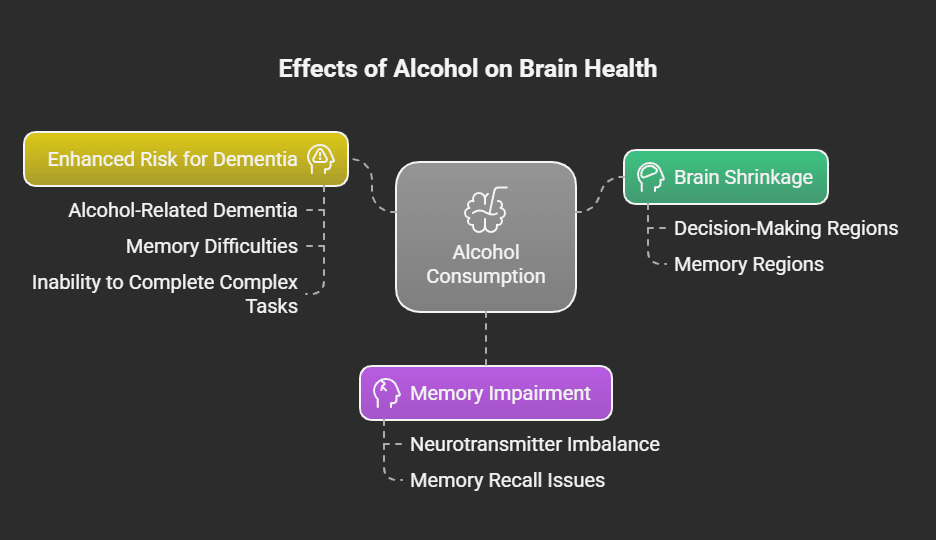
    How Alcohol Harms the Brain

    How Alcohol Harms the Brain
    • Brain Shrinkage: Long-term alcohol consumption decreases brain volume, especially in regions involved in decision-making and memory.
    • Memory Impairment: Alcohol interferes with neurotransmitter balance, disrupting memory development and recall.
    • Enhanced Risk for Dementia: Chronic alcohol use is associated with an increased risk of developing dementia, including alcohol-related dementia with symptoms of memory difficulties and an inability to complete complex tasks.

    Mitigating the Risks

    To safeguard your cognitive well-being, alcohol consumption should be kept to a minimum. Dieticians suggest that one drink a day for women and two for men is acceptable. Alcohol intake should be cut back to avoid neurodamage and the loss of brain function.

    Smoking: A Driver of Cognitive Decline

    Smoking causes many toxins to enter the body, some of which are harmful to the brain. Smokers are 30% more likely to suffer from dementia than non-smokers

    Effects of Smoking on the Brain

    • Accelerated Cognitive Decline: Middle-aged male smokers undergo faster cognitive deterioration compared to non-smokers.
    • Loss of Brain Volume: Smoking is linked to increased age-related brain volume reduction, impacting areas essential for memory and decision-making.
    • Increased Risk of Stroke: Smokers are at a higher risk of experiencing strokes, which have the potential to cause severe cognitive impairments.

    Benefits of Quitting Smoking

    The good news is that quitting smoking can reverse some of its harmful effects. Within five years of cessation, the risk of stroke decreases to that of a non-smoker. Additionally, quitting can lead to positive structural changes in the brain’s cortex, improving cognitive functions over time.

    High Sugar Intake and Its Cognitive Consequences

    Eating excessive sugar is not just unhealthy for the body but also extremely dangerous to brain health.

    Sugar and Brain Function

    • Memory and Learning Decline: Excessive sugar consumption has an inverse correlation with overall cognition, episodic memory, semantic memory, working memory, and perceptual speed.
    • Increased Risk of Dementia: People in the top quintile for sugar intake have twice the likelihood of developing Alzheimer’s dementia as those in the bottom quintile.
    • Neuroinflammation: Too much sugar can produce inflammation in the brain, upsetting normal neuronal functioning and leading to cognitive impairment.

    Strategies to Reduce Sugar Consumption

    To protect your cognitive health, try these

    • Restrict Added Sugars: Pay attention to hidden sugars in processed foods and drinks.
    • Select Whole Foods: Select natural sweet sources, such as fruits, that contain important nutrients and fiber.
    • Read Labels: Read nutrition labels to track sugar levels in processed foods.

    The Essential Function of Sleep for Cognitive Health

    Proper sleep is essential for memory consolidation, emotional regulation, and general cognitive function. Ongoing sleep deprivation can have drastic effects on brain health.

    Cognitive Effects of Sleep Deprivation

    • Memory Consolidation Disruption: Sleep is necessary for the transfer and consolidation of memories. Sleep loss interferes with this process, causing forgetfulness and learning problems
    • Increased Risk of Alzheimer’s: Poor quality sleep has been linked to increased risk for Alzheimer’s disease through the buildup of beta-amyloid brain proteins.
    • Emotional Instability: Sleep deprivation impacts the amygdala, resulting in increased emotional reactivity, mood fluctuations, and greater stress.

    Improving Sleep Quality

    To enhance sleep and safeguard cognitive health:

    • Use a Regular Sleep Routine: Sleep and rise at the same time every day.
    • Establish a Comfortable Sleeping Environment: Make your bedroom quiet, dark, and cool.
    • Have Limited Screen Time Before Bed: Steer clear of electronic devices at least one hour before bedtime to limit blue light exposure.
    • Steer Clear of Stimulants: Avoid the use of caffeine or nicotine near bedtime.

    Conclusion

    Cognitive health in the long term is determined by everyday habits. Excessive drinking, smoking, excessive sugar consumption, and sleep deprivation are major risk factors for cognitive impairment and dementia. By adopting mindful lifestyle modifications, like controlling alcohol consumption, stopping smoking, limiting sugar intake, and focusing on quality sleep, you can safeguard your brain health and improve your quality of life.