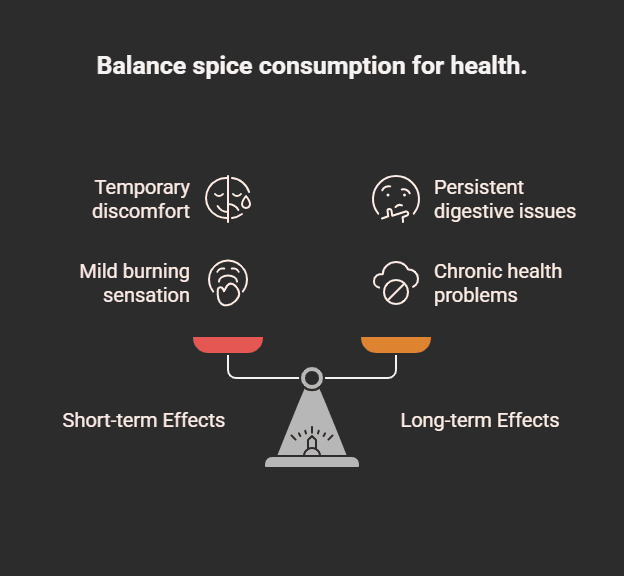
Spicy food is a culinary thrill that adds heat, flavor, and richness to dishes from all over the world. Chili peppers are now an important part of many diets. They are in everything from hot Indian curries to Mexican salsas and Thai stir-fries. But what if the hot kick happens every day? Eating spicy foods every day might have some health benefits, but it might also have some drawbacks. In this article, we talk about the seven most serious side effects of eating spicy food every day, according to science, and give tips on how to keep a healthy balance.
1. Digestive Distress: Irritation and Heartburn
One of the quickest and most noticeable consequences of consuming spicy food on a daily basis is its impact on the digestive system. Capsaicin, a chemical responsible for the heat in chili peppers, has the ability to irritate the lining of the stomach, particularly when taken in big or frequent amounts.
Symptoms include:
- Heartburn or acid reflux
- Stomach cramps or pain
- Nausea
- A burning sensation in the gut
Capsaicin is able to unwind the lower esophageal sphincter, the mechanism that divides the stomach from the esophagus. This enables stomach acid to creep upward, creating the noxious burning sensation of heartburn. Spicy meals once a day may aggravate symptoms in those with gastroesophageal reflux disease (GERD) or sensitive stomachs.
Tip: Combine spicy food with non-acidic, high-fiber foods such as rice or yogurt to cushion the irritation.
2. Bowel Irregularities and Diarrhea
Another spicy food health consequence commonly felt, particularly by those who are sensitive, is spiciness-induced diarrhea. Capsaicin has the ability to activate receptors within the intestines, which sends signals for more motility, thus accelerating digestion and causing loose stools.
How and why it occurs:
- Capsaicin acts on TRPV1 receptors lining the gut, which activate pain and heat.
- This action can accelerate gut transit time, leading to diarrhea.
- In others, it can cause burning or pain in the rectum during bowel movements.
Not hazardous in moderation, but chronic bowel changes from spicy foods can sometimes reflect gut inflammation or irritable bowel syndrome (IBS) that is worsened.
Interesting fact: Habitual consumers of spicy foods might develop tolerance to the effects of capsaicin over time, according to research. Still, this doesn’t rule out the underlying strain on the GI tract.
3. Gastric Ulcer Worsening (Myth vs. Reality)
Despite common perception, hot food does not result in ulcers per se. Ulcers are mostly caused by Helicobacter pylori infection or the abuse of NSAIDs (such as ibuprofen). Daily consumption of hot food, however, can aggravate ulcer symptoms and delay healing.
What hot food does:
- Triggers excess production of gastric acid
- Irritates pre-existing lesions of the stomach lining
- Worsens the pain, nausea, and bloating of ulcer patients
In addition, repeated daily use may cover up more severe disease symptoms, such as gastritis or peptic ulcer disease by causing prolonged desensitization of pain receptors.
Medical advice: If you have recurring stomach pain, see a medical professional before staying on a spicy-heavy diet.
4. Skin and Sweat Gland Reactions
Do you sweat or flush after eating something spicy? You’re not alone. Spicy food may cause visible reactions in the skin, particularly with repeated consumption.
Potential effects:
- Overactive sweating (gustatory sweating)
- Redness or flushing of the face
- Breakouts of acne or rosacea
- Allergic reactions or hives in a small percentage of people
Capsaicin stimulates heat receptors on your skin, which makes your body sweat to cool itself. For people with rosacea, regular consumption of spicy food can cause flare-ups because it increases blood circulation close to the surface of the skin.
Side note: In some countries, capsaicin is applied externally in cream form for arthritis and muscle aches. However, internally, it still produces inflammation-like reactions in sensitive skin.
5. Oral Health Issues: Burns and Taste Changes
While others relish the mouth-burning heat of spicy foods, the heat can lead to minor burns or irritation in the mouth and throat, particularly when consumed daily.
What to look out for:
- Inflammation or soreness of the tongue
- Dry mouth
- Desensitization of taste buds
- Canker sores or oral ulcers
Spicy food can also upset the oral microbiome, possibly causing bad breath or low-grade infections. In addition, long-term frequent consumption of excessive spice may blunt your sensitivity to subtle flavors so that you become reliant on intense seasoning.
Pro tip: Wash your mouth with water and milk after spicy meals to calm irritation and keep your mouth clean.
6. Sleep Disturbance and Night Sweats
Consuming spicy food on a regular basis, particularly dinner, can disrupt sleeping patterns. The body’s reaction to spice raises metabolic rate, body temperature, and even heart rate, making it more difficult to relax at night.
Typical sleep symptoms:
- Insomnia
- Night sweats
- Vivid or disruptive dreams
- Acid reflux at night
A 2019 study in the journal Appetite discovered that subjects who ate spicy food in the evening had decreased slow-wave sleep and elevated core body temperature, both of which are known to interfere with restorative sleep.
Hack: If you enjoy spicy food, have it for lunch instead of dinner to reduce the effects at night.
7. Potential Long-Term Health Hazards
While moderate daily use of chili peppers has been associated with long life and various cardiovascular benefits, too much on a daily basis may cause longer-term health problems, particularly with the inclusion of a poor-quality overall diet.
Possible harms include:
- Long-term increase in gastric cancer incidence among groups having a high-spice, high-sodium diet
- Establishment of food addiction or eating compulsion
- Upsetting the balance of gut microbiota
- Interference in the absorption of certain nutrients (i.e., iron, zinc)
Scientists in China have found a link between excessive chili consumption and mental deterioration in the elderly. Although additional research is necessary, the findings indicate that chronic capsaicin consumption may be neurotoxic when it is accompanied by nutritional deficiencies.
Balance is everything: Add cooling herbs such as mint, basil, or milk to counterbalance extreme heat in your diet.
When Spicy Food Is Helpful
It’s worth noting that not all spicy food is bad, and in moderation, it can offer several health perks. Capsaicin has been linked to:
- Boosted metabolism
- Appetite control
- Pain relief
- Anti-inflammatory properties
- Cardiovascular protection
It also contains antioxidants and has antimicrobial effects that can support the immune system. The key lies in moderation and individual tolerance.
Expert tip: If you’re new to spice, introduce it gradually and observe how your body reacts before making it a staple.
Tips for Enjoying Spice Without Side Effects
If you enjoy the excitement of chili peppers but don’t want the negatives, here are some intelligent strategies:
Practice Portion Control
Don’t overdo it. A little spice can do a lot in flavor and health advantages.
Cook with Milder Peppers
Use peppers such as jalapeños, poblanos, or sweet chili peppers instead of the extremely hot ghost or Carolina reaper peppers.
Match with Cooling Foods
Neutralize the heat and calm digestion with dairy (milk, yogurt), avocados, or cucumbers.
Drink Plenty of Water
Spicy food leads to dehydration, particularly if it triggers sweating. Stay hydrated by drinking water all day.
Watch Your Body
Maintain a food diary if you do not know whether spice is impacting your health. Monitor for symptoms such as bloating, skin, or sleep cycles
Final Thoughts: Should You Eat Spicy Food Daily?
Spicy foods can add flavor and even be good for you, but eating them every day could be bad for your health. Chili pepper risks should not be ignored, especially if you are having ongoing problems like digestive issues or trouble sleeping.
The bottom line is? Pay attention to your body. Some people can handle spice just fine, but others may need to tone it down. If you like spicy food, try switching between spicy and non-spicy days. Also, make sure to eat foods that are good for your gut and full of nutrients.