Yes, it’s more than just a strange chemistry word your doctor uses. It’s a tiny molecule that can cause a lot of problems if you don’t pay attention to it. Are you ready to jump in? Okay. Let’s go.
What Even Is Uric Acid?
Purines are small molecules that are found in DNA and many foods. Uric acid is the end product of purines. Your liver uses the enzyme xanthine oxidase to turn purines into uric acid. After that, your kidneys clean up by getting rid of about two-thirds of the waste through urine and the rest through stool. In most cases, it’s a waste product that happens behind the scenes. But what about the messy backstage? Then things go wrong.
Why It Gets Messy: Causes of High Uric Acid
Your uric acid levels can spike for a few key reasons, sometimes in clusters, like bad party guests who won’t leave.
Overproduction
Eating purine‑rich fare, red meat, organ meats, shellfish, and beer? Your body runs on fizz.
Rapid cell breakdown (like during chemotherapy) floods your system with purines.
Under‑Excretion
Kidneys are not pulling their weight, common in kidney disease or from hypertension.
Certain meds (diuretics, aspirin, niacin) can hamper uric acid clearance.
High-fructose diets, those sodas, sugary syrups, they jam the exit.
Combo of Both
Usually, it’s diet plus genetics, or kidney stress paired with meds. Add obesity, diabetes, or high blood pressure to the mix, and you’re deep in hyperuricemia territory.
The Consequences: Why You Should Care
Gout
That sudden, excruciating pain, often in the big toe, hits at night.
Caused by needle‑like crystals settling in joints, the immune system freaks, and inflammation ensues.
Repeated episodes can scar joints and form tophi (hard crystal deposits).
Kidney Stones & Damage
Uric acid can crystallize in your urinary tract, causing severe pain, blood in the urine, and maybe nausea.
Prolonged high levels can impair the kidneys, leading to a feedback loop of worsening excretion.
Metabolic & Heart Risks
Hyperuricemia often tags along with insulin resistance, fatty liver, hypertension, and heart disease.
While uric acid is an antioxidant in moderate amounts, once excessive, its role flips.
Signs It’s Becoming a Problem
Many people stroll into trouble with zero warning. But some signs might tip you off:
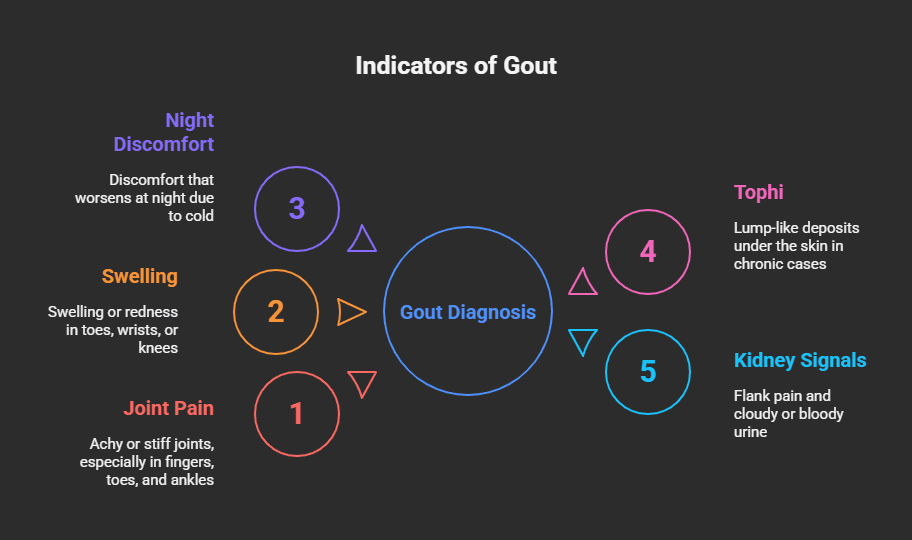
Achy or stiff joints, especially fingers, toes, and ankles.
Swelling or redness (toe, wrist, knee…).
Night‑time discomfort, crystals love cold.
Lump-like tophi under the skin (in chronic cases).
Kidney‑related signals, flank pain, cloudy or bloody urine.
What’s Happening Inside: Your Body’s Balancing Act
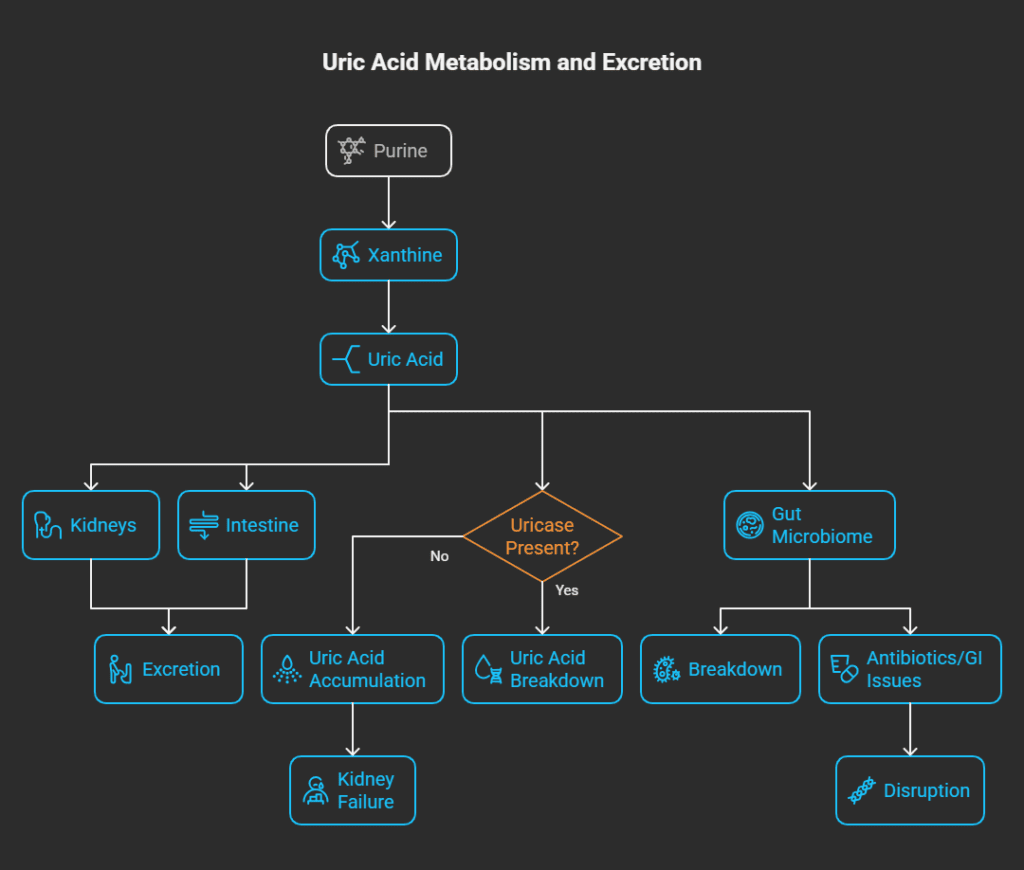
Purine → Xanthine → Uric Acid via xanthine oxidase in your liver.
Exit routes: kidneys (~66%) and intestine (~33%).
No uricase in humans, unlike many other mammals, so we can’t convert uric acid into a more soluble form.
When kidneys fail, uric acid piles up.
A healthy gut microbiome helps break it down; antibiotics or GI issues can disrupt that.
How Doctors Diagnose It
Blood test: Anything over ~6.8 mg/dL is flagged; under 6 mg/dL is ideal for managing gout.
24‑hour urine test: Checks uric acid clearance.
Joint fluid analysis: Crystal confirmation during flares.
Imaging (ultrasound/CT/X‑ray): Reveals crystals, tophi, and damage.
Fix It (Yes, You Can!)
Lifestyle Wins
Cut back on meat, shellfish, sugary drinks, and alcohol.
Hydrate, stay ahead of crystal formation.
Drop excess weight; each kg counts.
Stick with gentle exercise, walking, swimming, and cycling.
Helpful Foods & Drinks
Low‑fat dairy, vitamin C, coffee, and cherries show promising clearance benefits.
Skip organ meats, fatty dairy, refined carbs, sweet drinks, and booze.
Big tophi or stones: Surgery or specialty meds like rasburicase (in tumor lysis).
Kidney stones may require urine alkalinization.
Final Thoughts
Uric acid isn’t just about painful flare-ups; it’s a window into your metabolic and renal health. Keep levels in check, and you can avoid joint damage, kidney stones, and broader metabolic risks.
What You Can Do Today:
Get tested; a simple blood draw shows a lot.
Track triggers, note what you eat, and how you feel.
Make smart swaps, water instead of soda, lean protein over red meat, and daily walks.
Chat with your doctor, especially if you’re dealing with flares, lumps, stones, or chronic conditions.
Many folks manage their uric acid by transforming their lifestyle, not relying on meds forever. And when medication is needed, it’s part of a plan that keeps everything balanced.
Rapid Snapshot
Origins: Purine breakdown in the liver.
Exit: Kidneys and gut.
High levels = gout, stones, metabolic issues.
Fix: Diet, hydration, weight management, meds when needed.
A Friendly Close
So, the next time you grab a soda, a plate of shrimp, or a lot of fast food, take a break. Your body is doing its job, even if you don’t notice it. And what about keeping uric acid cool? It’s not just about your toes hurting. It’s about your future, healthier joints, stronger kidneys, and a better metabolic profile. You can do this.
The numbers might have been slightly off during a routine check-up. Or perhaps you are all too familiar with the tale of waking up to a big toe that is throbbing, irate, and unable to bear the weight of a bedsheet. You wouldn’t want your worst enemy to experience such a beautiful and fiery pain. That’s the hallmark of gout, the most well-known and excruciating side effect of uric acid, my friend.
You’re here for whatever reason. You’ve been instructed to monitor your levels, and your plate should be the first thing you check. And perhaps you’re a little bitter about having to give up some of your favorite foods because you’re feeling a little overwhelmed? Breathe deeply. You’re in the proper location.
Because this isn’t just another list of “eat this, not that” that is sterile and dull. Not at all. This is a genuine discussion about food, lifestyle, and regaining control. It’s not just about preventing a flare-up; it’s about living well. Without making you feel as though you are facing a life sentence of boring, uninteresting meals, we will delve into the specifics, the whys, and the hows.
It may surprise you to learn that controlling your uric acid can be empowering. It’s an opportunity to become more aware of your body and learn what triggers its reactions. Are you prepared to begin? Let’s get started.
What’s the Big Deal with Uric Acid, Anyway?
Before we start ransacking your pantry, let’s get one thing straight. Uric acid isn’t some evil villain. It’s a normal, naturally occurring substance in your blood. Your body produces it when it breaks down chemicals called purines.
Think of it like this: your body is a busy workshop, constantly building and repairing. Purines are like the raw materials, the sawdust and leftover scraps from all that work. Your kidneys are the cleanup crew, filtering this “sawdust” (uric acid) out of your blood and sending it out of your body via your urine. It’s a pretty slick system, most of the time.
The problem starts when the system gets out of whack.
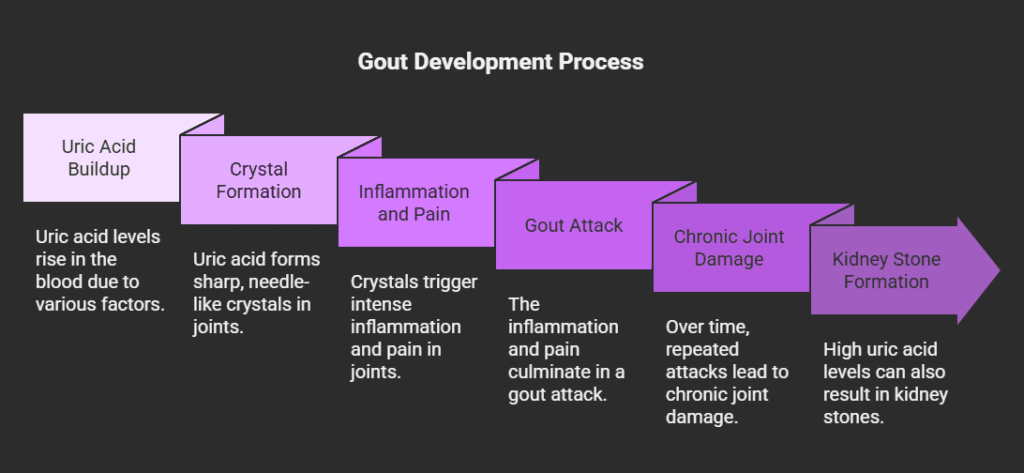
Either your body starts producing way too much sawdust, maybe you’re feeding it a ton of purine-rich materials, or your cleanup crew (the kidneys) gets a bit sluggish and can’t sweep it all away efficiently. When that happens, the uric acid builds up in your blood. It has nowhere to go. So it travels around your body, looking for a place to settle, and it has a particular fondness for cooler spots, like your joints.
And when will it settle? It forms tiny, sharp, needle-like crystals. Ouch. That’s not a metaphor; that’s literally what’s happening. Those urate crystals are what trigger the intense inflammation and agonizing pain of a gout attack. It’s not just a pain; it’s a fire. A full-on, five-alarm blaze in your joint. And over time, this can lead to not just more frequent attacks, but also chronic joint damage and even kidney stones.
Scary stuff, right? But here’s the kicker: you have way more control over this than you think. And it starts with the fuel you put in your body.
The Game-Changer: Your Plate
When it comes to managing uric acid, your diet is, without a doubt, the single biggest lever you can pull. It’s the game-changer. It’s how you go from being a victim of your symptoms to the master of your well-being.
The core principle is simple: manage your purine intake. Now, this doesn’t mean you have to eliminate every single purine from your life. That’s practically impossible, and frankly, it wouldn’t be healthy. Lots of very nutritious foods contain purines. The key isn’t elimination; it’s strategy. It’s about knowing which foods are packed to the gills with purines and which ones are safe to enjoy freely.
It’s time to know your friends from your foes.
The ‘Green Light’ List: Foods to Embrace and Enjoy
Let’s start with the good news. The great news. The list of foods you can and should be eating is long, vibrant, and delicious. This is about abundance, not deprivation. Get ready to pile your plate high.
Fruits: Nature’s Candy and Your New Best Friend
If there’s one food group to fall head over heels for, this is it. Most fruits are wonderfully low in purines and packed with things that actively help your cause.
Cherries, Cherries, Cherries! Okay, let’s just get this one out of the way. Cherries are the undisputed heavyweight champion in the fight against uric acid. They are legendary. They contain powerful antioxidants called anthocyanins, the stuff that gives them that gorgeous, deep red color, which have incredible anti-inflammatory properties. Some studies suggest that eating cherries or drinking tart cherry juice can lower uric acid levels and slash the risk of a gout attack. So, yes, believe the hype. A cup a day might just keep the doctor away. Seriously.
Vitamin C Powerhouses: Your body loves Vitamin C. And you know what else loves it? Your kidneys. Vitamin C has been shown to help the kidneys excrete more uric acid. So, load up! Think oranges, grapefruits, kiwi, and strawberries. A simple orange for a snack? That’s not just a snack; that’s a strategy.
Apples & Bananas: The humble apple contains malic acid, which is thought to help neutralize uric acid. Bananas are low in purines and a great source of potassium, which helps prevent uric acid from crystallizing. Easy, portable, and effective. What’s not to love?
Vegetables: A Rainbow of Goodness
Now, vegetables can feel like a bit of a minefield because of some old, outdated advice. The truth? Plant-based purines just don’t seem to affect your body in the same way animal-based ones do. So, while some veggies are higher in purines than others, the consensus now is that the benefits of eating a wide variety of vegetables far, far outweigh any potential risk.
The All-Stars: Cucumbers, bell peppers (all colors!), carrots, broccoli, squash, and potatoes are all low-purine heroes. They are hydrating and full of fiber and vitamins. Roast them, steam them, eat them raw in a giant salad. Go crazy.
What About Spinach and Asparagus? Ah, the age-old question. Yes, foods like spinach, asparagus, mushrooms, and cauliflower have a moderate amount of purines. For years, they were on the “avoid” list. Funny thing is, recent research has thrown that into question. Studies have failed to show a link between eating these vegetables and an increased risk of gout attacks. So, unless you find they are a personal trigger, there’s no need to banish them. Just don’t eat a whole pound of asparagus in one sitting. Common sense, you know?
Dairy: The Unexpected Secret Weapon
Here’s a fun surprise. Low-fat dairy is not just safe; it’s actively beneficial. Believe it or not, dairy products seem to have a special power; they promote the excretion of uric acid through your urine.
Milk & Yogurt: A glass of skim milk or a bowl of low-fat yogurt can literally help flush the bad stuff out. We’re talking a measurable effect here. Greek yogurt, in particular, is a fantastic, protein-packed option for breakfast or a snack. Just make sure you’re choosing the low-fat or non-fat versions, as high-fat dairy doesn’t seem to have the same protective effect.
Grains & Starches: Choose Your Carbs Wisely
Carbohydrates are your friend, but the type of carbohydrate matters.
Go for Whole Grains: Think brown rice, whole wheat bread, quinoa, and oats. These are complex carbohydrates that are good for your overall health, help with satiety, and are generally low in purines.
Ditch the White Stuff: Highly processed, refined carbohydrates, white bread, white rice, sugary cereals, cakes, cookies are another story. They can spike insulin levels, which in turn can reduce how much uric acid your kidneys get rid of. It’s a sneaky backdoor effect that many people miss.
Beverages: Hydrate, Hydrate, and Caffeinate?
Water is Your Superpower: If cherries are the champion, water is the god-tier superpower. You need to drink it. Lots of it. All day. Think of your body as a system of pipes. Water is what flushes those pipes clean, clearing out all the excess uric acid before it has a chance to set up camp in your joints. Aim for at least 8-10 glasses a day, maybe more if you’re exercising or it’s hot out. Carry a bottle with you everywhere. This is non-negotiable.
Coffee Lovers, Rejoice! Here’s the best news you might hear all day. Multiple large-scale studies have shown that regular coffee consumption is associated with lower uric acid levels. Yes, you read that right. The effect is seen with both regular and decaf coffee, which suggests it’s not just the caffeine but other compounds in the coffee that are helping out. So, that morning cup (or three)? It’s probably helping.
Green Tea: Not a coffee person? Green tea is another excellent choice, loaded with antioxidants and beneficial compounds.
The ‘Yellow Light’ List: Proceed with Caution
Life is about balance, right? Not everything is a hard yes or a hard no. This is the zone of moderation. These are foods that aren’t necessarily off-limits forever, but you need to be smart about them. It’s about portion size and frequency.
Lean Meats: We’ll get to the big, bad red meats in a moment, but what about chicken? A small, palm-sized portion of chicken or turkey breast, a couple of times a week, is generally considered okay for most people. The key is lean and small. A giant fried chicken dinner? That’s venturing into the red zone. But a simple grilled chicken salad for lunch is a different story entirely.
Oatmeal: Oatmeal is fantastic for you, full of soluble fiber. It does have a moderate level of purines, though. Is this a problem? For most people, no. The benefits are too great to ignore. Just don’t make it your only food source. Having a bowl for breakfast is a world away from having it for every meal.
Lentils and Legumes: Beans, lentils, and peas are a wonderful source of plant-based protein and fiber. They also carry a moderate purine load. Like the controversial veggies, they used to be on the “no” list, but a new school of thought sees them as a much, much safer bet than animal protein. They are a fantastic substitute for red meat.
Some Fish: This is a tricky one. We know that some seafood is disastrous for uric acid (more on that below). But what about the others? Fish like salmon, while having more purines than, say, a carrot, are also packed with anti-inflammatory omega-3 fatty acids. For many, a small serving of a lower-purine fish like salmon or trout once in a while might be a reasonable trade-off. This is where you have to listen to your body.
The ‘Red Light’ District: Foods to Seriously Avoid
Okay, time for some tough love. Some foods are just, if I’m being honest, purine-delivery systems. They are so high in these compounds that they can send your uric acid levels soaring and trigger a flare-up with shocking speed. These are the foods to either eliminate or save for the rarest of rare, special occasions.
Organ Meats: This is the absolute top of the list. Liver, kidneys, sweetbreads, pâté. These are purine bombs. No way around it. They are incredibly dense in purines because of their metabolic function in the animal. Sorry, but these have to go. End of story.
Red Meat: Beef, lamb, pork, and game meats like venison are all very high in purines. This is often the hardest one for people to swallow, but cutting way back on red meat can make a monumental difference. Think of it as a “once in a blue moon” food rather than a weekly staple.
Certain Seafood: While some fish are on the yellow list, others are squarely in the red. Anchovies, sardines, herring, mussels, scallops, and mackerel are notoriously high in purines. If you see anchovies on a pizza menu, just walk away.
Alcohol, Especially Beer: Ah, alcohol. This is a double-whammy. Or rather, a triple-whammy.
Beer is the worst offender. Why? It’s made from brewer’s yeast, which is fantastically high in purines. It directly adds fuel to the fire.
Alcohol itself speeds up purine production in the liver. So it’s making your body produce more of the bad stuff internally.
Alcohol dehydrates you and forces your kidneys to work overtime processing the alcohol, which means they do a much worse job of filtering out and excreting uric acid. So, beer delivers purines and makes your body produce more uric acid and making it harder to get rid of it. It’s the perfect storm for a gout attack. Hard liquor is also problematic. Wine, in very strict moderation (like one small glass), seems to be less of a threat, but honestly, the safest bet is to dramatically reduce your intake across the board.
The Hidden Villain: High-Fructose Corn Syrup (HFCS): This is the one that surprises everyone. It’s the secret enemy. HFCS contains no purines at all, yet it is one of the worst things you can consume for your uric acid levels. Here’s how it works: your body burns through a lot of energy to process fructose, and this process stimulates the production of uric acid like crazy. It revs up the “sawdust” machine in your workshop to a terrifying degree. Where do you find it? Sugary drinks. Sodas, sweetened iced teas, many fruit juices (yes, even the ones that seem healthy!), and countless processed foods and snacks. You must become a label detective. Cutting out sugary beverages is as important, if not more important, than cutting out red meat.
Beyond the Plate: Lifestyle Tweaks That Make a World of Difference
Your diet is the cornerstone, but a few other lifestyle changes can support your efforts and make you feel a whole lot better.
Weight Management: This is a delicate subject, but it’s crucial. Carrying extra weight puts more strain on your joints, but it also increases your body’s production of uric acid, making it harder for your kidneys to eliminate it. Losing even a small amount of weight, such as 5-10% of your body weight, can have a significant impact on your uric acid levels and the frequency of gout attacks. Frame it not as a punishment, but as an act of kindness to your body. It’s not about looking a certain way; it’s about taking a burden off your system so it can function better.
Gentle Movement: Regular exercise is fantastic for your overall health, weight management, and stress levels. But you need to be smart. High-impact, joint-jarring exercise can be a bad idea, especially if your joints are already sensitive. Think gently. Walking is amazing. Swimming is even better; it’s zero-impact and works your whole body. Cycling and yoga are also wonderful choices. The key is consistency.
Stress Less, Seriously: Who doesn’t have stress? But chronic stress can contribute to inflammation throughout your body. Finding ways to manage it can only help. It doesn’t have to be complicated. Five minutes of deep breathing, a short walk in the middle of the day, and listening to some music; these small acts can make a big difference in your overall state of well-being.
You’ve Got This. Really.
This is a lot of information, I realize. It may seem as though your life has been completely redesigned. However, don’t treat it like a mountain that you must climb all at once. Consider it a single step.
Begin modestly. Make one change this week. Perhaps it’s switching to sparkling water with a squeeze of lemon instead of your usual soda. Perhaps it’s packing a large salad for lunch. Or perhaps it’s simply committing to always have a water bottle on hand.
This is a process rather than a final destination. You will occasionally get a piece of pizza. Cake will be served at the birthday celebrations. It’s alright. That is what it means to be human. Progress, not perfection, is the aim. It’s about feeling better, having more energy, and not having to worry about that next painful, unexpected attack.
Now you know. You are familiar with the low-fat yogurt, the water, the cherries, and the heroes. The villains, beer, organ meats, and sugary drinks are all familiar to you. You’re not in the dark anymore.
So, go ahead. Enter your kitchen. Consider it a pharmacy rather than a minefield. A healing place. A position of authority. One tasty, wise, and filling meal at a time, regain your health. Your joints in particular will appreciate it. You’re capable.
Believe it or not, lemon water is becoming more and more popular as a natural way to lower uric acid levels. They say it’s a morning ritual that keeps gout away. But does it really live up to the hype? Let’s get to the bottom of it and see if the science backs up the hype..
The Basics: What Is Uric Acid, Anyway?
When your body breaks down purines, which are found in red meat, seafood, alcohol, and other foods, it makes uric acid. Your kidneys usually get rid of most of it. But when levels go over about 6.8 mg/dL, problems can start, like gout attacks, kidney stones, and swelling. Silent hyperuricemia can be around for a while without you knowing it, but then you wake up with a painful, swollen joint.
So, drinking enough water is important. Plain water helps get rid of uric acid quickly. But what about lemon water? That water has vitamin C, citrate, and a sour taste, all of which could help in addition to just hydrating.
How Lemon May Help
1. Alkalizing Effect
Even though lemon is acidic on its own, once metabolized it can actually raise urinary pH. A slightly more alkaline urine may help dissolve uric acid crystals, helping your body clear them more easily. Kind of clever, right?
2. Vitamin C & Antioxidants
Lemons are packed with vitamin C and flavonoids, natural antioxidants. These compounds may reduce inflammation and slow oxidative processes tied to uric acid production.
3. Potassium Citrate Components
Researchers have found that certain water-soluble extracts of lemon, especially those rich in potassium citrate, may help reduce uric acid without burdening the kidneys, so it’s not just acid, but the mineral profile at play.
What the Research Shows
Human Studies
A small trial had participants drink juice from two lemons in two liters of water daily for six weeks. Result? Serum uric acid decreased noticeably, and urine became more alkaline. Kidney function even showed modest improvement.
Other combined human-and-animal studies showed that drinking about one lemon’s worth of fresh juice daily lowered uric acid in both people and lab mice.
Animal & Mechanistic Studies
Mouse studies confirmed that potassium citrate-rich lemon extracts can reduce blood uric acid by affecting how it’s transported in the body, without acting like mainstream gout drugs.
So… Does It Work?
Yes, Evidence Suggests:
Regular consumption (1–2 lemons daily, diluted over several weeks) does lower uric acid, usually by around 1–2 mg/dL.
Raising urine pH helps dissolve crystals.
It’s kidney-friendly and low-risk.
Offers added vitamin C and antioxidants.
But There’s a Catch:
The studies are small, nothing massive or definitive.
Dosages vary (one lemon vs. two, different water amounts).
We don’t have strong proof that it directly prevents gout flares, just that it lowers uric acid.
Effects are modest. Not a replacement for prescription meds in serious cases.
Potential downsides? Enamel erosion, reflux if not diluted, and mouth irritation.
Tips for Using Lemon Water
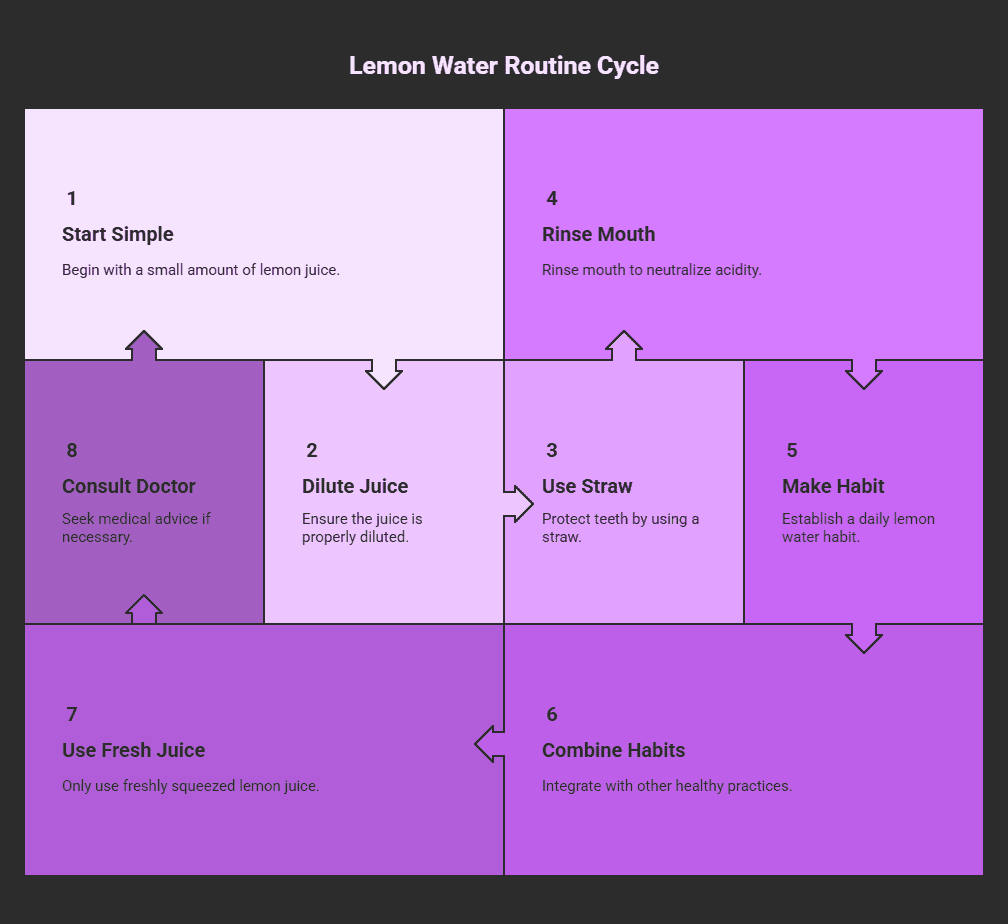
Start simple: try half to one fresh lemon in ~300–500 ml water daily.
Always dilute, straight lemon juice is rough on enamel and digestion.
Use a straw and rinse your mouth after drinking.
Make it a habit: room-temperature or warm lemon water each morning can kickstart hydration.
Combine with good habits: stay hydrated, limit purine-rich foods, and maintain a healthy weight.
Use only fresh juice, not bottled or concentrated.
Check with your doctor, especially if you’re already on uric-acid medications.
How It Fits in Your Life
Lemon water isn’t a cure, but it’s a helpful, gentle helper. Picture it as a daily ritual that supports kidney health, mildly alkalizes urine, and adds antioxidants. Especially useful for:
Those with mild-to-moderate hyperuricemia are aiming to prevent gout.
Folks already on medication who want low-risk, natural support.
Anyone wanting to boost hydration and vitamin intake.
Final Verdict: Who Should Try This?
Individuals with moderately elevated uric acid are looking for a natural boost.
People on medication seeking supportive lifestyle additions.
Anyone who wants a refreshing, daily wellness habit.
Just be cautious if you have severe reflux, enamel sensitivity, or are prone to mouth issues. And always loop in your healthcare provider.
FAQs – Quick Answers to Your Questions
1. How much lemon water? Typically, juice from 1–2 lemons is diluted into about 1–2 liters of water daily. Even one lemon can make a difference.
2. When will I see results? Most people notice changes around six weeks in.
3. Can I just take vitamin C pills instead? Supplements help, but they don’t replicate lemon’s alkalizing and citrate benefits.
4. Does bottled lemon juice work? Unlikely. Fresh juice has components that bottled versions often lack.
5. Side effects? Watch for enamel wear, reflux, and oral irritation. Use a straw, dilute, rinse your mouth, and avoid brushing right away.
6. Will it stop gout attacks? We don’t have direct evidence, but lowering uric acid and raising urine pH can help reduce risk.
7. What about other natural remedies? Green tea, cherries, and general hydration also support uric acid control.
8. Who should avoid it? If you have severe reflux, acid sensitivity, or dental issues, take it slow and check with your dentist or doctor.
The Bottom Line
Lemon water is cheap, gentle, and has some scientific support. It’s not a miracle cure, but it helps lower your uric acid levels, makes you feel better, and keeps you hydrated. And it tastes great too.
Try it out. Make it a part of your day. Think about each sip. And, as always, follow your doctor’s advice when you do it.