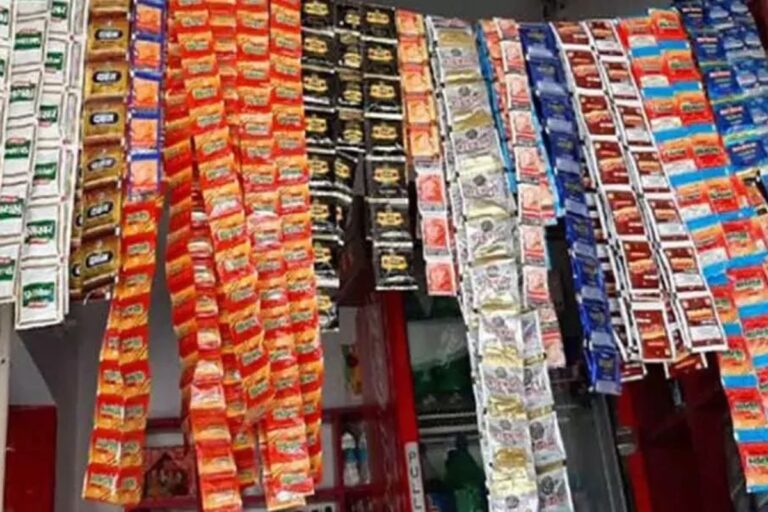







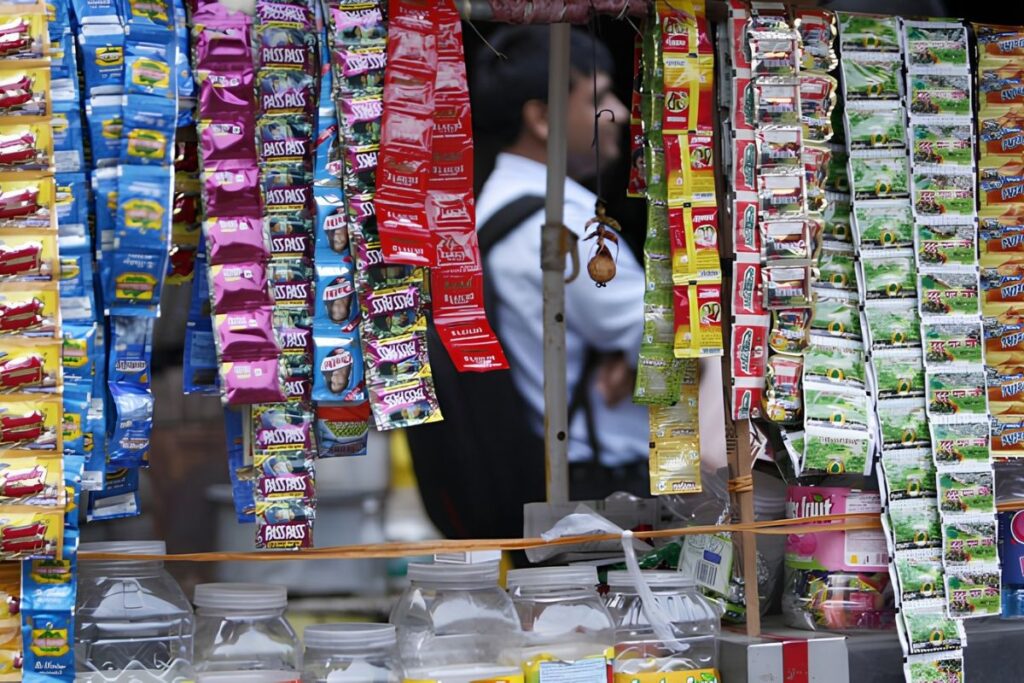
Rural Indian households are legally buying gutkha despite decade-old state bans because manufacturers split the product into two separate pouches. By unbundling gutkha into paired sachets of pan masala and pure tobacco, manufacturers use a gutkha ban loophole to bypass prohibition laws that only ban the pre-mixed product.
How does the twin-pack gutkha ban loophole work?
Retailers sell a strip containing two distinct pouches designed to be bought together and mixed by the consumer. According to public health researchers and industry observers, tobacco companies adapted to state bans by selling pure pan masala in one packet and pure tobacco in another.
These pan masala twin-packs are shipped together, sold side-by-side, and handed to the buyer simultaneously. This supply chain reality demonstrates that the dominant form of smokeless tobacco India sees in rural markets is not a smuggled product. It is an overt, taxable commodity operating in plain sight.
Why are rural gutkha sales surging despite the ban?
Household gutkha purchases are rising because the legal availability of paired pouches masks actual consumption in national health surveys. This dual-packet reality explains a contradiction between two national datasets.
The latest National Family Health Survey (NFHS-6) recorded a decline in reported individual tobacco use. However, according to a recent Economic Advisory Council to the Prime Minister (EAC-PM) working paper, the proportion of rural households purchasing smokeless tobacco surged from 5.3 percent to 30.4 percent. The widespread retail availability of twin-packs aligns with the massive increase in household purchasing, proving the reported drop in individual use is a statistical artifact.
What is the flaw in the 2012 FSSAI tobacco regulations?
The regulations prohibit mixing tobacco with food ingredients before sale, leaving the individual components unregulated when sold separately.
The Food Safety and Standards Authority of India (FSSAI), the statutory body responsible for regulating food quality, established the current baseline over a decade ago. Under Regulation 2.3.4 of the Food Safety and Standards (Prohibition and Restrictions on Sales) Regulations, 2011, the government prohibited the use of tobacco and nicotine as an ingredient in any food product. Because the law targets the act of combining ingredients at the factory level, it inadvertently legalized the sale of the separate components.
How did the twin-pack loophole survive Indian courts?
Manufacturers successfully argued in court that pan masala is food and pure tobacco is not, meaning unmixed adjacent sales do not violate mixing bans. When state authorities attempt to crack down on twin-packs, manufacturers successfully defend the practice in court.
Precedents rooted in the Supreme Court’s Godawat Pan Masala v. Union of India (2004) decision established that states cannot ban pan masala by classifying it as an adulterated food simply because consumers often chew it alongside tobacco. Manufacturers assert they sell two distinct, legal products. They argue that what adult consumers choose to do with them post-purchase is a matter of personal choice rather than corporate legal liability.
Why can’t food safety officers seize unmixed tobacco?
Frontline officers lack the legal authority to confiscate unmixed pouches because selling them separately does not violate the FSSAI prohibition on mixed gutkha.
The legal protection afforded to twin-packs structurally disables state health authorities and police from curbing distribution. As legal experts note, while selling pre-mixed gutkha can result in severe penalties under the Food Safety Act, selling the unmixed pouches carries no such penalty. Because the unmixed pouches are legally distinct commodities, frontline officers cannot execute seizures.
How do twin-packs affect India’s oral cancer rates?
The consumer’s act of mixing the twin-pack in their palm creates the exact same carcinogenic profile as the banned pre-mixed gutkha.
While the supply chain relies on keeping the ingredients separate, the consumer bridges the regulatory gap. According to a recent study published in the Indian Journal of Medical Research, smokeless tobacco accounts for 57.3 percent of mouth cancers in men. The legal distinction between pre-mixed and consumer-mixed tobacco does not alter the clinical outcome for the user.
Frequently Asked Questions
Is gutkha banned in India?
Pre-mixed gutkha is banned across most Indian states under 2011 FSSAI regulations. However, manufacturers legally bypass this by selling pan masala and pure tobacco in separate, paired pouches that consumers buy together and mix themselves.
Why did household tobacco purchases increase in rural India?
According to an EAC-PM working paper, rural household purchases of smokeless tobacco jumped from 5.3 percent to 30.4 percent. This increase is driven by the legal, widespread retail availability of twin-pack pouches that evade state-level bans.
Can police seize twin-pack pan masala and tobacco?
No. Because the FSSAI regulations only prohibit the sale of tobacco mixed into food products at the manufacturing level, food safety officers and police lack the legal authority to confiscate unmixed, legally distinct pouches.