






Quick Summary: The Science of Ghee
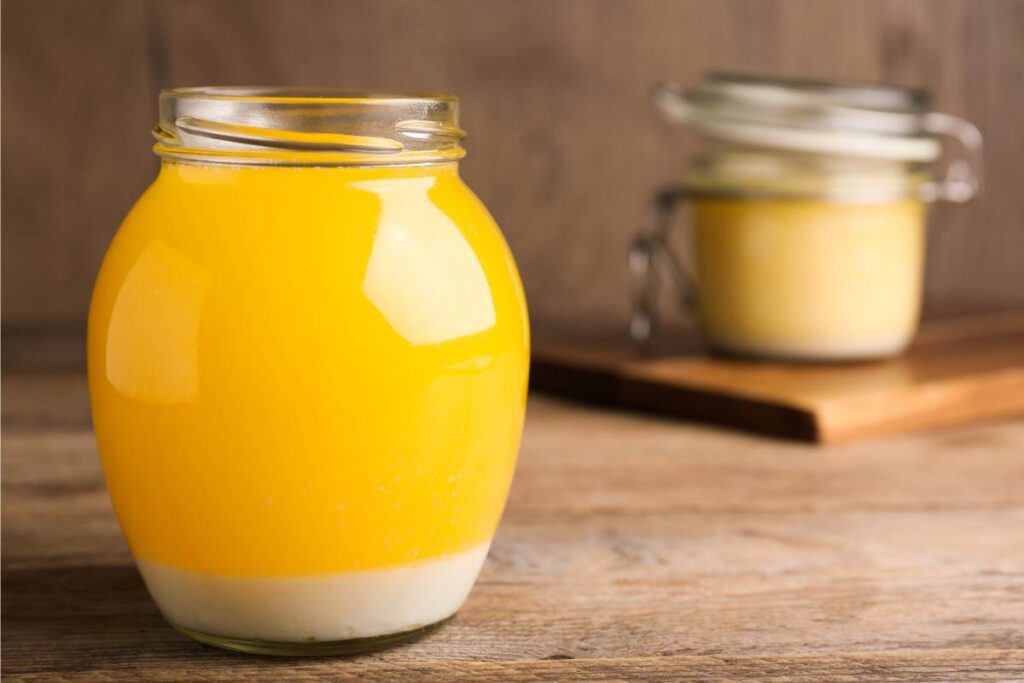
Ghee (traditional clarified butter) is a nutrient-dense culinary fat, revered in Ayurveda and increasingly validated by modern lipid science. Created by slowly simmering butter to evaporate water and remove milk solids (casein and whey), traditional ghee is practically free of lactose and milk proteins. This makes it highly tolerable for those with dairy sensitivities. With an impressive smoke point of 482°F (250°C), ghee resists toxic lipid oxidation during high-heat cooking. Biochemically, high-quality, grass-fed ghee provides potent concentrations of butyric acid (butyrate) for colon health, Conjugated Linoleic Acid (CLA) for metabolic support, and essential fat-soluble vitamins A, E, and K2 (MK-4).
Traditional Bilona Ghee vs. Industrial Clarified Butter
Not all commercial ghee offers the same nutritional profile. The biochemical makeup of ghee heavily depends on how it is processed:
- The Traditional Bilona Method (The Ayurvedic Standard): Whole grass-fed milk is first cultured into curd (yogurt) using lactic acid bacteria. It is then churned bi-directionally with a wooden churn (bilona) into cultured butter, which is slowly simmered over a low flame. This fermentation process pre-digests milk sugars and enriches the final ghee with bioactive microbial peptides and health-promoting short-chain fatty acids.
- Commercial Industrial Clarification: Conversely, raw industrial cream is separated from grain-fed milk and rapidly boiled at high temperatures. While this effectively removes water and milk solids, the resulting clarified butter lacks the profound probiotic-derived metabolic benefits of traditionally cultured bilona ghee.
5 Evidence-Based Health Benefits of Ghee
1. High Concentration of Butyrate for Gut Health
Ghee stands out as one of nature’s richest dietary sources of butyric acid (butyrate), a crucial short-chain fatty acid. Butyrate serves as the primary energy source for colonocytes—the cells lining the large intestine. Clinical evidence demonstrates that butyrate strengthens intestinal tight junctions, mitigating the risk of “leaky gut” (intestinal permeability). It also helps dampen mucosal inflammation, supporting overall digestive integrity.
2. Exceptional Thermal Stability (482°F / 250°C Smoke Point)
When cooking oils are pushed beyond their smoke points, their fragile fatty acids undergo thermal lipid peroxidation, releasing harmful free radicals and toxic aldehydes. Ghee is primarily composed of highly stable saturated fatty acids and monounsaturated oleic acid, with all heat-sensitive proteins removed. This grants ghee an extraordinary smoke point of 482°F (250°C), vastly outperforming standard butter (350°F / 175°C) and most unrefined seed oils. Learn how smoke points affect health in our ultimate guide to cooking oils and smoke points.
3. A Natural, Hypoallergenic Dairy Alternative
During the traditional clarification process, milk solids—which contain problematic lactose and casein—precipitate and are carefully skimmed away. Independent laboratory tests confirm that high-quality ghee contains less than 0.1% lactose and undetectable levels of casein. This allows most individuals with lactose intolerance or casein sensitivities to enjoy a rich, buttery flavor without experiencing digestive distress.
4. Conjugated Linoleic Acid (CLA) for Metabolic Support
Ghee sourced from pasture-raised, grass-fed cows features significantly higher levels of Conjugated Linoleic Acid (CLA) compared to grain-fed butter. Extensive research indicates that dietary CLA can help modulate lipid metabolism, enhance insulin sensitivity, and suppress inflammatory pathways, making it a valuable component of a metabolically healthy diet.
5. Superior Delivery of Fat-Soluble Vitamins (A, D, E, K2)
Ghee acts as both a rich source and an effective delivery vehicle for essential lipophilic (fat-soluble) micronutrients. It naturally contains retinol (Vitamin A), alpha-tocopherol (Vitamin E), and Vitamin K2 (Menaquinone-4). Furthermore, consuming vegetables cooked in or drizzled with ghee dramatically enhances the body’s ability to absorb vital dietary carotenoids and other fat-soluble antioxidants. Discover why K2 is essential in our guide on Vitamin D3 and K2 synergy.
Nutritional Breakdown: Traditional Ghee vs. Butter
| Nutrient Metric (per 100g) | Traditional Grass-Fed Ghee | Standard Unsalted Butter |
|---|---|---|
| Smoke Point | 482°F (250°C) – Extreme thermal stability | 350°F (175°C) – Burns easily due to remaining milk solids |
| Pure Fat Content | 99.5% pure lipids (0% water) | 80%–82% fat (~16%–18% water) |
| Lactose & Casein Content | Virtually 0% (eliminated during clarification) | Present (~1.5%–2% milk proteins and sugars) |
| Butyric Acid (Butyrate) | 3% to 4% of total fatty acid profile | ~2% to 3% of total fatty acid profile |
Cardiovascular Health: Navigating the Evidence
Because ghee is composed of roughly 60% to 65% saturated fat, traditional dietary guidelines often warned against its consumption. However, modern cardiovascular lipidology strongly differentiates between beneficial whole-food fat matrices and harmful industrial trans fats. Current research in healthy populations suggests that moderate consumption of traditional ghee (1 to 2 tablespoons daily) does not significantly elevate atherogenic small dense LDL particles or increase the baseline risk of coronary heart disease.
That said, individuals with genetic hypercholesterolemia or those carrying the ApoE4 allele (who are known dietary fat hyper-responders) should mindfully monitor their ApoB and LDL-C levels when incorporating higher amounts of saturated fats into their diets. Read our comprehensive cardiology review on dietary cholesterol and heart disease.
Frequently Asked Questions
Is ghee healthy for daily consumption?
Yes, when enjoyed in moderate portions (approximately 1 to 2 tablespoons daily) as part of a balanced diet rich in vegetables, legumes, and lean proteins. Ghee offers superior cooking stability, gut-nourishing butyrate, and bioavailable vitamins.
Can someone with a severe dairy allergy eat ghee?
Although high-quality ghee contains virtually zero casein and whey, individuals with life-threatening, anaphylactic IgE milk allergies should exercise strict caution and consult an allergist. Microscopic trace amounts of milk proteins could theoretically remain, especially in commercial non-certified batches.
Does ghee need to be refrigerated?
No. Because all the moisture has been evaporated during the cooking process, ghee is naturally shelf-stable. When kept in an airtight glass jar away from moisture and direct sunlight, it will remain fresh at room temperature for several months.