







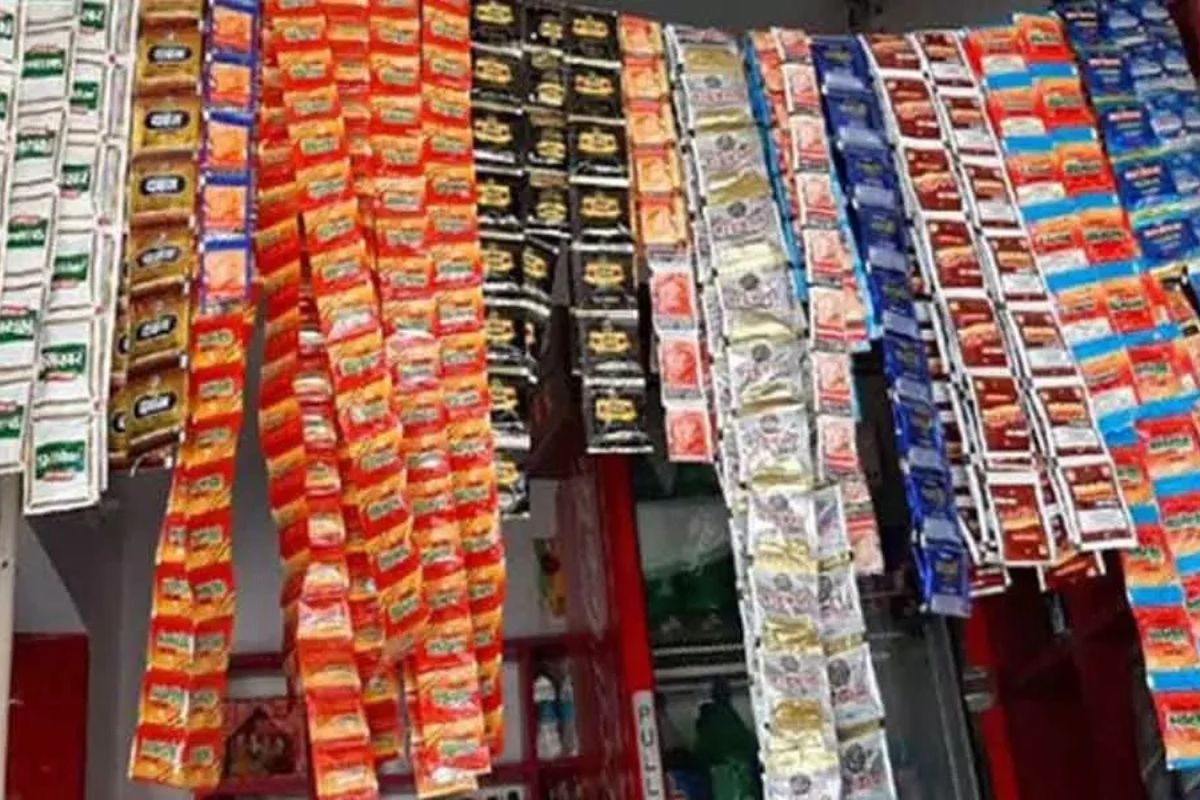
Illegal gutkha sold on the street today carries significantly higher toxicity than the legal versions available before state prohibitions. Pushed underground, black-market manufacturers now cut their pouches with heavy metals and industrial magnesium carbonate, driving per-pouch illegal gutkha toxicity levels far beyond historical regulatory baselines.
Are Black-Market Gutkha Pouches More Toxic?
Independent laboratory studies and chemical estimates confirm a chemical shift in street products, showing they are substantially more toxic than pre-ban legal tobacco. Research evaluating unbranded black-market gutkha samples reveals concentrations of magnesium carbonate reaching up to 3% by volume.
These chemical fillers replace natural tobacco volume. Pre-ban regulations capped heavy metals, but current street samples exceed former safety maximums. Toxicological reviews of gutkha confirm that trace elements like magnesium, copper, and lead are present at levels capable of exerting severe deleterious effects on human health. They act as direct catalysts for cellular damage in the mouth.
Why Do Manufacturers Add Magnesium Carbonate to Gutkha?
Manufacturers lace their products with these specific industrial chemicals to survive black-market margin pressures. Utilizing industrial compounds offsets the high costs of smuggling and illicit distribution.
Producers operate as rational economic actors. Tobacco carries high acquisition and transportation costs, while industrial powders are cheap. Replacing pure tobacco with magnesium carbonate, an inorganic salt used industrially as a cheap anticaking agent, artificially expands volume. This substitution stabilizes profit margins against the added expenses of police bribes and black-market logistics.
Did the Smokeless Tobacco Ban Work?
State health officials and anti-tobacco advocates maintain that prohibition protects public health by driving down total usage. Data from the Global Adult Tobacco Survey (GATS-2) , a nationwide household survey tracking tobacco usage , demonstrates a measurable decline in smokeless tobacco prevalence across India following state-level gutkha bans.
Authorities argue that even if individual illicit pouches hold higher toxicity, the ban successfully reduced the absolute number of new users. Under this statistical triage model, total societal harm remains lower than if the legal market remained open.
How Does Adulterated Gutkha Affect Users?
The biological consequence of this chemical adulteration is a changing disease profile. Post-ban gutkha chewers present with faster-acting, more aggressive oral submucous fibrosis (OSMF) , a chronic, precancerous condition causing severe stiffening of the mouth lining , than pre-ban patients.
The higher concentrations of toxic trace elements and abrasive fillers accelerate tissue scarring. According to medical case-control studies published by the National Institutes of Health, over 70% of OSMF cases now occur in individuals under 35 years of age. These hyper-aggressive precancerous lesions form significantly faster than clinical baselines established before the ban.
Why Aren’t Authorities Testing Illegal Gutkha?
State authorities miss this chemical shift because they treat illegal gutkha strictly as a smuggling issue under the Cigarettes and Other Tobacco Products Act (COTPA) or the Indian Penal Code, rather than a food poisoning crisis.
Once the state banned gutkha, the product dropped off the standard testing registry of the Food Safety and Standards Authority of India (FSSAI). While food safety laws technically prohibit adding magnesium carbonate to food, inspectors no longer measure the heavy metal or chemical toxicity of illicit street pouches. This leaves the precise chemical makeup of the black market entirely unmonitored by health authorities.
Frequently Asked Questions
Is illegal gutkha more toxic than legal gutkha? Yes. Pushed into the black market, manufacturers now cut their pouches with heavy metals and industrial magnesium carbonate, driving per-pouch illegal gutkha toxicity levels significantly higher than pre-ban regulations allowed.
Why is magnesium carbonate added to gutkha? Producers use magnesium carbonate to artificially expand the volume of the pouches. This industrial chemical is much cheaper than pure tobacco, allowing manufacturers to offset the added expenses of police bribes and black-market logistics.
Are health authorities testing street gutkha for toxins? No. Once states banned gutkha, it dropped off the Food Safety and Standards Authority of India (FSSAI) testing registry. Because the product is completely outlawed, inspectors no longer routinely test street samples for heavy metals or adulterants.